


Unitree Go2 vs As2 vs A2 vs B2: Real-World Deployment Guide
Move beyond specification shopping. Compare Unitree quadrupeds through actual mission design, verified field references, payload integration, autonomy, communications, cyber security, acceptance testing and the operational controls required for a credible Canadian deployment.
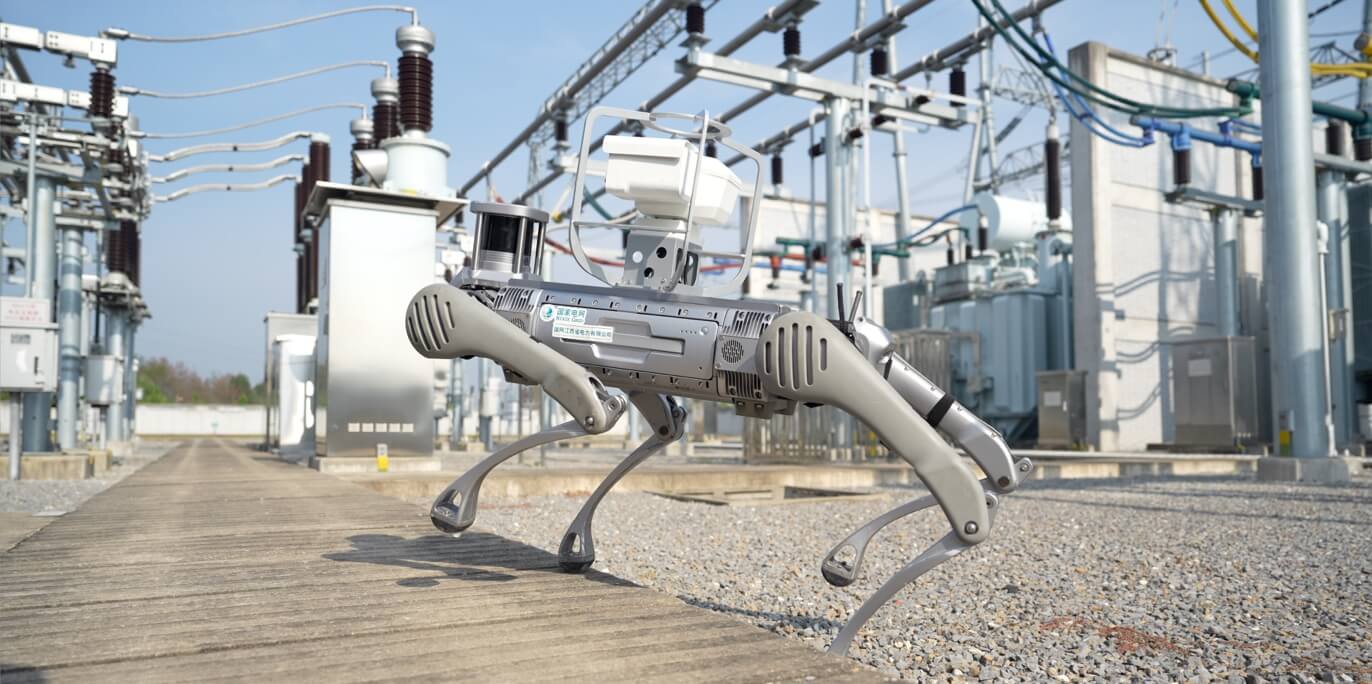
Go2 is an interaction and research platform. As2 is the compact professional bridge. A2 is the practical medium industrial system. B2 is for hazardous, high-payload or high-consequence missions. The correct deployment starts with the workflow—not the biggest robot.
Choose the robot by operational consequence
Quadruped projects fail when a team buys an impressive robot and only later asks what it should do. A professional program reverses the sequence: define the mission, measure the environment, select the payload, choose the autonomy level, design the communications path and then select the smallest platform with adequate margin.
People-facing missions
Events, museums, classrooms, recruitment, demonstrations and supervised experiences prioritize portability, predictable routines, operator visibility and audience safety.
Best default: Go2 ProCompact inspection and research
Campus patrol, facility data capture, mobile sensing and advanced R&D need more payload and endurance than Go2 while preserving transportability and indoor access.
Best default: As2 EDURepeatable field workflows
Utilities, plants, tunnels, logistics sites and infrastructure programs need sustained runtime, hot-swappable power, industrial interfaces and a formal support pathway.
Best default: A2Hazardous and heavy-duty missions
Fire reconnaissance, severe terrain, large sensors and high-risk environments justify B2 only when its payload, ingress protection and integration capacity are essential.
Best default: B2Deployment principle: do not use standing payload, laboratory speed or maximum obstacle figures as the design target. Size the system against continuous operating load, real route geometry, battery reserve, braking distance, communications loss and the consequence of a fall.
Go2 vs As2 vs A2 vs B2 for real deployments
The table below emphasizes what changes the deployment plan: platform mass, continuous payload, environmental protection, power architecture, development access and the level of operational control required.

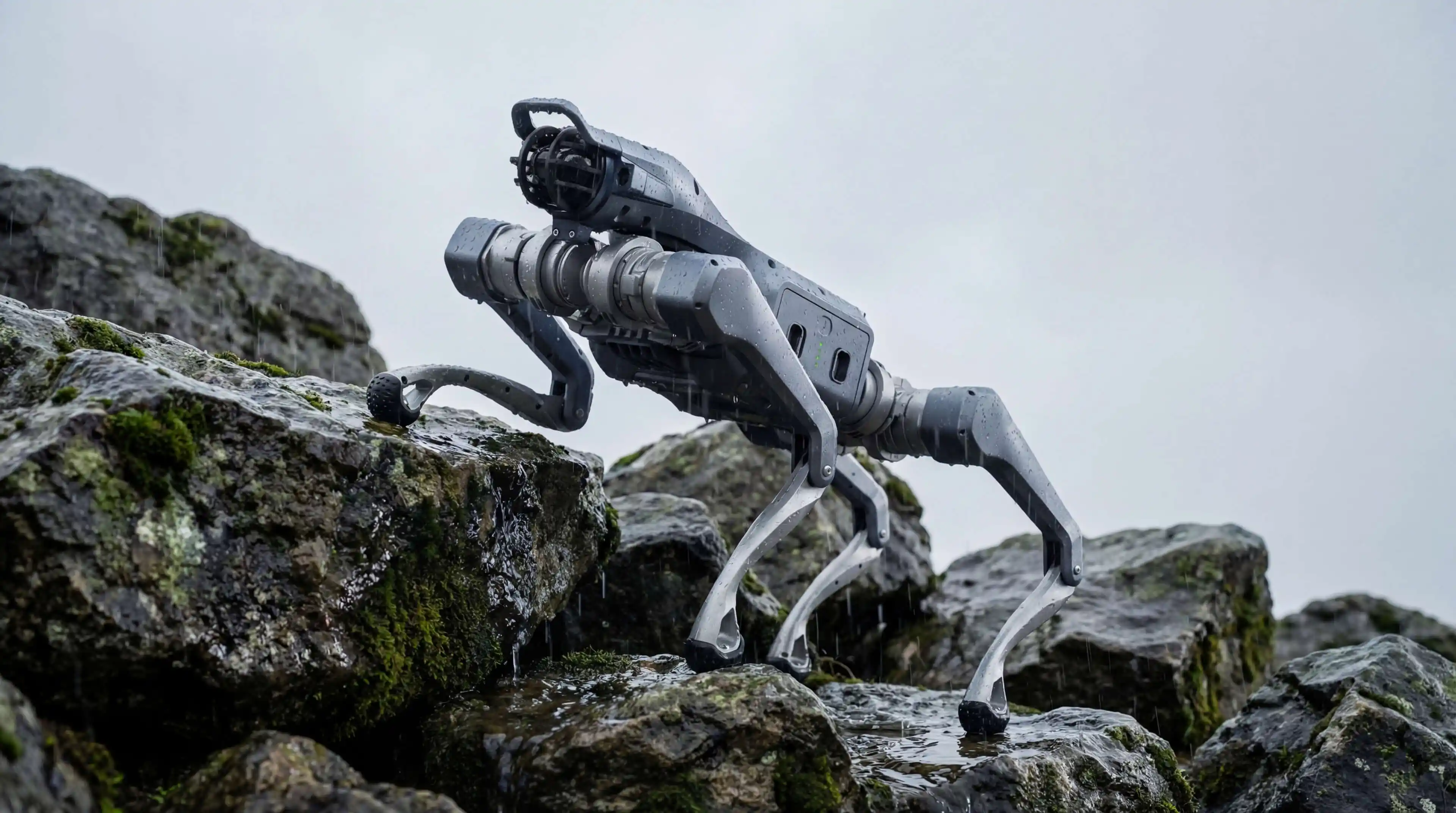
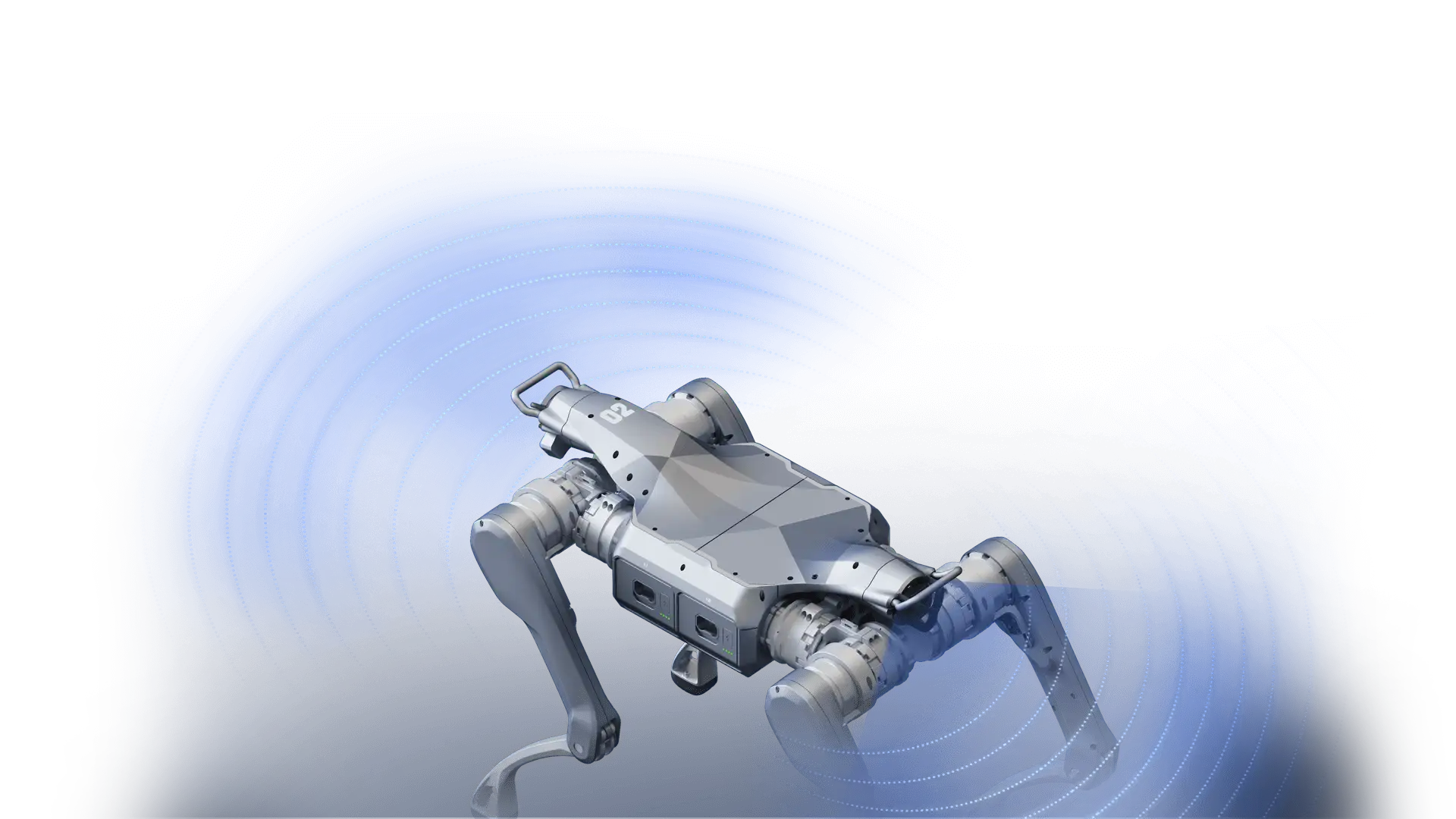
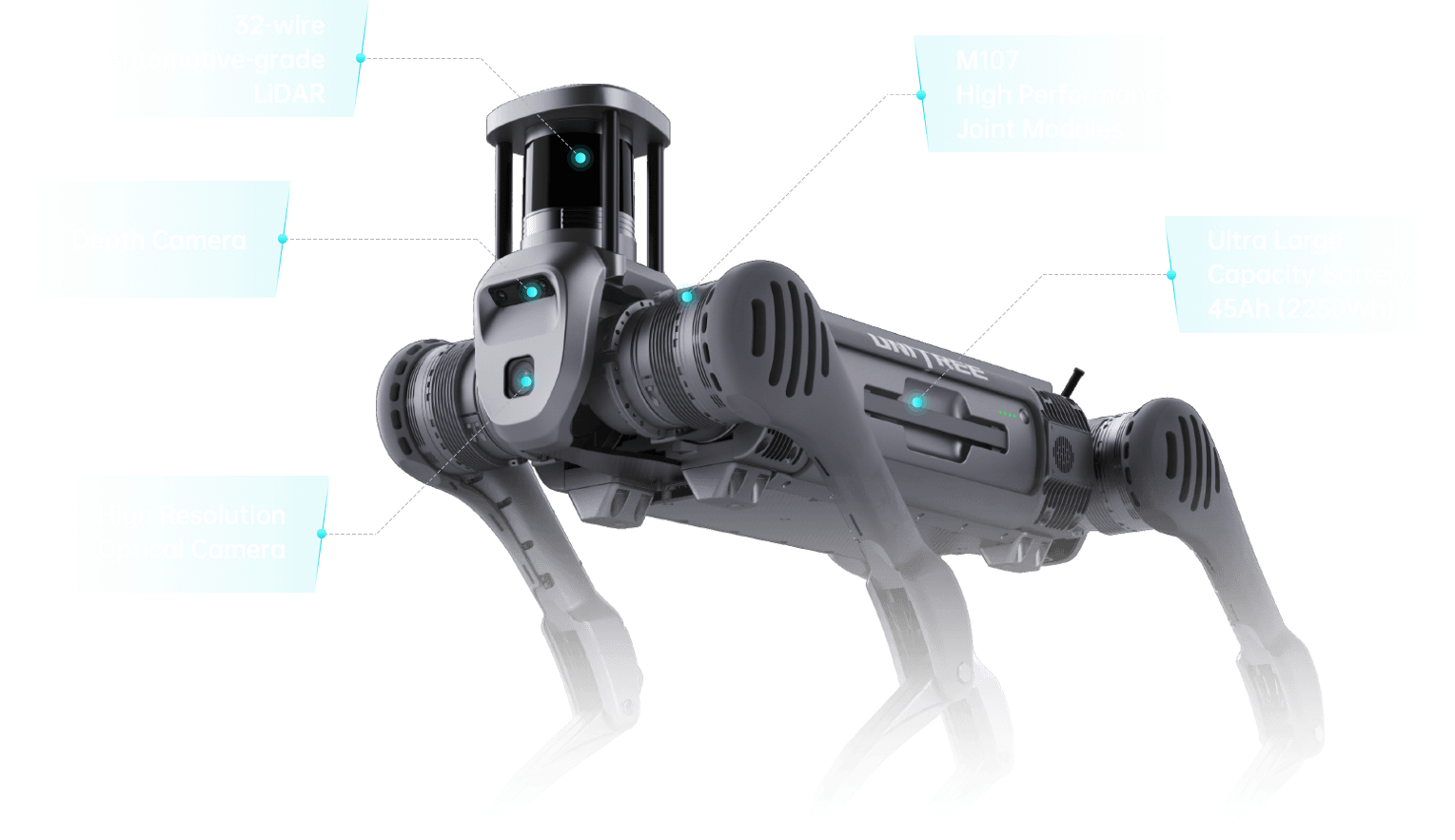
On smaller screens, swipe left to compare all four robot families.
| Deployment factor | Go2 family | As2 family | A2 / A2 Pro | B2 |
|---|---|---|---|---|
| Operational role | Interaction, education, events and accessible research | Compact professional sensing, mobile R&D and pilot projects | Industrial inspection, logistics, patrol and field integration | Hazardous inspection, rescue support and heavy payload missions |
| Approximate system mass | 15 kg | 18 kg | 42 kg with batteries | 60 kg with battery |
| Continuous walking payload | About 7–8 kg by version | About 10–15 kg by version | About 25 kg; ideal conditions may reach about 35 kg | More than 40 kg |
| Protection rating | No IP rating published in core comparison | IP54 on Pro and EDU; Air not listed | IP56; A2 Pro core components IP67 | IP67 |
| Power architecture | 8000mAh standard; 15000mAh on EDU | 8000mAh Air; 15000mAh Pro and EDU | Dual hot-swappable 9000mAh battery slots | 45Ah / 2250Wh plug-in battery; charging solution optional |
| Representative endurance | About 1–4 hours by version and activity | Pro/EDU: about 4 hours or 20 km unloaded; over 2.5 hours loaded | Over 5 hours / 20 km unloaded; over 3 hours / 12.5 km with 25 kg | 4–6 hours; over 5 hours unloaded; over 4 hours with 20 kg |
| Perception baseline | 4D LiDAR + HD camera; EDU adds depth camera | LiDAR + HD camera; industrial LiDAR on Pro/EDU | Front LiDAR and camera; A2 Pro adds rear LiDAR | 3D LiDAR, dual depth cameras and dual optical cameras, configuration-dependent |
| Secondary development | Full on EDU; limited on X; not listed for Air/Pro | Supported on EDU only | Supported | Supported; configuration-dependent functions |
| Typical site controls | Operator, spotter, low-speed route and crowd boundary | Controlled pilot zone, route validation and payload checks | Industrial SOP, network plan, maintenance and shift handover | Command structure, exclusion zone, recovery plan and mission authority |
| Best procurement path | Retail or special order by model | Configuration review and pilot quote | Site assessment, configured system and acceptance test | Enterprise deployment design and multi-party approval |
Figures are official manufacturer values checked July 21, 2026 and can vary by configuration, payload, surface, temperature, firmware, battery condition and control mode. Maximum results are not operating guarantees.
The seven-layer quadruped deployment architecture
A robot dog does not become an inspection, rescue or logistics solution until every layer works together. The same chassis can produce very different outcomes depending on sensing, edge compute, communications, command software, operating procedures and the quality of the data workflow.
Mission
Define the task, route, operating window, output, risk and measurable success criteria.
Mobility
Select Go2, As2, A2 or B2 based on mass, terrain, stairs, payload and recovery requirements.
Payload
Configure RGB, thermal, gas, acoustic, mapping, manipulation or communications equipment.
Edge compute
Run perception, navigation and mission logic locally with controlled software versions and logs.
Network
Design Wi-Fi, private radio, cellular or point-to-point communications with loss-of-link behaviour.
Command
Provide operator control, live video, alarms, mission scheduling, human override and audit history.
Operations
Train personnel, maintain the fleet, review incidents, secure data and improve the workflow.
Professional difference: the robot is usually less than half of the deployment design. The harder work is establishing reliable mission data, communications coverage, human authority, maintenance ownership and a repeatable response when autonomy is uncertain.
Real-world cases that reveal how quadrupeds create value
The cases below are not presented as universal performance guarantees. They show four distinct deployment patterns: public logistics, indoor autonomous research, fire-rescue reconnaissance and intelligent infrastructure inspection. Canadian projects still require local site review, privacy controls, cyber security and organizational approval.
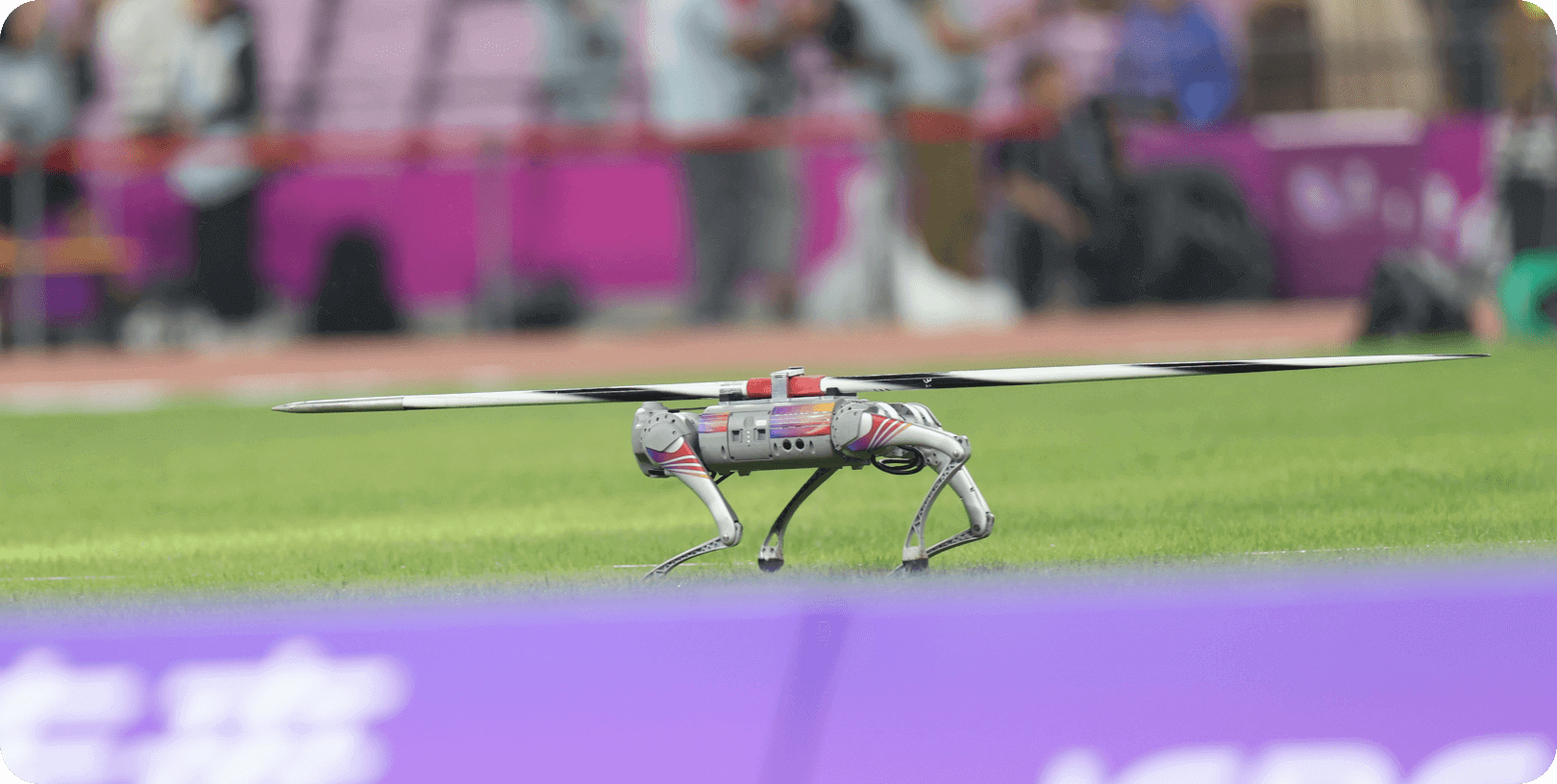 Verified event deployment
Field logistics became part of the audience experience
Unitree reports that a robot dog transported discus and javelin equipment at the 19th Asian Games. The operational value was simple: repeated movement on a controlled field. The public value was larger: the robot also became a visible technology feature for spectators.
Canadian lesson: Go2-class projects succeed when the task is constrained, supervised and designed around a repeatable public workflow.
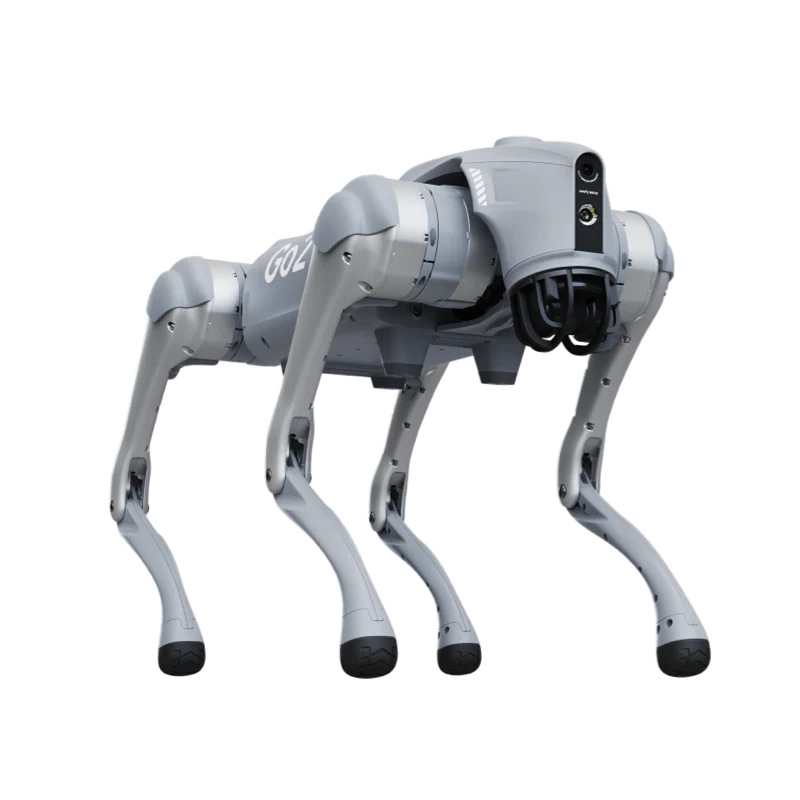 Research field test
Autonomy was tested against real clutter and moving people
A 2026 paper accepted by WCCIS describes a Go2 EDU navigation system tested in a real library. The stack combined visual-LiDAR SLAM, sensor fusion and ROS 2 navigation. Reported mission success decreased as the environment became more dynamic—an important reminder that autonomy is conditional.
Interpretation: this is a research result, not a commercial service-level guarantee. The decreasing success rate should inform fallback and human-supervision design.
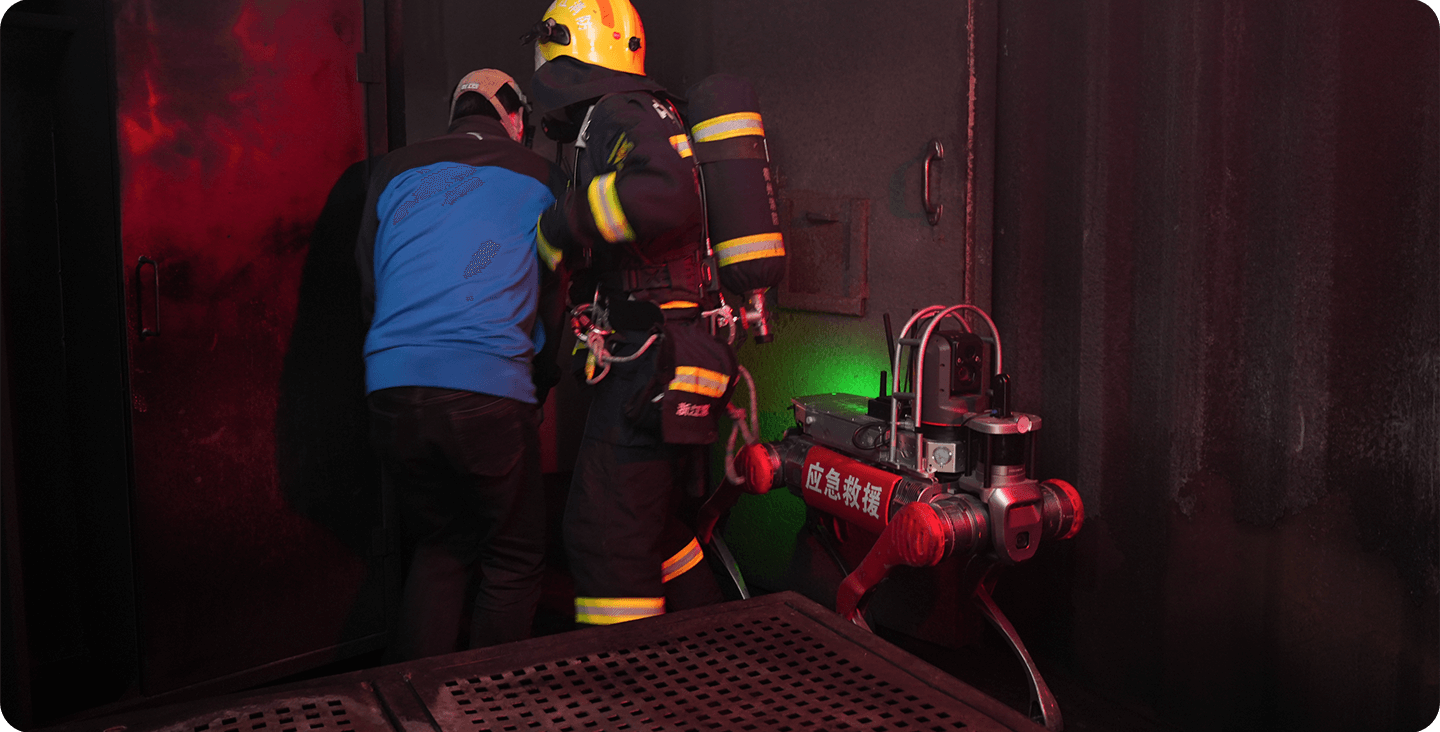 Verified agency deployment
Two B2 systems were configured for reconnaissance
Unitree states that the Qingdao Firefighting and Rescue Support Team officially added two B2 quadrupeds. The published configuration included 360-degree cameras, a dual-light cloud platform, self-networking, gas sensing and industrial-grade remote controllers.
Canadian lesson: a rescue robot is a configured system with sensors, communications and command procedures—not a stock B2 operating alone.
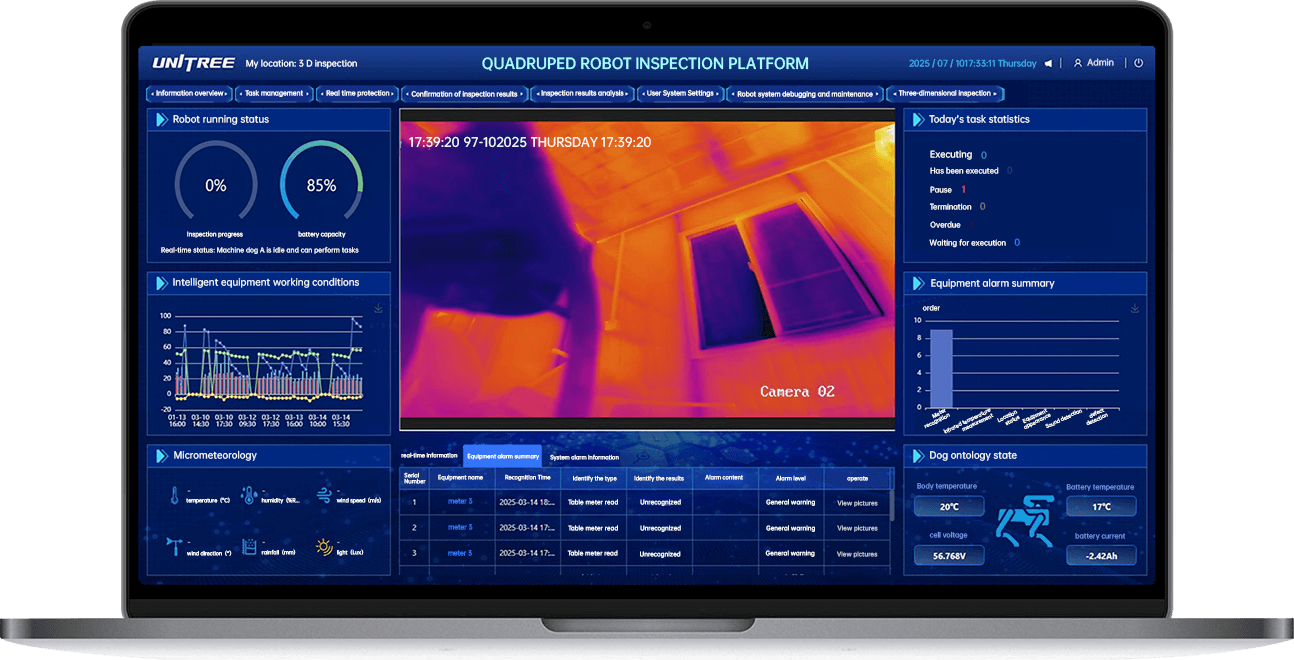
Manufacturer reference architecture
The platform connects patrol, sensing and analysis
Unitree’s official inspection solution combines thermal imaging, LiDAR and AI vision with a centralized patrol platform. The deployment workflow is described as a closed loop from waypoint definition to simulation, field deployment, automated inspection and report generation.
Canadian lesson: the value is not locomotion alone. It is the repeatable conversion of route data into alerts, reports and maintenance decisions.
Evidence boundary: the Asian Games and Qingdao examples are manufacturer-reported deployments. The library example is a 2026 research paper. The power-inspection example is a manufacturer solution architecture. SpeedyDrone does not present these as named Canadian customer deployments.
What a professional deployment looks like for each model
Interactive robotics, education and controlled autonomy
- Use Go2 Pro for events, exhibitions and supervised public demonstrations
- Use Go2 EDU when SDK access, custom navigation or research is mandatory
- Design a low-speed route with an operator, spotter and audience boundary
- Keep payload light and centred; validate battery for the complete event window
- Use a rehearsed routine rather than experimental autonomy in public
Best first project: a guided campus or showroom experience with defined stations, operator narration and recorded operating metrics.
Compact professional pilot and mobile sensing
- Select As2 EDU for custom software, compute expansion and charging-dock development
- Select As2 Pro when longer endurance and IP54 are needed without secondary development
- Plan around 13–15 kg continuous payload only with the correct version and margin
- Validate rain exposure, stair geometry, floor transitions and communications coverage
- Use the platform as a bridge between lab robotics and industrial operations
Best first project: a 90-day facility pilot collecting visual, thermal or environmental data across a mixed indoor-outdoor route.
Repeatable industrial inspection and payload transport
- Use the dual hot-swappable battery system to design shift continuity
- Separate platform computing from user-development applications
- Use A2 Pro when rear perception or stronger core-component protection is required
- Build inspection points, alarm thresholds and reports before scaling autonomy
- Document maintenance ownership, spare power and recovery equipment
Best first project: a supervised inspection route with thermal and visual capture, manual confirmation and automated report comparison.
Hazardous reconnaissance and heavy integration
- Use B2 when IP67, heavy payload or severe terrain is mission-critical
- Create an exclusion zone proportional to the 60 kg mass and 360 N·m joint capability
- Design communications redundancy and loss-of-link behaviour before field use
- Separate reconnaissance, intervention and fire-suppression configurations
- Require command authority, incident logging and a mechanical recovery plan
Best first project: remote reconnaissance in a controlled industrial training site using a validated camera and gas-sensing payload.
A 90-day path from site idea to deployment decision
A serious pilot should answer whether the robot creates operational value, not merely whether it can walk the route. The program below creates evidence for procurement, safety, IT, operations and executive stakeholders.
Mission and site assessment
- Map route, stairs, surfaces and hazards
- Define payload and data outputs
- Identify operators and stakeholders
- Set measurable baseline performance
Robot and system build
- Select platform and safety margin
- Integrate sensors and mounting
- Configure network and edge compute
- Create manual recovery procedures
Controlled mission testing
- Run manual and assisted routes
- Test low battery and link loss
- Measure data quality and false alarms
- Record intervention and downtime
Operational and financial review
- Compare against human baseline
- Review safety and cyber findings
- Estimate support and lifecycle cost
- Approve, redesign or stop the project
Go/no-go threshold: scale only when the complete workflow is repeatable, operators can recover safely, data is decision-useful and lifecycle cost is justified. A successful walking demo is not a deployment decision.
Design the robot around the data product
Inspection and public-safety buyers should begin by defining the decision the robot must support. A thermal camera is useful only when temperature thresholds, viewing geometry, calibration, storage and alert ownership are defined. A gas sensor is useful only when sampling location, response time and emergency escalation are validated.
- Visual: asset condition, gauges, corrosion, leaks and scene documentation
- Thermal: electrical hotspots, bearings, insulation and process anomalies
- Acoustic: mechanical noise, discharge signatures and leak detection
- Gas: environment-specific sensing with calibrated thresholds
- Mapping: route geometry, localization and change detection
- Manipulation: task-specific arm or tool with strict stability analysis
Mass is not enough
Validate centre of gravity, height, vibration, cable strain, weather sealing, collision envelope and recovery access.
Power the full mission
Confirm voltage, current, startup surge, fuse strategy, connector retention, payload heat and effect on endurance.
Control versions and interfaces
Document SDK, ROS or API dependencies, sensor topics, model versions, logs, update policy and rollback method.
Hazardous-area warning: an IP rating does not make the robot, payload or custom wiring certified for explosive atmospheres. Any hazardous-location deployment requires the applicable site, electrical and equipment certification review.
Cyber security and data governance are deployment requirements
A networked quadruped combines cameras, microphones, sensors, edge AI, remote control and physical motion. The Canadian Centre for Cyber Security’s July 2026 edge-AI guidance emphasizes device visibility, network segmentation, continuous monitoring, tested human override and mechanical fail-safes for autonomous systems.
Keep robots off trusted business networks
Use a dedicated robot or OT segment, restrict allowed communications, control outbound access and isolate the system automatically when behaviour deviates from the approved baseline.
Control who can move the robot
Remove default credentials, assign named accounts, use strong authentication where supported and separate operator, developer and administrator privileges.
Log commands and autonomous actions
Collect authentication events, network anomalies, firmware versions, sensor health, mission decisions, manual overrides and safety events for incident review.
Use controlled change windows
Test firmware, app, SDK and model changes in a non-production environment. Maintain a known-good configuration and rollback plan.
Govern cameras, microphones and location data
Define lawful purpose, notice, access, retention and deletion. Avoid collecting identifiable people when the mission does not require it.
Make shutdown independent of AI
Provide accessible override or shutdown mechanisms that do not depend on the autonomy stack cooperating, and test them regularly.
Critical-infrastructure rule: treat the robot, payload computer, controller, cloud service and update chain as operational assets. If a compromise could affect a physical process, apply additional controls beyond a normal IoT deployment.
Acceptance testing for a professional quadruped system
The purchase order should define how the delivered system will be accepted. Tests should use the actual payload, route, communications environment, operators and reporting workflow—not only the unloaded manufacturer demonstration.
Verify every component
Model, version, controller, batteries, charger, compute, sensors, mounts, cables, software access and warranty.
Run the real geometry
Test doors, stairs, slopes, gravel, transitions, turning radius, stopping distance and safe recovery points.
Measure the installed system
Confirm balance, vibration, sensor view, thermal stability, power draw, cable integrity and endurance.
Validate decision quality
Use known targets to measure detection, reading accuracy, false alarms, missing data and report completeness.
Test degraded conditions
Simulate link loss, low battery, blocked route, sensor fault, software restart and unexpected human entry.
Prove the team can intervene
Measure shutdown, manual takeover, robot retrieval, restart, log review and return-to-service time.
Pass criteria example: complete the approved route with the installed payload, maintain required communications, produce usable inspection data, remain within battery reserve and recover safely from each defined fault.
Build the business case around access, risk and information
Quadruped ROI is rarely “robot salary versus employee salary.” The strongest cases are usually based on gaining access to hazardous or irregular spaces, increasing inspection frequency, improving data consistency, reducing shutdown exposure or creating a premium public experience.
Reach where wheels or people struggle
Stairs, debris, narrow passages, uneven surfaces and hazardous zones can justify a legged platform.
Move sensing before people
Remote reconnaissance can improve situational awareness before personnel enter an uncertain environment.
Make inspection repeatable
Consistent viewpoints, timestamps and route history can improve trend analysis and maintenance decisions.
Increase inspection density
A robot may collect routine data more frequently while specialists focus on diagnosis and intervention.
Create attention and credibility
Go2 deployments can combine operational movement with education, public engagement and brand activation.
Build institutional capability
A controlled pilot develops internal knowledge about autonomy, edge AI, sensing, safety and procurement.
Capital rule: compare total lifecycle cost against the measured value of the complete workflow. A lower-cost robot that cannot meet payload, environmental or software requirements can become the more expensive project.
How Canadian organizations should buy and deploy
Go2 can be purchased as a defined product configuration. As2, A2 and B2 should be treated as systems projects. A professional quotation should connect the model, payload, communications, software, acceptance testing, training and support pathway.
Describe the mission
Send site type, route, environment, payload, operating hours, autonomy, communications, budget and target timeline.
Validate the operating concept
Use a showroom, controlled site or paid pilot to test human factors and mission fit before final configuration.
Freeze the bill of materials
List exact robot, controller, batteries, charger, sensors, compute, interfaces, software and accessories.
Choose purchase or financing
Align payment structure with delivery milestones, pilot risk, integration work and long-term operating budget.
Train and accept the system
Complete inspection, network setup, operator training, route testing, failure drills and acceptance documentation.
Expand from evidence
Add missions, payloads, charging or additional robots only after pilot metrics support the investment.
Canadian compliance: requirements depend on site, sector, privacy, labour, electrical, fire, radio, hazardous-location and procurement rules. Equipment ownership does not by itself authorize operation in a controlled or regulated environment.
Request a Unitree deployment assessment
SpeedyDrone Canada supports Canadian organizations evaluating Go2, As2, A2 and B2 for education, events, research, inspection, logistics, public safety and industrial projects. Send the mission, route, payload, operating environment, autonomy level, communications requirement, budget and timeline. We can help structure the next step as a configuration review, demo, pilot or enterprise quote.
As2, A2 and B2 are configuration-sensitive platforms. Final availability, specifications, package contents, lead time, support and pricing must be confirmed in the project quotation.
Unitree quadruped deployment FAQ
Which Unitree robot dog is best for a first enterprise pilot?
As2 EDU is a strong compact professional pilot platform when development access, payload and endurance are required. A2 is more appropriate when the pilot already involves industrial payloads, long shifts or dual-battery operation. Go2 Pro is the better first platform for events and supervised interaction.
What is the main deployment difference between Go2 and As2?
Go2 prioritizes accessibility, portability and interaction. As2 increases continuous payload, endurance, motor capability and environmental protection on Pro and EDU. Full secondary development is associated with Go2 EDU and As2 EDU, not the consumer-oriented versions.
When should a Canadian organization choose A2 instead of As2?
Choose A2 when the mission requires approximately 25 kg continuous payload, dual hot-swappable batteries, industrial interfaces, longer field endurance, a user-development computer or a more formal industrial support workflow.
When is Unitree B2 justified?
B2 is justified when IP67 protection, more than 40 kg continuous walking payload, severe terrain, high-capacity interfaces or a heavy rescue or inspection payload is essential. Its mass and torque also require stronger site controls, training and recovery planning.
Are there real-world Unitree quadruped deployments?
Yes. Unitree reports robot-dog logistics at the Hangzhou Asian Games and two B2 systems deployed by the Qingdao Firefighting and Rescue Support Team. A 2026 paper also reports a Go2 EDU autonomous-navigation system tested in a real library. These cases should be treated as references rather than universal performance guarantees.
Can Go2 be used for autonomous inspection?
Go2 EDU can support custom navigation and sensing research. It is best suited to controlled, lower-risk deployments. Production inspection usually requires validation of weather protection, payload, endurance, networking, software access and recovery procedures.
Does IP67 make B2 safe for every hazardous environment?
No. IP67 addresses dust and water ingress under defined conditions. It does not automatically provide explosion-proof, intrinsically safe, fire-resistant or hazardous-location certification for the robot, payload, wiring or accessories.
How long should a quadruped pilot run?
A 60- to 90-day pilot is often long enough to assess route reliability, payload data, human intervention, battery workflow, network coverage, maintenance and business value. The exact duration should cover representative operating conditions.
What should be included in a Unitree deployment quote?
The quote should identify the exact robot version, controller, batteries, charger, payload, mounts, compute, interfaces, software access, communications, commissioning, training, warranty, support, acceptance tests and lead time.
How should a robot dog be connected to an enterprise network?
Use a dedicated robot or OT network segment, restrict communications, remove default credentials, control updates, collect logs and maintain independent human override. Critical-infrastructure projects should apply additional OT and edge-AI security controls.
What determines the real payload capacity?
Real payload capacity depends on total mass, centre of gravity, mounting height, movement, terrain, speed, power draw, vibration and environmental conditions. Continuous walking payload with operating margin is more relevant than a maximum standing figure.
How is quadruped deployment ROI measured?
Measure access gained, human exposure reduced, inspection frequency, data consistency, downtime, intervention rate, mission completion and lifecycle cost. Do not justify the project using robot price alone.
Can SpeedyDrone Canada provide demos or pilot support?
Contact SpeedyDrone Canada to discuss Toronto evaluation options, event deployments, configuration planning, enterprise pilots, financing and Canada-wide robotics projects. Availability depends on the model and project scope.
- Unitree Go2 official product page, specifications and Hangzhou Asian Games reference
- Unitree As2 official Air, Pro and EDU specifications
- Unitree A2 and A2 Pro official specifications and application positioning
- Unitree B2 official specifications and industrial use positioning
- Unitree fire-rescue solution and Qingdao deployment references
- Unitree advanced quadruped inspection architecture
- Autonomous Navigation System for Library Service Robot Based on Unitree Go2 EDU, 2026
- Canadian Centre for Cyber Security: Securely deploying AI at the network edge, July 2026
- Canadian Centre for Cyber Security: Internet of Things security guidance
- SpeedyDrone Canada Unitree Go2 collection
- SpeedyDrone Canada Go2 Air listing
- SpeedyDrone Canada Go2 Pro listing
- SpeedyDrone Canada robotics and enterprise contact
- SpeedyDrone Canada financing information
Information was checked July 21, 2026. Specifications, firmware, regional functions, package contents, development access, communications, sensors, prices, warranty and lead times can change. Some functions require human operation, secondary development or application-specific integration. Manufacturer maximum figures are not guarantees. Organizations remain responsible for site safety, cyber security, privacy, procurement and regulatory compliance.


