



Pocket 3. Pocket 4. Pocket 4P.
Three compact gimbal cameras. Three very different buying decisions. Pocket 3 is the value choice, Pocket 4 is the best all-rounder, and Pocket 4P is the dual-camera option for creators who need more framing flexibility.
Choose by the shots you actually make.
Buy Pocket 3 when price and simplicity matter most. Buy Pocket 4 when you want the strongest balance of image quality, storage, tracking, battery life, and everyday usability. Buy Pocket 4P when the 60mm mid-tele camera will genuinely improve your portraits, product shots, stage footage, food content, and travel details.
Three cameras.
Three priorities.
The difference is not simply old, new, and Pro. Each model is strongest for a different type of buyer. Start with the use case, then decide how much extra capability is worth paying for.
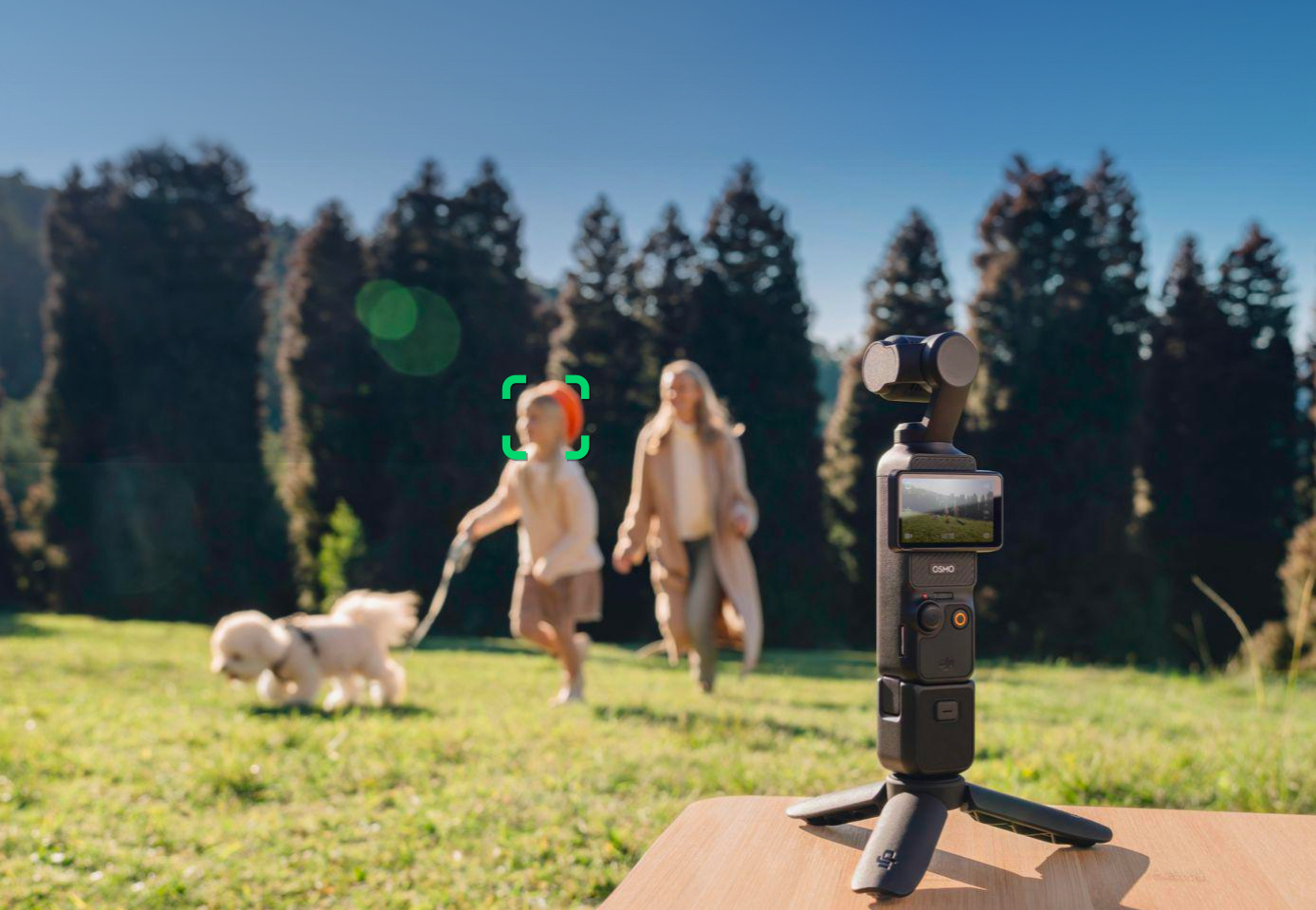
Osmo Pocket 3
A proven 1-inch pocket gimbal camera for travel, daily vlogs, family videos, and creators who want strong results without paying for the newest model.
- Sensor1-inch CMOS
- Lens20mm f/2.0
- Slow motion4K/120fps
- Colour10-bit D-Log M
- Battery reference166 minutes
- StoragemicroSD required
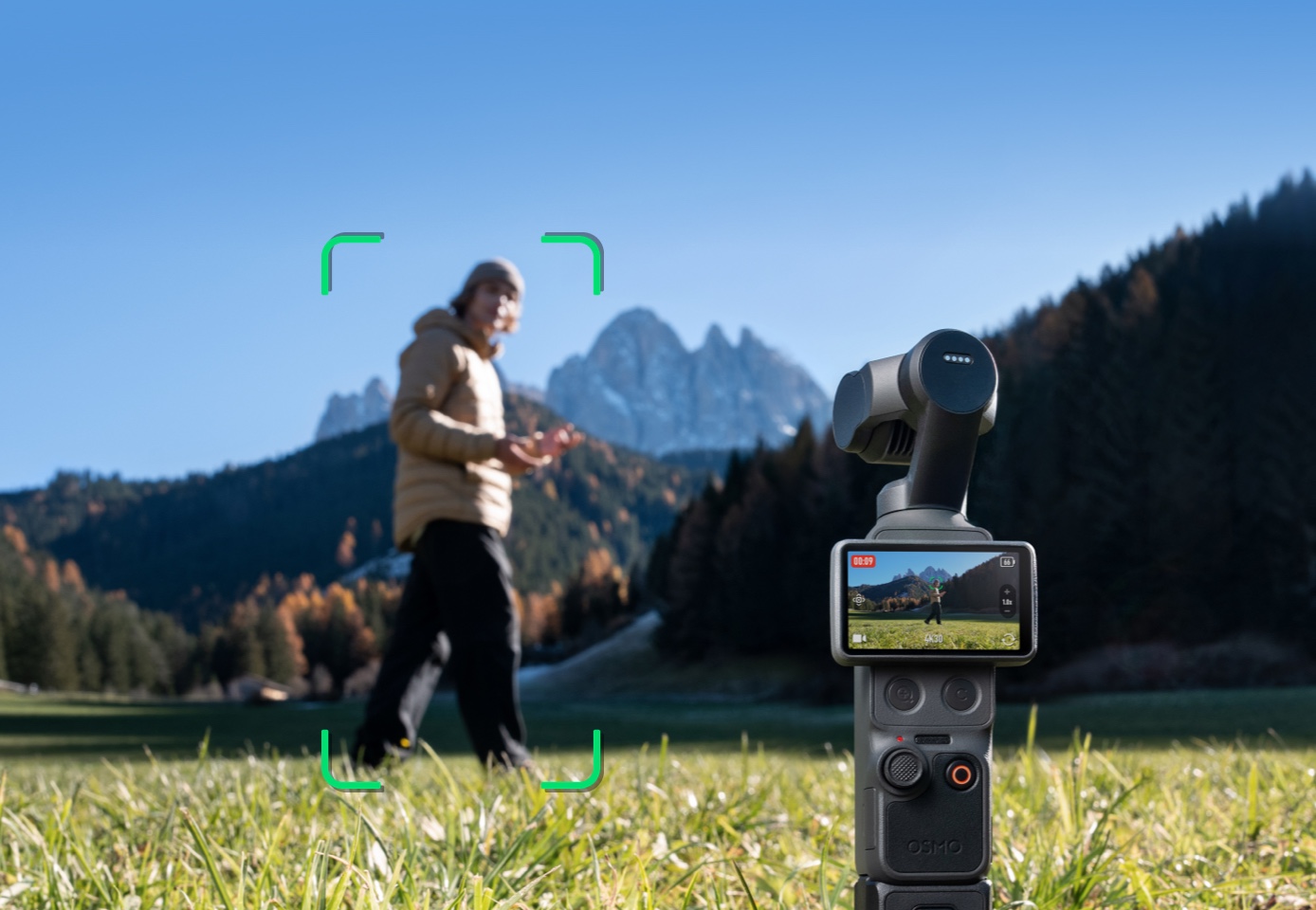
Osmo Pocket 4
The strongest everyday package in the lineup, with more dynamic range, faster slow motion, built-in storage, longer runtime, and a more efficient shooting workflow.
- SensorNew 1-inch CMOS
- Lens20mm f/2.0
- Slow motion4K/240fps
- Dynamic rangeUp to 14 stops
- Battery reference240 minutes
- Storage107GB built in
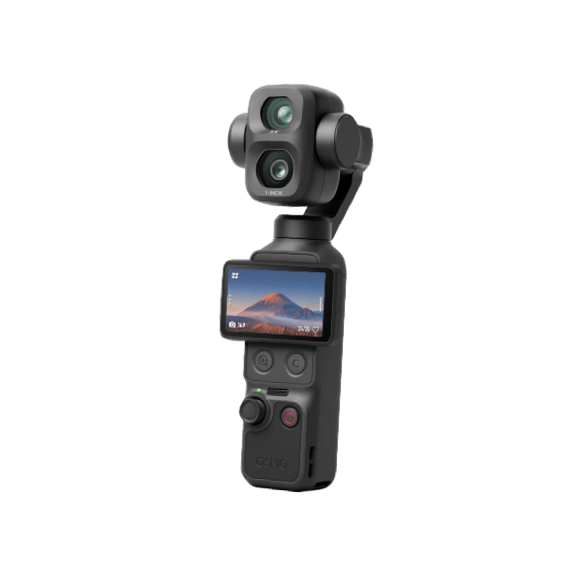
Osmo Pocket 4P
A dual-camera pocket cinema tool for creators who need wide context and a dedicated 60mm perspective for people, products, food, performances, and distant details.
- Wide camera1-inch / 20mm f/2.0
- Mid-tele camera1/1.28-inch / 60mm f/1.8
- Slow motion4K/240 + 4K/200
- Dynamic rangeUp to 17 stops
- Battery reference210 minutes
- Storage103GB built in
The value benchmark still holds up.
Pocket 3 remains the easiest entry point into the DJI Pocket ecosystem. Its 1-inch sensor, 20mm f/2.0 lens, three-axis mechanical gimbal, 4K/120fps slow motion, and ActiveTrack 6.0 still cover the needs of most casual creators.
The main trade-offs are simple: there is no built-in storage, runtime is shorter than Pocket 4, and you do not get the newer 4K/240fps or 14-stop D-Log workflow.
For beginners, students, families, travel users, and creators who do not need the latest specifications, the price difference can be more valuable than the feature difference.
Buy Pocket 3 when your priority is getting excellent stabilized video at the lowest entry cost.
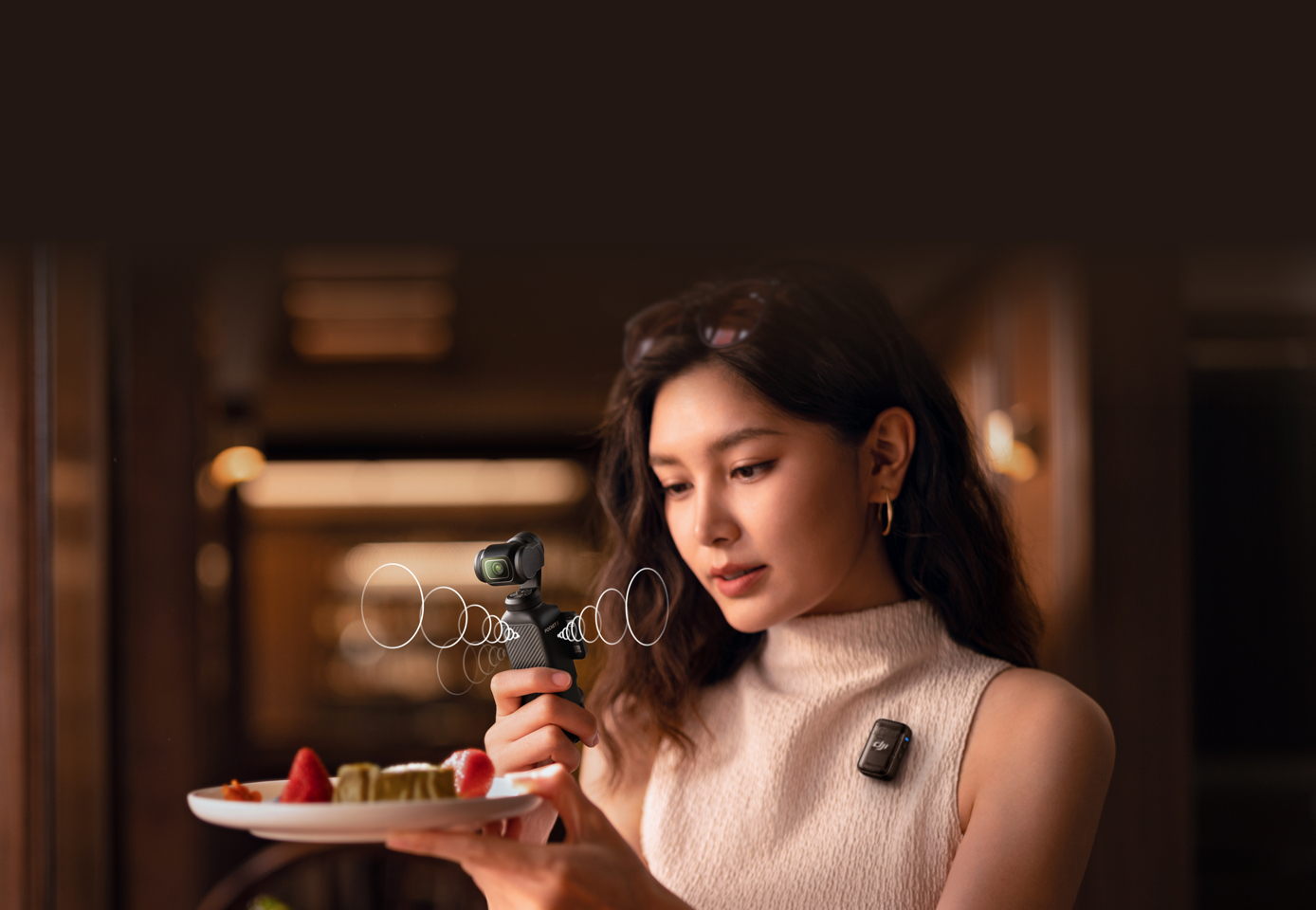
The default recommendation for most people.
Pocket 4 is the strongest balance of cost and capability. It keeps the familiar pocket-sized gimbal format while improving image quality, dynamic range, subject tracking, storage, transfer speed, and operating time.
The 107GB of built-in storage is a practical upgrade. It means you can start recording without immediately relying on a memory card, while microSD expansion remains available for longer shoots.
Its 4K/240fps mode is designed for slow motion, not normal everyday recording. For most buyers, the bigger day-to-day advantages are the improved workflow, longer battery reference, stronger tracking, and more flexible post-production colour.
Buy Pocket 4 when you want one compact camera that can handle almost everything without becoming a full camera system.
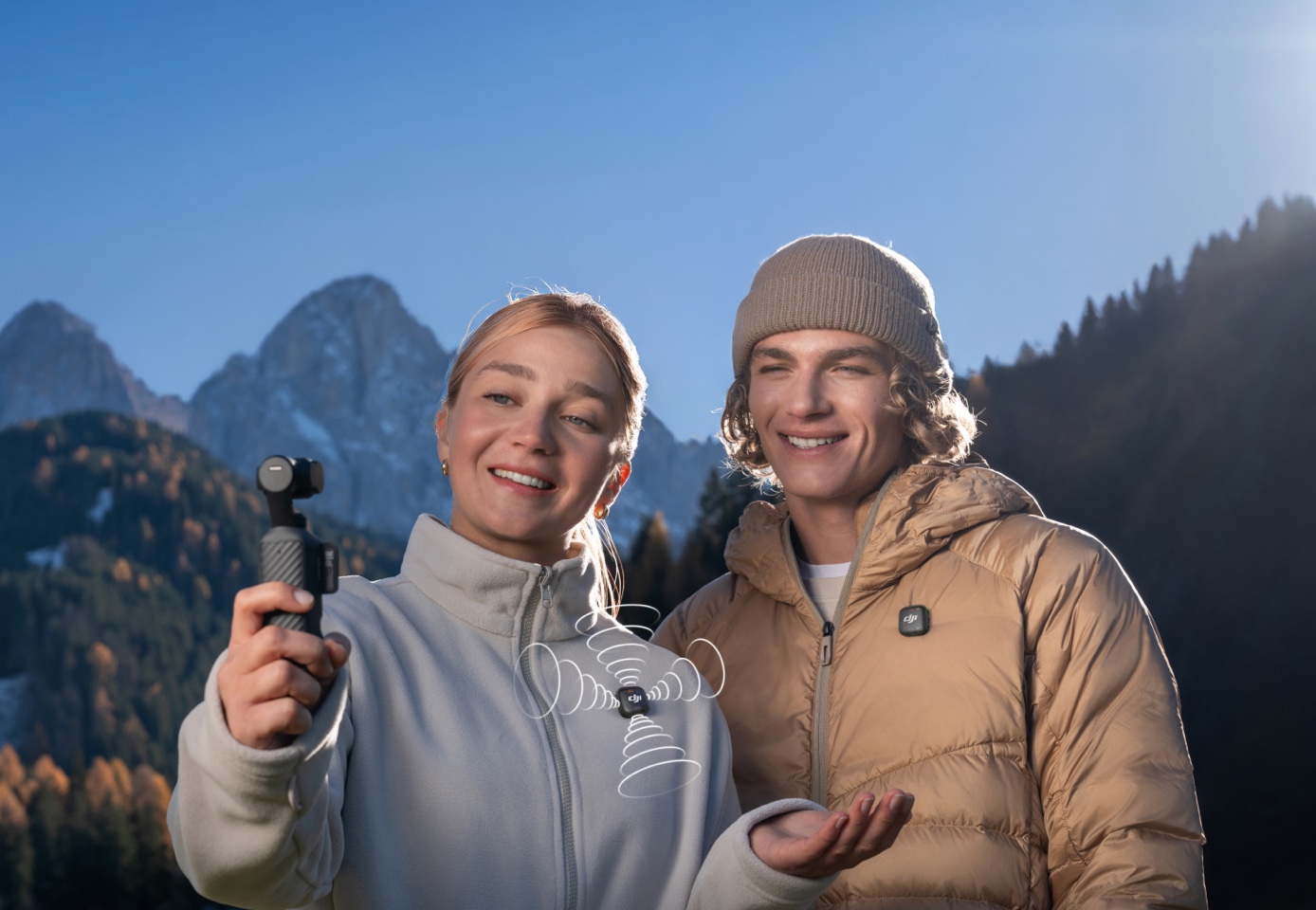
Two cameras change the way you frame a story.
Pocket 4P is not automatically the best option for every buyer. Its value comes from the physical 60mm mid-tele camera. When portraits, products, food, performances, street details, and tighter B-roll are part of your normal workflow, that second perspective can replace constant cropping, awkward camera movement, or extra gear.
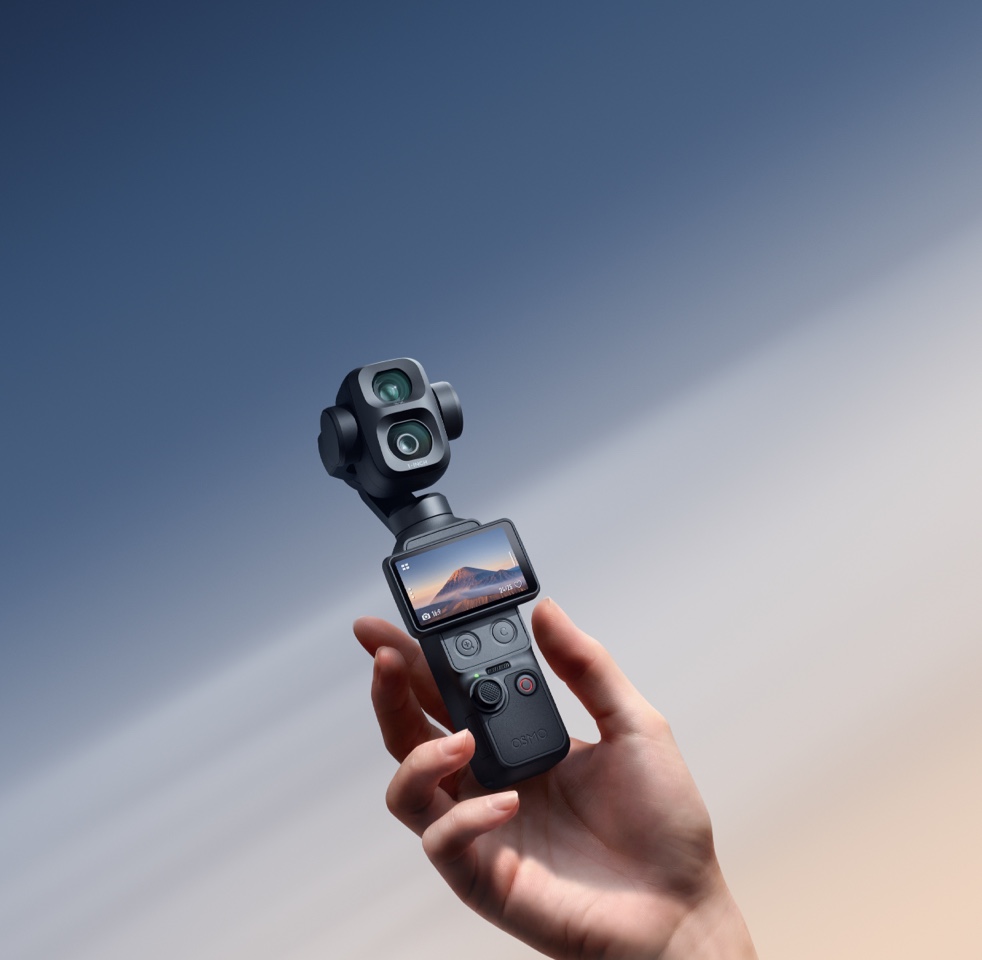

Show the world.
Use the 1-inch wide camera for travel, vlogs, interiors, walking shots, landscapes, groups, and scenes where the environment is part of the story.

Show what matters.
Use the 60mm f/1.8 camera for portraits, products, food, stage footage, travel details, and more natural subject framing from a comfortable distance.
The differences that actually affect buying.
Official maximum specifications can depend on mode, colour profile, frame rate, zoom setting, temperature, screen use, and other test conditions. Use this table as a buying guide, not as a promise that every maximum can be combined at once.
What should you buy today?
A higher model number does not automatically create better content. The right purchase is the least expensive model that reliably covers the shots, workflow, and delivery quality you need.
Pocket 3 vs Pocket 4 vs Pocket 4P FAQ
Which DJI Pocket camera is best for most people?
Pocket 4 is the best overall choice for most buyers. It combines a 1-inch sensor, 14-stop dynamic range, 4K/240fps slow motion, 107GB of built-in storage, longer reference runtime, ActiveTrack 7.0, and a compact three-axis gimbal body.
Is Pocket 4 worth the extra cost over Pocket 3?
Yes, when you will use the upgrades. Pocket 4 adds stronger dynamic range, 4K/240fps slow motion, 107GB built-in storage, longer reference runtime, faster file transfer, newer tracking, and a more efficient workflow. Pocket 3 remains the better value when those features are not important to you.
Should a beginner buy Pocket 3 or Pocket 4?
Choose Pocket 3 when budget is the main concern. Choose Pocket 4 when you can afford the difference and want a camera with more room to grow. Both are beginner friendly, but Pocket 4 offers a stronger long-term feature set.
What is the biggest difference between Pocket 4 and Pocket 4P?
Pocket 4 uses one 20mm wide camera. Pocket 4P adds a separate 60mm f/1.8 mid-tele camera with a 1/1.28-inch sensor. That second physical camera is the main reason to choose Pocket 4P.
Is the Pocket 4P 60mm view a real optical camera or a digital crop?
It is a separate physical mid-tele camera. The 60mm equivalent lens has its own 1/1.28-inch CMOS sensor and f/1.8 aperture.
Which model is best for vlogging?
Pocket 4 is the best all-round vlogging choice. Pocket 3 is the budget choice. Pocket 4P is the better option when your vlog also includes portraits, food, products, stage footage, or tighter travel details.
Which model is best for portraits and product videos?
Pocket 4P is the strongest option because its 60mm f/1.8 mid-tele camera provides tighter, more natural-looking framing than the standard 20mm wide view. Pocket 4 can still produce good portraits and product clips, but it does not have the dedicated 60mm camera.
Does Pocket 4P support D-Log 2 on both cameras?
No. DJI states that 10-bit D-Log 2 is supported at 1x, which corresponds to the wide-camera workflow. Do not assume that the 60mm camera records D-Log 2.
Can Pocket 4 and Pocket 4P record 4K/240fps in normal video mode?
No. The 4K/240fps specification applies to Slow Motion mode. Normal recording modes use lower frame-rate limits.
Does Pocket 3 have built-in storage?
No. Pocket 3 requires a compatible microSD card. Pocket 4 includes 107GB of built-in storage, while Pocket 4P includes 103GB.
What do the battery runtime numbers mean?
They are reference results measured under specific laboratory conditions, commonly at 1080p/24fps with Wi-Fi and the screen turned off. Higher resolution, higher frame rates, tracking, wireless use, screen brightness, temperature, and continuous operation can reduce real-world runtime.
What are the current Canadian prices?
At the time of writing, SpeedyDrone lists the Pocket 3 Standard Combo at CAD $505.99 and the Pocket 4 Standard Combo at CAD $649.00. This guide intentionally does not state an exact Pocket 4P Canadian price. Check the product page or contact SpeedyDrone for the latest price and stock status.
Can I see or pick up a DJI Pocket camera in Toronto?
SpeedyDrone offers a downtown Toronto showroom and local pickup on eligible in-stock products. Contact the store before visiting if you need confirmation of a specific model, combo, colour, or demo unit.

Choose the camera that fits the way you shoot.
Visit SpeedyDrone in downtown Toronto for local guidance, pickup, accessories, and help comparing Pocket 3, Pocket 4, and Pocket 4P availability.


