


Which DJI pocket gimbal camera best fits your work? This Canada-focused guide compares Osmo Pocket 4P, Pocket 4 and Pocket 3 using DJI’s published specifications, plus practical differences in lenses, colour workflow, slow motion, tracking, storage, battery life and current buying status.
Consider Osmo Pocket 4P when its dedicated 60mm camera will improve portraits, products, events and tighter B-roll—and when Canadian availability fits your timing. Choose Pocket 4 for the strongest current all-round balance and longest rated runtime. Choose Pocket 3 for a proven, lower-cost entry when 4K/120fps and a microSD-based workflow are enough.
Three Pocket cameras. Three different buying decisions.
Pocket 4P is not simply a Pocket 4 with a larger zoom number. Its second physical camera changes how creators frame portraits, products, performances and travel details, but it is not automatically the best choice for every buyer. Pocket 4 remains the simpler single-camera flagship, while Pocket 3 continues to be the proven lower-cost option.
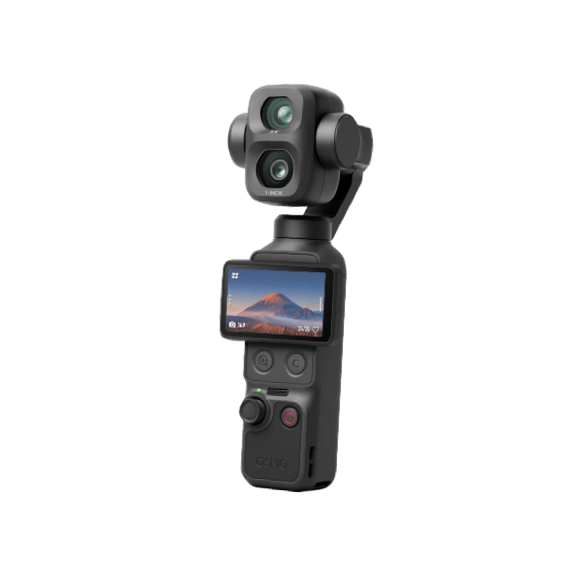
For creators who need two real perspectives
- 20mm wide and 60mm med-tele physical cameras
- Up to 17 stops in D-Log 2 at 1×
- Up to 4K/240fps wide and 4K/200fps med-tele slow motion
- Best for portraits, events, documentary and tighter B-roll
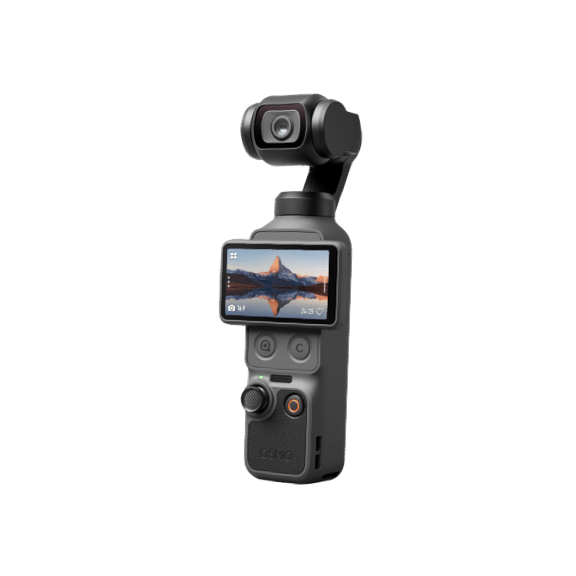
The strongest all-round Pocket choice
- New 1-inch CMOS and 20mm f/2.0 lens
- 14-stop dynamic range and 10-bit D-Log
- 4K/240fps slow motion and 2× lossless zoom
- 240-minute rated operating time at 1080p/24fps
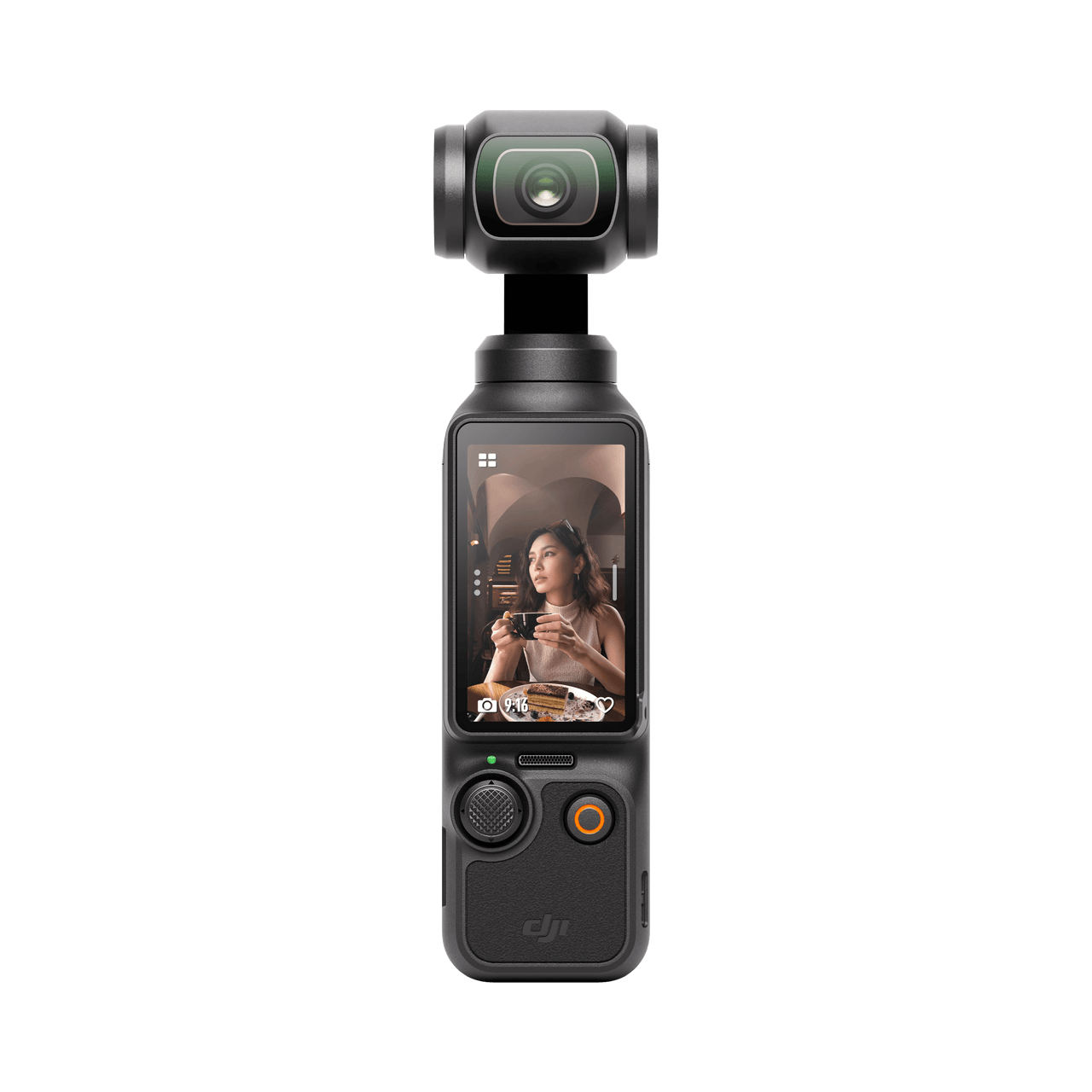
The proven value option
- 1-inch CMOS and 20mm f/2.0 lens
- 4K/120fps slow motion
- ActiveTrack 6.0 and 3-axis stabilization
- Ideal when price matters more than the newest features
| Feature | Osmo Pocket 4P | Osmo Pocket 4 | Osmo Pocket 3 |
|---|---|---|---|
| Camera system | Dual physical cameras | Single camera | Single camera |
| Sensor | Wide: new 1-inch CMOS Med-tele: 1/1.28-inch CMOS |
New 1-inch CMOS | 1-inch CMOS |
| Lens | 20mm f/2.0 + 60mm f/1.8 | 20mm f/2.0 | 20mm f/2.0 |
| Maximum dynamic range (DJI-rated) | Up to 17 stops in D-Log 2 at 1× | Up to 14 stops | 12.5 stops |
| Maximum slow motion | Wide: 4K/240fps Med-tele: 4K/200fps Slow Motion mode |
4K/240fps Slow Motion mode |
4K/120fps Slow Motion mode |
| Zoom advantage | Dedicated 60mm optical camera; up to 12× video zoom* | 2× lossless zoom; tracking up to 4× | Digital zoom workflow |
| Subject tracking | ActiveTrack 8.0; tracking supported up to 12× in supported modes | ActiveTrack 7.0; tracking supported up to 4× | ActiveTrack 6.0 |
| Built-in storage | 103GB | 107GB | None |
| Rated operating time | Up to 210 minutes | Up to 240 minutes | Up to 166 minutes |
| Charging | 80% in 18 min; 100% in 32 min | 80% in 18 min | 80% in 16 min |
| Best suited to | Portraits, interviews, event details, cinematic B-roll | Travel, family, vlogging and long all-day use | Everyday content and best-value entry |
| Canada buying status | Confirm current Canadian availability and pricing | Available through Canadian retail channels | Available through Canadian retail channels |
Swipe the table on smaller screens. *DJI states that 12× digital zoom is unavailable in Photo, Low-Light, Slow Motion and Timelapse modes. 10-bit D-Log 2 is supported only at 1× zoom. Maximum specifications are not necessarily available simultaneously. Dynamic-range and operating-time figures are DJI-rated laboratory results and vary with mode, settings and environment.
Why Pocket 4P’s 20mm + 60mm design matters
Osmo Pocket 4P uses two physical cameras rather than one camera with a single lens. The wide camera combines a 1-inch sensor with a 20mm-equivalent f/2.0 lens. The med-tele camera uses its own 1/1.28-inch sensor and a 60mm-equivalent f/1.8 lens.
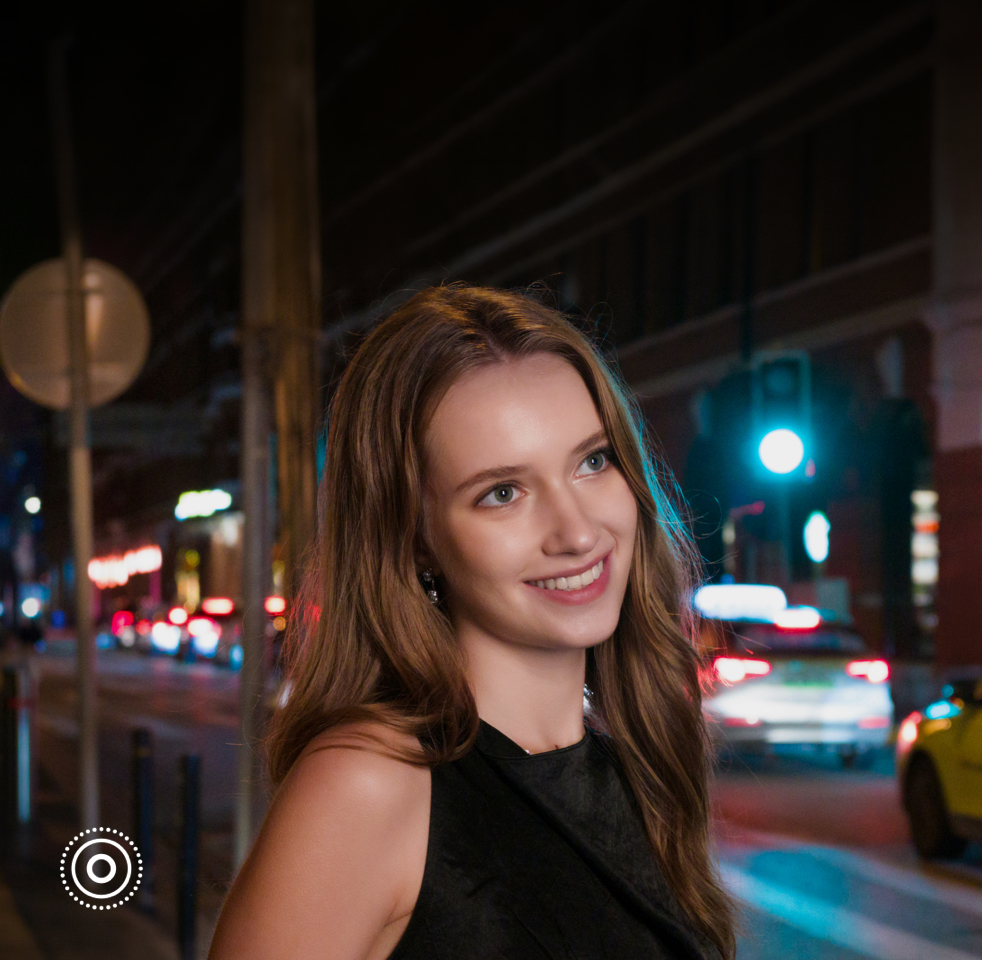
The 60mm view is especially useful for portraits because it creates a more natural facial perspective than a wide lens used from very close range. It also helps isolate products, food, stage performers, architecture details and street scenes.
Important: the two cameras do not record simultaneously or combine their footage.
Pocket 4P switches between dedicated 20mm and 60mm camera modules. The 60mm view is a separate optical camera—not a continuous optical zoom—and intermediate or higher zoom levels may use digital zoom depending on mode.

17-stop D-Log 2 is powerful—but the fine print matters
DJI rates the wide camera at up to 17 stops of dynamic range in D-Log 2. This is a manufacturer-supplied maximum rather than an independent SpeedyDrone measurement; in supported settings, it gives experienced editors more latitude for high-contrast scenes and colour grading.

D-Log 2 limitation: 10-bit D-Log 2 is supported only at 1× zoom.
That means the highest-latitude D-Log 2 workflow belongs to the wide-camera view. The 60mm camera’s main advantage is its optical perspective, f/1.8 aperture and portrait rendering—not identical D-Log 2 performance across both cameras.
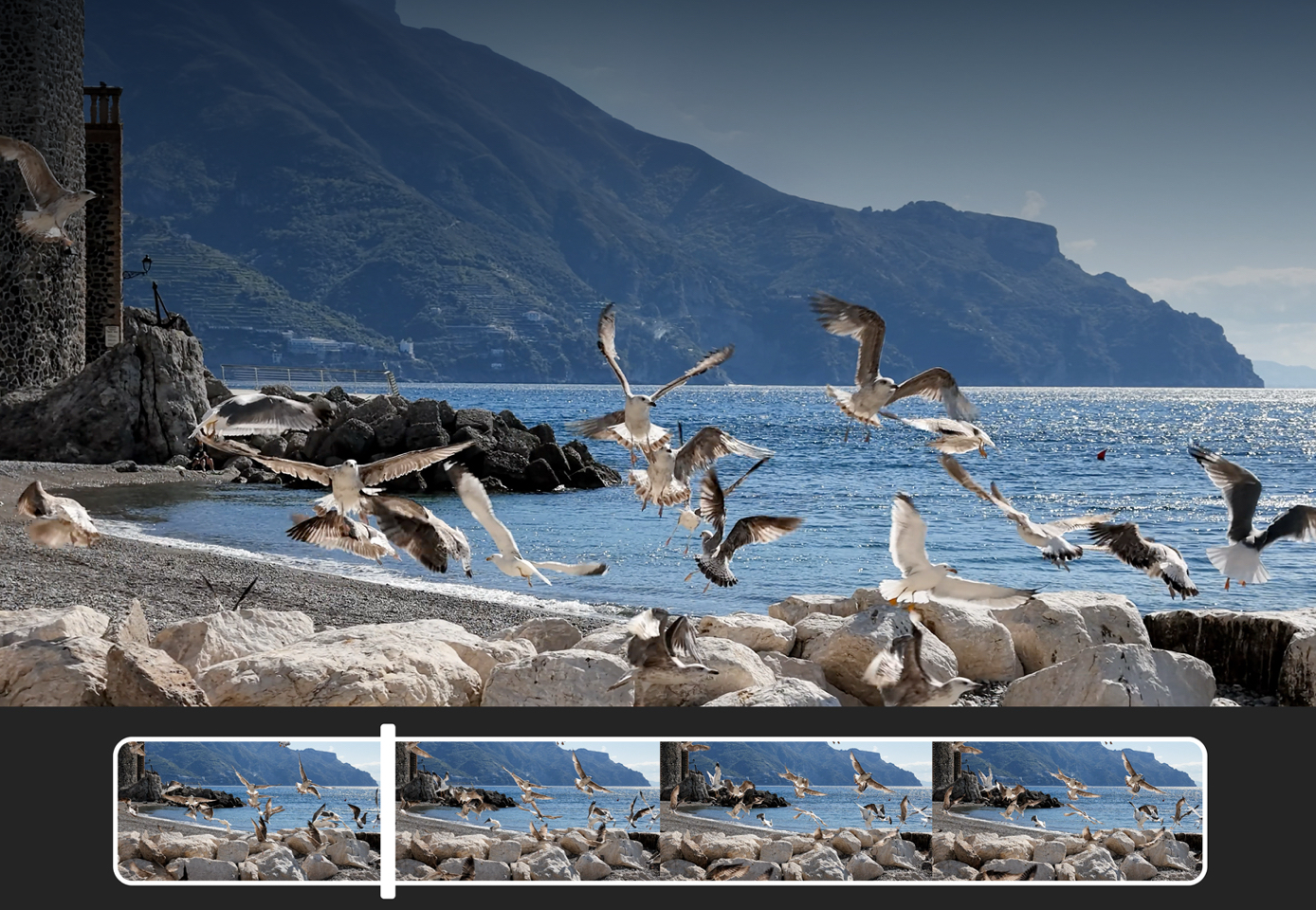
Who benefits most from the higher specifications?
- Filmmakers matching shots across professional colour workflows
- Event creators who move between wide scenes and distant details
- Interview and portrait shooters who want a more natural focal length
- Product creators who need wide talking shots plus tight detail B-roll
- Travel creators who do not want to carry interchangeable lenses
ActiveTrack 8.0 makes the zoom useful for moving subjects
Pocket 4P combines three-axis mechanical stabilization with ActiveTrack 8.0. DJI lists subject tracking distances that extend farther as zoom increases, including tracking from approximately 3 to 50 metres at 6× to 12× under supported conditions. Gesture-control range also increases at longer zoom settings.
DJI also adds Multi-Person Tracking for up to eight people. The camera can dynamically reframe to include people who enter the shot, although zoom cannot be changed while Multi-Person Tracking is active.
ActiveTrack is not supported in Panorama, Timelapse, Motionlapse, SpinShot or Low-Light Video modes, or in certain high-speed slow-motion settings. It is also unavailable when the gimbal is in FPV mode and the device is held horizontally. DJI recommends using tracking in well-lit environments.
Which DJI Pocket camera should you buy?
You shoot people, products or events
The dedicated 60mm camera is the reason to consider Pocket 4P. It gives portraits and detail shots an optical perspective that the single 20mm camera models cannot reproduce without cropping or digital zoom. Confirm Canadian availability before planning a purchase.
You want the best all-round balance
Pocket 4 combines the newer 1-inch imaging system, up to 4K/240fps in Slow Motion mode, a DJI-rated 14-stop D-Log workflow, built-in storage and the longest rated runtime without paying for a second camera.
You want strong results for less
Pocket 3 remains a capable stabilized 1-inch creator camera. Its value case is strongest when its current Canadian price is meaningfully lower and 4K/120fps, ActiveTrack 6.0 and microSD storage already cover your workflow.
Upgrade from Pocket 3?
Consider Pocket 4P—once Canadian availability and pricing are confirmed—when the second 60mm camera, D-Log 2 latitude, stronger zoom, built-in storage or higher-frame-rate 4K slow motion will materially improve your work. For simple daily vlogging, Pocket 3 may still be sufficient.
DJI Osmo Pocket 4P price and availability in Canada
As of July 30, 2026, Osmo Pocket 4P has launched in selected markets, but DJI’s Canadian online store does not yet show a Canadian Pocket 4P product page or MSRP. Treat it as a coming-soon option in Canada until an official Canadian listing or authorized local inventory is confirmed.
Do not treat overseas pricing as final Canadian pricing. Canadian buyers should verify the sales channel, regional warranty and DJI Care Refresh eligibility, included accessories, taxes, local pickup and Canada-wide shipping before ordering.
Compare your Pocket camera options with SpeedyDrone Canada
SpeedyDrone Canada offers DJI product guidance, Toronto showroom pickup on eligible products and Canada-wide shipping. Use the Pocket 4P collection to check the latest Canadian availability, bundles and purchase options before ordering.
What comes with Osmo Pocket 4P?
DJI’s official Pocket 4P Standard Combo listing includes the following items in markets where this bundle is offered. Canadian bundle contents should be confirmed at the time of purchase:
- Osmo Pocket 4P
- USB-C to USB-C PD Cable (USB 3.1)
- Osmo Pocket 4 Fill Light
- DJI Wrist Strap
- Osmo Pocket 4 Handle With 1/4-inch Thread
- Osmo Pocket Pro Portable Carrying Pouch
Useful day-one add-ons: compatible battery handle, DJI microphone transmitter, ND filters, screen protection and a compact tripod.
The Battery Handle can add approximately 130 minutes of operating time to Pocket 4P under DJI’s stated 1080p/24fps laboratory conditions.
Where Pocket 4P makes the biggest practical difference
Toronto street and travel
Use 20mm for city context and 60mm for architectural details, performers and candid-looking portraits from a more comfortable distance.
Events and business content
Capture the venue, then move to tighter speaker, guest, product and stage shots without changing cameras or adding a lens.
Product and retail videos
Film a wide host segment at 20mm, then switch to 60mm for more polished close-ups, demonstrations and detail B-roll.
DJI Osmo Pocket 4P FAQ
Is DJI Osmo Pocket 4P a real dual-lens camera?
Yes. It uses two physical cameras: a 20mm-equivalent wide camera and a 60mm-equivalent med-tele camera.
Do both Pocket 4P cameras record at the same time?
No. DJI states that the device switches to the appropriate physical camera based on zoom level rather than recording and combining both camera feeds simultaneously.
Is the 60mm lens optical or a digital crop?
It is a dedicated fixed 60mm-equivalent optical camera with its own 1/1.28-inch CMOS sensor. It is not cropped from the 20mm wide-camera image, but the system is not a continuous optical zoom lens.
What is the biggest difference between Pocket 4P and Pocket 4?
Pocket 4P adds the second 60mm f/1.8 camera, up to 17-stop D-Log 2 performance at 1×, stronger zoom capability and a faster 1/16000-second electronic shutter.
Does D-Log 2 work on the 60mm camera?
DJI states that 10-bit D-Log 2 is supported only at 1× zoom, which corresponds to the wide-camera workflow.
How much slow motion can Pocket 4P record?
The wide camera supports up to 4K/240fps slow motion. The 60mm med-tele camera supports up to 4K/200fps slow motion.
How long does the Pocket 4P battery last?
DJI rates Pocket 4P for up to 210 minutes when recording 1080p/24fps under specified laboratory conditions. A compatible Battery Handle can add approximately 130 minutes.
Does Pocket 4P have built-in storage?
Yes. DJI lists 103GB of usable built-in storage. DJI says that this can store roughly 570 minutes of 1080p/24fps footage or 210 minutes of 4K/60fps footage at standard bitrate; storage time is not the same as battery life.
Can Pocket 4P livestream?
Yes, through the DJI Mimo app, but platform support matters. DJI’s current guidance says direct overseas Facebook and YouTube livestreaming is not supported, while RTMP streaming is available. Platform and connection support can change with app or firmware updates.
Is Pocket 4P better than Pocket 3 for vlogging?
Not automatically. Pocket 4P is more flexible for portraits, event details, zoomed tracking, built-in storage and advanced grading, while Pocket 3 may be the better-value choice for creators who mainly need stabilized 20mm vlogging and 4K/120fps.
What is the DJI Osmo Pocket 4P price in Canada?
As of July 30, 2026, DJI’s Canadian online store does not show an official Pocket 4P MSRP. Confirm Canadian pricing through the Canadian retail channel; overseas prices are not final Canadian MSRP because currency, tax, bundles, inventory and regional warranty terms differ.
- DJI Store: Osmo Pocket 4P product information and comparison
- DJI Media Center: Osmo Pocket 4P Cannes announcement
- DJI Support: Beginner’s Guide to Osmo Pocket 4P
- DJI Support: Osmo Pocket series charging guide
- DJI Store Canada: Pocket 4 and Pocket 3 official comparison
Product specifications, firmware features, package contents, pricing and availability may change. Performance figures in this guide are DJI-published maximums or laboratory ratings unless otherwise stated; they are not independent SpeedyDrone test results. Confirm the latest Canadian product listing before purchase. DJI, Osmo and related product names are trademarks of DJI.


