


DJI Osmo Pocket 4 vs Insta360 Luna Ultra
Pocket 4 is a lighter, faster and more affordable single-camera creator tool. Luna Ultra is a dual-camera 8K system with a detachable remote screen. This complete comparison goes beyond headline specifications to examine image quality, slow motion, zoom, tracking, audio, battery, storage, Canadian pricing and real creator workflows.

DJI Osmo Pocket 4
20 mm f/2.0, 4K/240fps, 14-stop D-Log, 190.5 g.
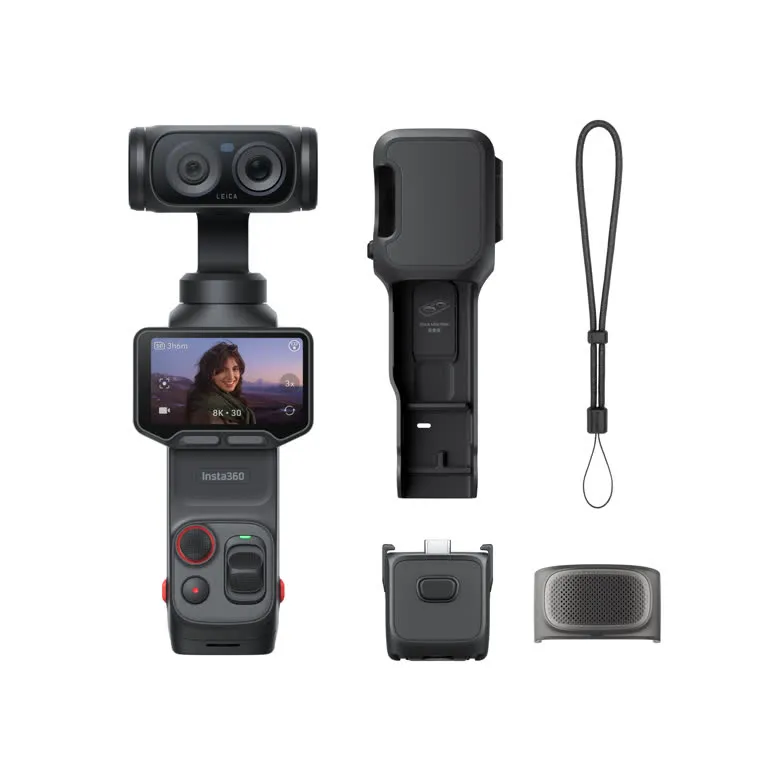
Insta360 Luna Ultra
20 mm f/1.8 plus 60 mm f/2.0, 8K/30fps, detachable screen, 233-235 g.
Pocket 4 is the better value. Luna Ultra is the more ambitious camera.
Pocket 4 is easier to recommend for most travel creators, vloggers, families and social producers. Luna Ultra earns its premium when 8K reframing, a dedicated telephoto perspective and an included remote monitor are central to the workflow rather than occasional features.
For faster everyday creation.
- 4K/240fps slow motion.
- 190.5 g body and simpler one-lens workflow.
- 107 GB usable internal storage.
- Up to 800 MB/s wired transfer.
- Direct DJI Mic integration and four-channel audio output.
- Lower Canadian entry price.
For framing freedom and solo production.
- 8K/30fps capture.
- Physical 20 mm and 60 mm cameras.
- 6x lossless or clarity zoom and 12x maximum zoom.
- Detachable remote screen with live preview.
- PureVideo up to 4K/60fps.
- Four microphones including one in the remote screen.
8K and 240fps solve different problems.
- 8K gives Luna more room for reframing.
- 4K/240 gives Pocket 4 more high-resolution slow motion.
- Both claim 14 stops in their log profiles.
- Luna has the stronger lens system.
- Pocket 4 has the cleaner storage and transfer workflow.
- A controlled test is required for an absolute image-quality winner.
Resolution, motion, lenses and remote control.
The cameras share a 1-inch main sensor and 20 mm wide perspective, but nearly every major workflow decision after that point is different.
The strongest specification for sports, water, dance, pets and dramatic slow motion.
More pixels for reframing, stabilization and high-resolution master files.
A dedicated telephoto camera changes portraits, products, food and detail shots.
More than twice Luna's internal storage and faster manufacturer-rated transfer.
The details that change the buying decision.
Maximum features may not be available in every frame rate, colour profile, aspect ratio or zoom position. Use this table as a buying guide, then verify the exact mode you plan to use.
| Category | DJI Osmo Pocket 4 | Insta360 Luna Ultra |
|---|---|---|
| Release date | April 16, 2026 | June 10, 2026 |
| Main camera | 1-inch CMOS, 20 mm equivalent, f/2.0, 20 cm minimum focus | 1-inch sensor, 20 mm equivalent, f/1.8, 9 cm minimum focus |
| Telephoto camera | None | 1/1.3-inch sensor, 60 mm equivalent, f/2.0, 15 cm minimum focus Lens advantage |
| Maximum normal video | 4K/60fps | 8K/30fps and 4K/120fps Resolution winner |
| Maximum slow motion | 4K/240fps and 1080p/240fps Slow-motion winner | 4K/120fps and 1080p/240fps |
| Professional colour | 10-bit D-Log, manufacturer-rated up to 14 stops | 10-bit I-Log, manufacturer-rated up to 14 stops |
| HDR and processed looks | D-Log, Film Tone, Beautify and Low-Light Video | Dolby Vision, I-Log, Leica looks, Beautify and PureVideo |
| Maximum video bitrate | 180 Mbps Higher ceiling | 120 Mbps |
| Photo resolution | Approximately 37 MP; JPEG and DNG | Up to 37 MP UltraPhoto plus 200 MP panorama; JPG and RAW |
| Zoom | 2x lossless; up to 4x digital in supported modes | Physical 3x telephoto, 6x lossless or clarity zoom and up to 12x Zoom winner |
| Tracking | ActiveTrack 7.0, gesture control, Dynamic Framing, tracking up to 4x zoom | Single, group, pet and object tracking; up to eight people; zoom following up to 12x |
| Remote monitoring | DJI Mimo phone workflow; no detachable monitor included | Detachable 2-inch OLED with preview and control up to 20 m in ideal conditions Remote winner |
| Screen | 2-inch OLED, 556 x 314, 1000 nits, rotating | 2-inch OLED, 318 x 564, 1000 nits, rotating and detachable |
| Built-in microphones | 3 | 4: three on main unit plus one on detachable screen |
| Wireless microphone support | Up to two compatible DJI Mic transmitters; four-channel OsmoAudio output | Up to two Insta360 Mic Air or Mic Pro transmitters; built-in backup audio supported |
| Internal storage | 128 GB physical, 107 GB usable Storage winner | 47 GB |
| microSD support | Up to 1 TB | Support documentation recommends UHS-I V30 cards no larger than 1 TB |
| Wired transfer | Up to 800 MB/s from internal storage | Up to 350 MB/s from internal storage with a USB 3.0 cable |
| Wireless transfer | Up to 90 MB/s | Approximately 70-80 MB/s in laboratory testing |
| Maximum laboratory runtime | 240 minutes at 1080p/24fps, screen and Wi-Fi off | 240 minutes at 1080p/24fps, screen and Wi-Fi off Headline tie |
| High-resolution runtime detail | DJI does not publish the same mode-by-mode table on the product page | About 1h50 at 8K/30, 2h at 4K/60 and 2h30 at 4K/30 |
| Charge to 80 percent | About 18 minutes Faster | About 23 minutes |
| Full charge | About 32 minutes | About 38 minutes |
| Weight | 190.5 g Lighter | 233 g black; 235 g white |
| Dimensions | 144.2 x 44.4 x 33.5 mm | 52.4 x 169.9 x 38.5 mm |
| Gimbal maximum control speed | 180 degrees per second | 210 degrees per second |
| Livestreaming | Supported through DJI Mimo; platform availability varies | Official support currently says live streaming is not supported |
| Weather protection | Protect from rain, condensation, sand and fine debris | Explicitly not waterproof, splashproof or dustproof |
One excellent wide camera or two distinct perspectives?
Pocket 4 focuses the entire product around a refined 20 mm camera. Luna Ultra starts with a similar wide perspective and adds a physical 60 mm camera, which changes composition more meaningfully than digital zoom alone.

Context, movement and fast handheld work.
The 20 mm field of view is a strong all-purpose choice for travel, walk-and-talk footage, family scenes, interiors and vertical social content.
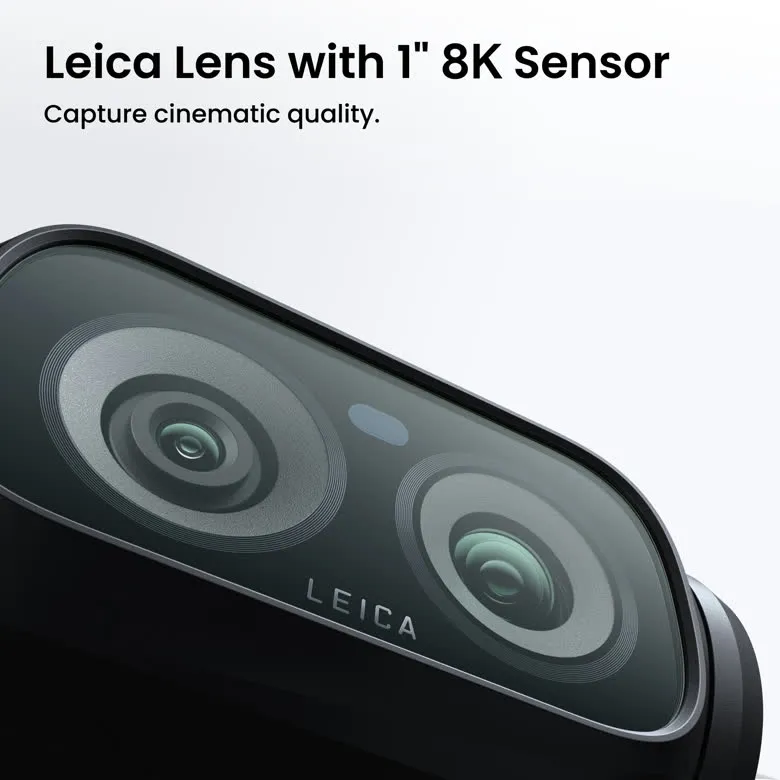
Wide context plus compressed detail.
The 60 mm camera gives Luna a different optical perspective for portraits, products, food, performance details and background separation.
Simplicity and consistency.
One main camera means fewer colour and sensor transitions, faster decisions and a lighter body. The dedicated Zoom button moves quickly between 1x, 2x and 4x framing.
- Excellent for wide, handheld storytelling.
- 2x lossless zoom for moderate reframing.
- 37 MP stills and 180 Mbps video ceiling.
- Full-pixel PDAF focusing.
More visual language in one body.
A physical telephoto camera can create a different relationship between subject and background that a wide-camera crop cannot fully reproduce.
- 20 mm f/1.8 wide camera.
- 60 mm f/2.0 telephoto camera.
- 6x lossless or clarity zoom.
- 12x maximum framing in supported modes.
Choose post-production freedom or motion freedom.
Luna Ultra's 8K mode is useful when the final edit needs substantial cropping or a high-resolution master. Pocket 4's 4K/240fps mode is useful when motion itself becomes the creative effect.
Reframe a horizontal master.
Luna can provide more room for a second composition, moderate stabilization or a crop into vertical social media. File size, processing load and thermal conditions still matter.
Pick Luna UltraTurn one second into a dramatic moment.
Pocket 4 is the stronger choice for water splashes, sports, dance, animals, vehicles and cinematic B-roll when the final project needs detailed slow motion.
Pick Pocket 4Most viewers still receive 4K or less.
For ordinary 4K delivery, exposure, focus, colour, camera movement and sound may matter more than the maximum sensor readout.
Test your workflowBoth claim 14 stops. Their low-light strategies differ.
Pocket 4 combines 10-bit D-Log, a dedicated Low-Light Video mode and a 180 Mbps maximum bitrate. Luna Ultra combines 10-bit I-Log, an f/1.8 wide lens, Dolby Vision and PureVideo processing up to 4K/60fps.
More bitrate and a straightforward grading path.
- 10-bit D-Log with manufacturer-rated 14 stops.
- Low-Light Video up to 4K/30fps.
- ISO up to 25,600 in Low-Light Video.
- Maximum bitrate of 180 Mbps.
- Film Tone and Beautify for faster delivery.
More processed low-light and HDR options.
- 10-bit I-Log with manufacturer-rated 14 stops.
- PureVideo up to 4K/60fps.
- 8K Dolby Vision recording.
- Native I-Log support inside DaVinci Resolve.
- I-Log cannot be combined with Dolby Vision, PureVideo or Beautify.
Pocket 4 follows efficiently. Luna Ultra monitors remotely.
Tracking matters when one person must perform and operate the camera. Remote preview matters when the camera is positioned across a room, above a desk or away from the operator.
Fast handheld and social-first control.
- Tracks subjects at up to 4x zoom.
- Supports Dynamic Framing and subject-lock focusing.
- Palm gesture can toggle tracking.
- V gesture can take a photo or start and stop recording.
- DJI Mimo supports phone preview and control.
More integrated fixed-position control.
- Tracks people, pets and manually selected objects.
- Supports up to eight-person group tracking.
- Zoom following works up to 12x.
- Detachable screen provides live preview and parameter control.
- Screen microphone can capture audio closer to the subject.
The ecosystem matters more than the microphone count.
Both cameras can record usable ambient sound and connect two wireless transmitters. The stronger choice depends on which wireless system, internal recording, receiver workflow and backup strategy you already use.
| Audio feature | DJI Osmo Pocket 4 | Insta360 Luna Ultra |
|---|---|---|
| Built-in microphones | Three-microphone array | Four microphones including detachable-screen microphone |
| Direct transmitters | Up to two DJI Mic 2, Mic 3, Mic Mini, Mic Mini 2 or Mic Mini 2S transmitters | Up to two Insta360 Mic Air or Mic Pro transmitters |
| Receiver required | No for supported direct Bluetooth transmitters | No for supported Insta360 Bluetooth transmitters |
| Built-in backup audio | OsmoAudio four-channel output supports flexible source recording | Built-in Audio Sync can create a separate backup audio file |
| Third-party Bluetooth support | Use DJI's listed compatibility for direct connection | Official support currently limits direct microphone compatibility to Mic Air and Mic Pro |
| Best reason to choose | Existing DJI Mic ecosystem and Creator Combo with Mic 3 transmitter | Detachable-screen microphone and Creator Bundle with Mic Pro transmitter |
Pocket 4 is the cleaner high-volume workflow.
Luna's 8K files create more demand for storage and processing, while Pocket 4 supplies more internal capacity and faster manufacturer-rated transfers. Luna provides more detailed mode-specific battery references.
107 GB versus 47 GB.
Pocket 4 offers more than twice the usable internal storage. Luna estimates approximately 35 minutes of 8K/30 recording in its 47 GB internal storage.
Pick Pocket 4Both advertise 240 minutes.
Both maximums use 1080p/24fps with the screen and wireless functions reduced. They should not be treated as 8K or 4K high-frame-rate runtimes.
Headline tie18 minutes versus 23 minutes to 80 percent.
Pocket 4 reaches 80 percent sooner and completes a laboratory full charge in about 32 minutes compared with about 38 minutes for Luna.
Pick Pocket 4800 MB/s versus 350 MB/s.
Pocket 4 has the stronger official internal-storage transfer ceiling. Real speed depends on cable, computer, port and file structure.
Pick Pocket 4About 1 hour 50 minutes.
Luna publishes an 8K/30fps runtime reference, which gives creators a more practical planning number for its headline mode.
Luna detail advantageAbout 70 minutes at 4K/30.
Luna's detachable-screen workflow uses more power. This trade-off matters for interviews and fixed-position solo filming.
Plan extra powerThe best camera changes with the production.
Do not buy the most impressive specification. Buy the workflow you will use every week.
Carry less and shoot longer.
Pocket 4 is lighter, less expensive and has more internal storage for long travel days.
Pocket 4Monitor yourself across the room.
Luna's detachable screen is the more complete built-in remote-production system.
Luna UltraHigh-resolution slow motion wins.
Pocket 4's 4K/240fps specification gives it a clear motion advantage.
Pocket 4Use a real 60 mm perspective.
Luna's physical telephoto camera creates more flattering framing and detail isolation.
Luna UltraDJI has the current support advantage.
Pocket 4 supports DJI Mimo live streaming, while Luna's support page currently says live streaming is unavailable.
Pocket 4More room in post.
Luna is the only camera in this comparison with native 8K recording.
Luna UltraFast startup and lower cost matter.
Pocket 4 is easier to recommend when telephoto and remote monitoring are not essential.
Pocket 4PureVideo adds another option.
Luna offers a dedicated processed low-light workflow up to 4K/60fps.
Luna UltraTest D-Log against I-Log.
Both offer 10-bit log and 14-stop claims; scene-specific testing should decide.
Controlled testPocket 4 reduces decisions. Luna Ultra expands options.
DJI refines a familiar pocket-camera formula. Insta360 adds more hardware, more viewpoints and more remote capability. Neither approach is automatically better.

One camera that disappears into the day.
Lighter weight, fast physical controls, large internal storage and DJI audio integration are designed to reduce setup friction.
A modular production system in a pocket format.
Dual cameras, remote screen, microphone options, 8K and specialized bundles create more ways to configure the shoot.
Luna Ultra carries a meaningful premium.
Compare complete bundles, not only camera names. Prices below were public references checked July 21, 2026 and may change with stock, promotions and regional supply.
Standard Combo
SpeedyDrone public Canadian listing reference.
- Lower entry price.
- Creator Combo publicly listed at CA$829.
- Creator Combo includes a DJI Mic 3 transmitter, Fill Light, Wide-Angle Lens, Mini Tripod and more.
- Toronto pickup and Canada-wide shipping subject to current stock.
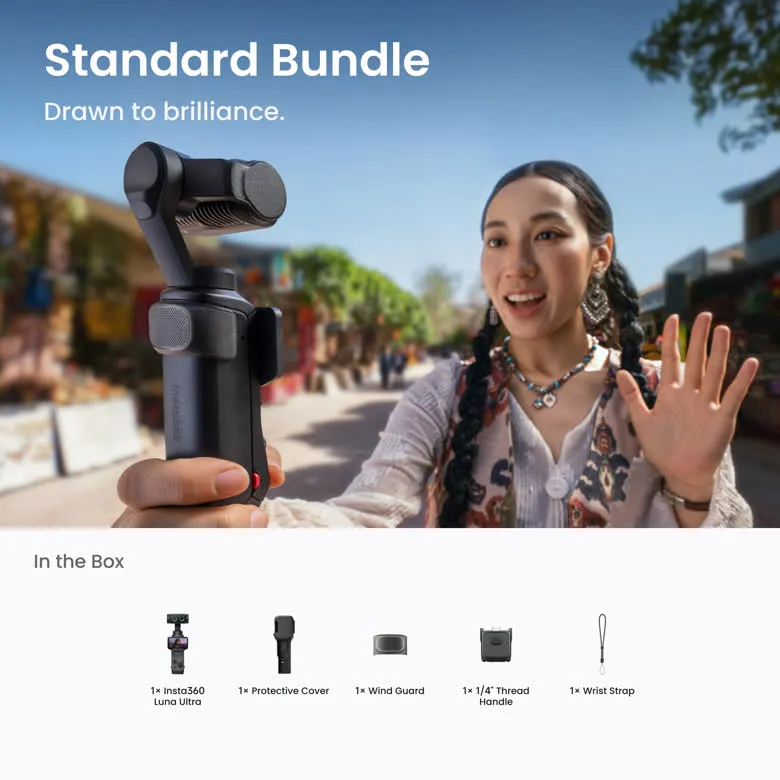
Standard Bundle
Official Insta360 Canada store reference.
- Approximately CA$300.99 above the Pocket 4 Standard listing.
- Creator Bundle publicly listed at CA$1,199.99.
- Creator adds Mic Pro transmitter, Wide-Angle Lens, Battery Handle, Carry Bag and more.
- SpeedyDrone availability may differ from the manufacturer store.
Who should buy each camera?
Start with the most common weekly shoot, then decide whether the premium features will be used often enough.
Buy Pocket 4 when speed and value matter most.
- You shoot travel, family, events, daily vlogs or social content.
- You want 4K slow motion more than 8K.
- You already use DJI Mic products.
- You need larger internal storage and fast transfers.
- You prefer a lighter, simpler one-camera system.
- You want live streaming support.
Buy Luna Ultra when flexibility earns the premium.
- You regularly need wide and telephoto perspectives.
- You plan to crop or reframe 8K masters.
- You film yourself from fixed or remote positions.
- You want an included detachable monitor and microphone.
- You value PureVideo, Dolby Vision and Leica looks.
- You accept more weight, lower storage and higher cost.
Pocket 4 and Luna Ultra questions answered.
Which camera is better overall: DJI Osmo Pocket 4 or Insta360 Luna Ultra?
Pocket 4 is the stronger all-round value for creators who prioritize 4K slow motion, lighter weight, larger internal storage, faster transfer, DJI microphone integration and a lower Canadian entry price. Luna Ultra is the stronger choice for 8K recording, a physical 60 mm telephoto camera, 6x lossless zoom, a detachable remote screen and PureVideo low-light processing.
Does Luna Ultra's 8K automatically make it better than Pocket 4?
No. 8K provides more recorded pixels for reframing and high-resolution delivery, but image quality also depends on lens performance, exposure, noise, motion, bitrate, processing and final delivery resolution. Pocket 4's 4K/240fps capability and 180 Mbps maximum bitrate target a different workflow.
Which camera is better for slow motion?
Pocket 4 is the clear specification winner for high-resolution slow motion. It records up to 4K at 240fps, while Luna Ultra records up to 4K at 120fps and 1080p at 240fps.
Which camera has better zoom?
Luna Ultra. It uses a dedicated 60 mm equivalent telephoto camera, supports 6x lossless or clarity zoom and reaches 12x maximum zoom in supported modes. Pocket 4 uses one 20 mm camera, provides 2x lossless zoom and reaches up to 4x digital zoom.
Which camera is better for colour grading?
Both manufacturers claim up to 14 stops in their professional 10-bit profiles: D-Log on Pocket 4 and I-Log on Luna Ultra. These figures may use different test methods and should not be treated as directly comparable. Pocket 4 records up to 180 Mbps, while Luna Ultra records up to 120 Mbps.
Which camera is better in low light?
Luna Ultra has an f/1.8 main lens and PureVideo up to 4K/60fps, while Pocket 4 has an f/2.0 lens, a dedicated Low-Light Video mode up to 4K/30fps and a higher published low-light ISO ceiling. The better result depends on scene, processing preference and tolerance for noise reduction. A controlled side-by-side test is required.
Which camera is better for solo creators?
Luna Ultra is more convenient for fixed-position solo work because its included screen detaches and provides live preview and control from up to 20 metres in ideal conditions. Pocket 4 is lighter, supports gesture control and ActiveTrack, and can be monitored through DJI Mimo, but it does not include a detachable screen.
Which camera tracks subjects better?
Both support people, pets and object tracking. Pocket 4 uses ActiveTrack 7.0 and supports tracking at up to 4x zoom. Luna Ultra supports single-person, multi-person, pet and object tracking, up to eight people, and zoom-following across the focal range up to 12x. Real reliability still depends on light, contrast, speed and obstruction.
Which camera has better audio?
Pocket 4 has three built-in microphones and can connect directly to up to two compatible DJI Mic transmitters, with OsmoAudio four-channel output. Luna Ultra has four microphones including one in the detachable screen and can connect to up to two Insta360 Mic Air or Mic Pro transmitters. Audio quality depends heavily on microphone placement and wind protection.
Which camera has better battery life?
Both advertise a 240-minute laboratory maximum at 1080p/24fps with screen and wireless functions reduced. Luna Ultra also publishes approximately 1 hour 50 minutes at 8K/30fps, 2 hours at 4K/60fps and 70 minutes at 4K/30fps with the detachable remote in use. Pocket 4 charges faster to 80 percent: about 18 minutes versus about 23 minutes.
Which camera has more storage?
Pocket 4 includes 107 GB of usable built-in storage and supports microSD cards up to 1 TB. Luna Ultra includes 47 GB and its support documentation recommends UHS-I V30 cards no larger than 1 TB.
Which camera is cheaper in Canada?
When checked on July 21, 2026, SpeedyDrone listed Pocket 4 Standard at CAD 649 and Creator Combo at CAD 829. Insta360's official Canadian store listed Luna Ultra Standard at CAD 949.99 and Creator Bundle at CAD 1,199.99. Pricing, stock and bundle contents can change.
Can Pocket 4 or Luna Ultra be used in rain?
Treat neither product as an action camera. Insta360 explicitly states that Luna Ultra is not waterproof, splashproof or dustproof. Pocket gimbal cameras should also be protected from rain, condensation, sand and fine debris.
Which should a travel creator buy?
Pocket 4 is easier to recommend for most travel creators because it is lighter, less expensive, has more internal storage, longer-established DJI audio integration and stronger 4K slow motion. Luna Ultra is worth the premium when 8K reframing, telephoto composition or the detachable remote screen will be used regularly.
Check current specifications and pricing before buying.
Choose the camera around the shots you make every week.
Send your main content type, normal delivery resolution, need for slow motion, telephoto, remote monitoring, wireless audio, livestreaming and total kit budget. SpeedyDrone can compare current Canadian availability, bundle contents and accessory requirements before you purchase.


