


DJI Osmo Pocket 4P vs Insta360 Luna Ultra
Two dual-camera pocket gimbals. Two completely different production philosophies. Luna Ultra prioritizes 8K, Leica optics, and a detachable monitor. Pocket 4P prioritizes D-Log 2 latitude, high-speed 4K slow motion, long-range tracking, and a simpler one-piece workflow.
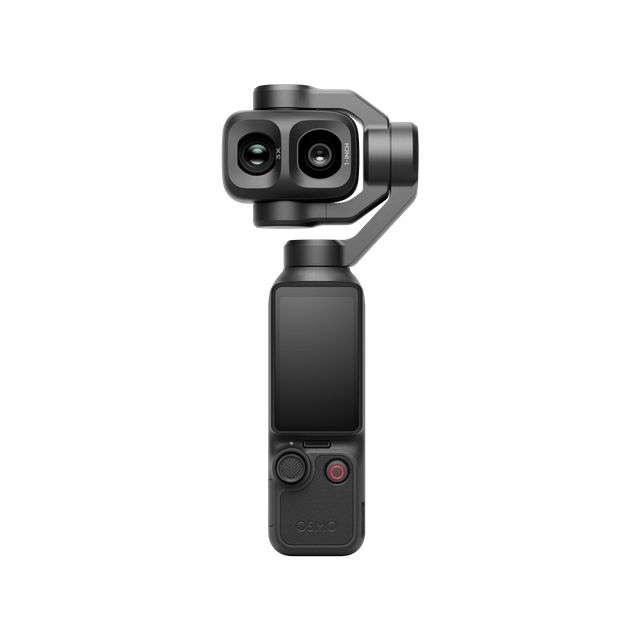
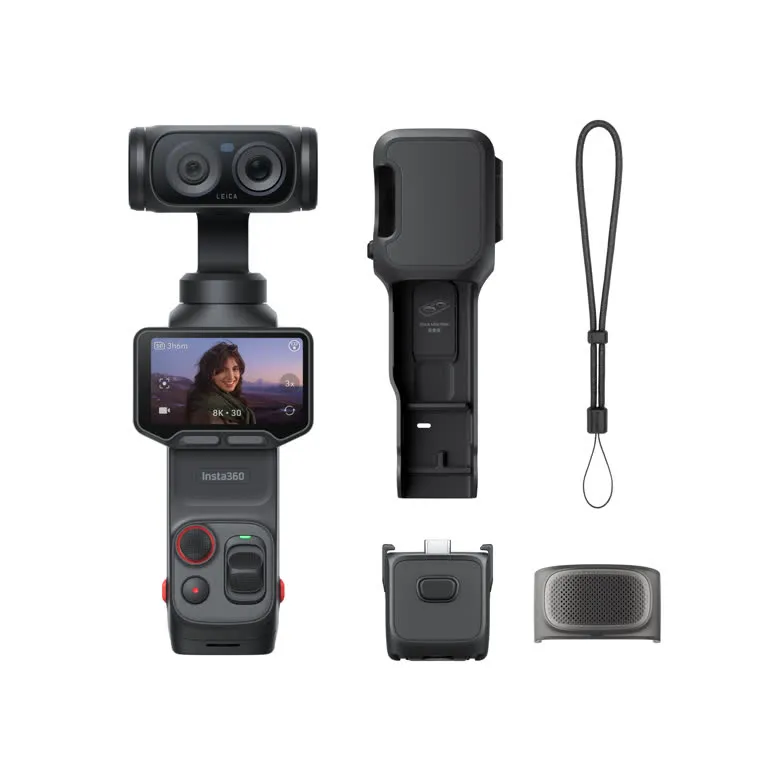
Do you want 8K freedom or faster cinematic execution?
Luna Ultra wins when the detachable remote screen, 8K capture, 6x lossless zoom, and ready-to-use Leica and Dolby Vision options directly solve your workflow. Pocket 4P wins when 4K slow motion, D-Log 2, ActiveTrack 8.0, larger internal storage, and fast one-piece operation matter more.
For motion, tracking, and grading.
- 4K/240fps on the wide camera and 4K/200fps on the med-tele camera.
- Up to 17 stops in 10-bit D-Log 2 at 1x.
- ActiveTrack 8.0 at zoom levels up to 12x.
- 103GB of built-in storage.
- 230g one-piece body and 18-minute charge to 80 percent.
For 8K, remote monitoring, and modular shoots.
- 8K/30fps and 8K Dolby Vision capability.
- Detachable 2-inch OLED monitor with remote preview and control.
- Up to 6x lossless zoom and 12x maximum zoom.
- PureVideo up to 4K/60fps for low-light processing.
- Four microphones, including one in the detachable screen.
Resolution is only one part of the workflow.
Luna Ultra gives editors a larger 8K canvas. Pocket 4P gives filmmakers more high-speed 4K options and a higher manufacturer-rated D-Log 2 ceiling. The right advantage depends on what happens after you press record.
Luna Ultra creates more room for cropping, reframing, and high-resolution master footage.
Pocket 4P is the stronger specification for sports, dance, animals, water, and dramatic slow motion.
DJI states this maximum in 10-bit D-Log 2 at 1x on the wide camera.
Everything that changes the buying decision.
This table separates native lenses, recording modes, remote-control design, storage, charging, and Canadian availability. Maximum figures are not always available in every mode, aspect ratio, color profile, or zoom level.
| Category | DJI Osmo Pocket 4P | Insta360 Luna Ultra |
|---|---|---|
| Wide camera | New 1-inch CMOS, 20mm equivalent, f/2.0, 9cm minimum focus | 1-inch CMOS, 20mm equivalent, f/1.8, 9cm minimum focus |
| Telephoto camera | 1/1.28-inch CMOS, 60mm equivalent, f/1.8, 20cm minimum focus | 1/1.3-inch CMOS, 60mm equivalent, f/2.0, 15cm minimum focus |
| Maximum video resolution | 4K Motion-focused | 8K/30fps Resolution winner |
| Maximum 4K slow motion | Wide: 240fps; med-tele: 200fps Winner | 120fps |
| Professional color | 10-bit D-Log 2 at 1x; up to 17 stops claimed | 10-bit I-Log; 14 stops claimed; DaVinci Resolve support |
| Ready-to-use HDR and looks | Six in-camera film tones; D-Log 2 for grading | 8K Dolby Vision, Leica looks, I-Log, PureVideo |
| Optical focal positions | 1x wide and 3x dedicated optical med-tele | 1x wide and 3x dedicated optical telephoto |
| Zoom | Video up to 12x; 60mm is optical; 12x is digital | Up to 6x lossless and 12x maximum zoom Zoom advantage |
| Tracking | ActiveTrack 8.0; up to 12x; multi-person tracking up to 8 people | Deep Track; automatic, group, and active zoom tracking |
| Remote monitoring | Optional Osmo FrameTap; up to 25m, with under 10m recommended for stability | Detachable OLED remote included; up to 20m in an open environment Integrated winner |
| Screen | 2-inch OLED, 1000 nits, rotating | 2-inch OLED, up to 1000 nits, detachable |
| Built-in storage | 103GB Winner | 47GB |
| Microphones | 3 built-in microphones; DJI microphone ecosystem | 4 microphones: 3 on camera plus 1 on detachable screen |
| Weight | 230g | 233g black; 235g white Near tie |
| Maximum lab runtime | 210 minutes | 240 minutes Standalone maximum |
| Charge to 80 percent | About 18 minutes Faster | About 23 minutes |
| Weather protection | Not positioned as a waterproof action camera | Not dustproof, waterproof, or splashproof |
| Official Canadian price reviewed | Confirm current CAD price and local availability | CA$949.99 Standard Bundle as of July 21, 2026 |
Both cameras move from context to intention.
At 20mm, the environment becomes part of the story. At 60mm, the subject becomes the story. Both products use a dedicated telephoto camera rather than only cropping the wide sensor.
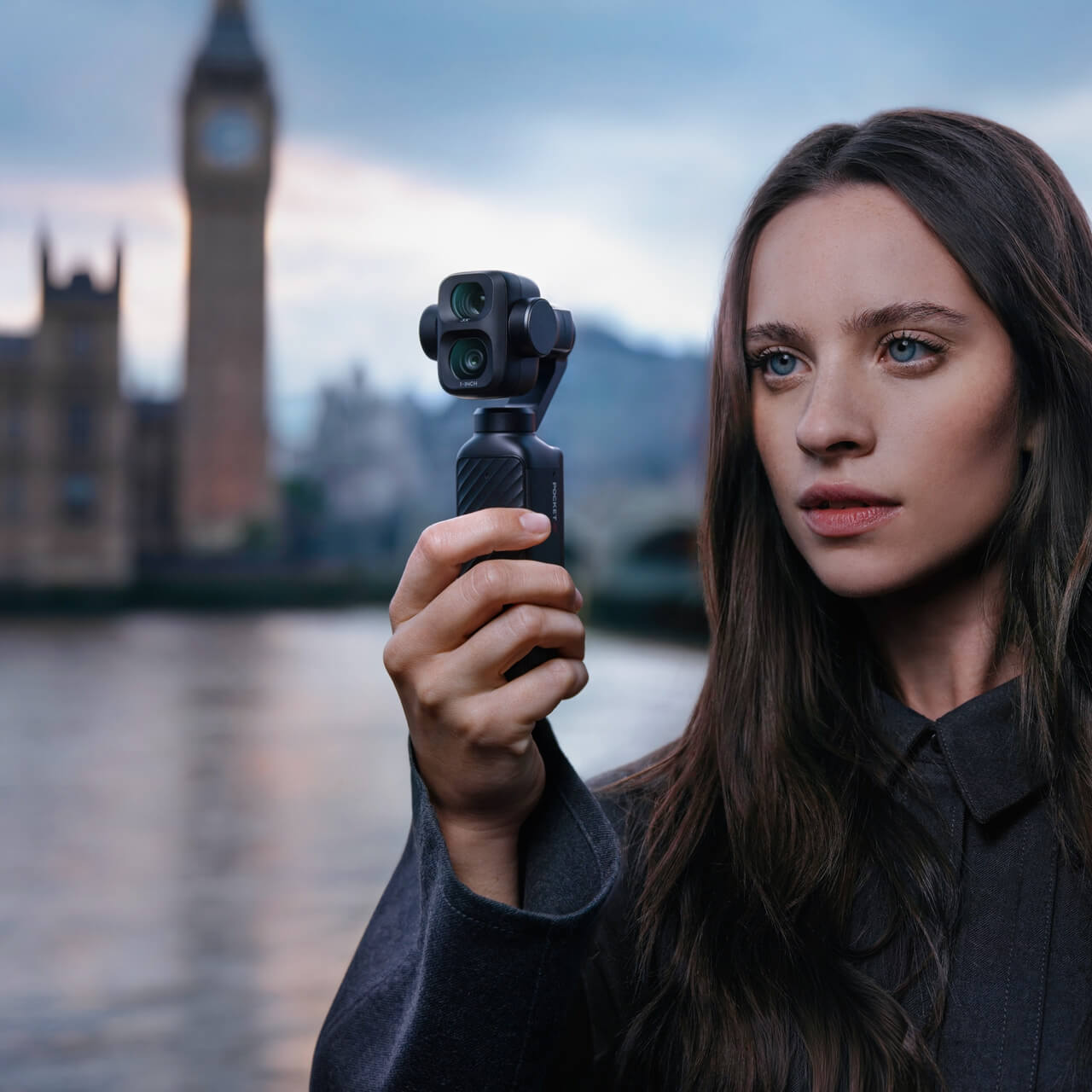
Stronger telephoto aperture.
DJI pairs a 1/1.28-inch telephoto sensor with a 60mm equivalent f/1.8 lens. That favors portraits, stage details, and background separation.
Closer telephoto focus.
Luna Ultra focuses its 60mm equivalent telephoto camera from 15cm, making it especially attractive for products, food, accessories, and tabletop detail.
Grade deeply or finish quickly.
Pocket 4P is built around DJI's new D-Log 2 story. Luna Ultra offers I-Log for grading, but also leans harder into ready-to-use Dolby Vision, Leica looks, and PureVideo processing.
Maximum latitude at 1x.
DJI states that 10-bit D-Log 2 reaches up to 17 stops on the wide camera. It is the better specification for high-contrast scenes when the creator plans to grade.
- Best suited to windows, sunsets, backlight, and mixed exposure.
- D-Log 2 is limited to 1x zoom.
- The stated 17-stop maximum belongs to DJI's own testing conditions.
More finished looks in camera.
Luna Ultra supports 10-bit I-Log with a 14-stop manufacturer claim, plus 8K Dolby Vision, Leica looks, and PureVideo for low-light processing.
- I-Log cannot be used at the same time as Dolby Vision or PureVideo.
- Native DaVinci Resolve I-Log support simplifies grading.
- PureVideo reaches up to 4K/60fps.
One tracks farther. One monitors smarter.
DJI's advantage is long-range tracked zoom and a mature one-piece gimbal workflow. Insta360's advantage is a detachable display that becomes a remote monitor, controller, and microphone.
Designed to keep motion framed.
DJI states subject-tracking ranges up to approximately 50m at 6x to 12x under suitable conditions. Pocket 4P also supports multi-person tracking for groups of up to eight people.
- Strong fit for stages, sports, pets, events, and moving robots.
- Tracking performance depends on light, contrast, speed, and obstacles.
- Multi-person tracking does not support zoom changes while active.
A monitor you can carry away.
Luna Ultra's screen stays connected after removal and supports live preview, parameter changes, recording control, and audio capture.
- Up to 20m in a clean open environment.
- Insta360 states about 8m in more complex wireless environments.
- The screen microphone can capture sound closer to the subject.
The camera you keep using is the camera that removes friction.
Storage, charging, screen design, microphone routing, and physical controls influence every shoot. These details often matter more than the single largest number on the box.
Fewer pieces to manage.
Pocket 4P's one-piece body, 103GB internal storage, physical zoom controls, and long-range tracking create a simpler travel workflow.
Pick: Pocket 4PMonitor from across the room.
Luna Ultra's detachable display is the more elegant built-in solution for self-recording, fixed camera positions, overhead shots, and remote framing.
Pick: Luna UltraDistance and focus both matter.
Luna focuses the telephoto camera closer. Pocket 4P offers the brighter f/1.8 telephoto lens. Test your actual products before choosing.
Pick: Test bothSlow motion creates the edge.
Pocket 4P's 4K/240fps wide and 4K/200fps med-tele specifications give it a clear advantage for movement and highlight reels.
Pick: Pocket 4PMore pixels for post.
Luna Ultra is the only camera in this comparison with native 8K/30fps recording and 8K Dolby Vision capability.
Pick: Luna UltraProtect the highlights.
Pocket 4P's 17-stop D-Log 2 claim makes it the stronger specification for creators who will expose carefully and grade at 1x.
Pick: Pocket 4PThe specification winner may not be the purchase winner.
Canadian pricing, bundle contents, warranty coverage, microphone compatibility, return terms, and local support determine the real cost of a usable creator kit.
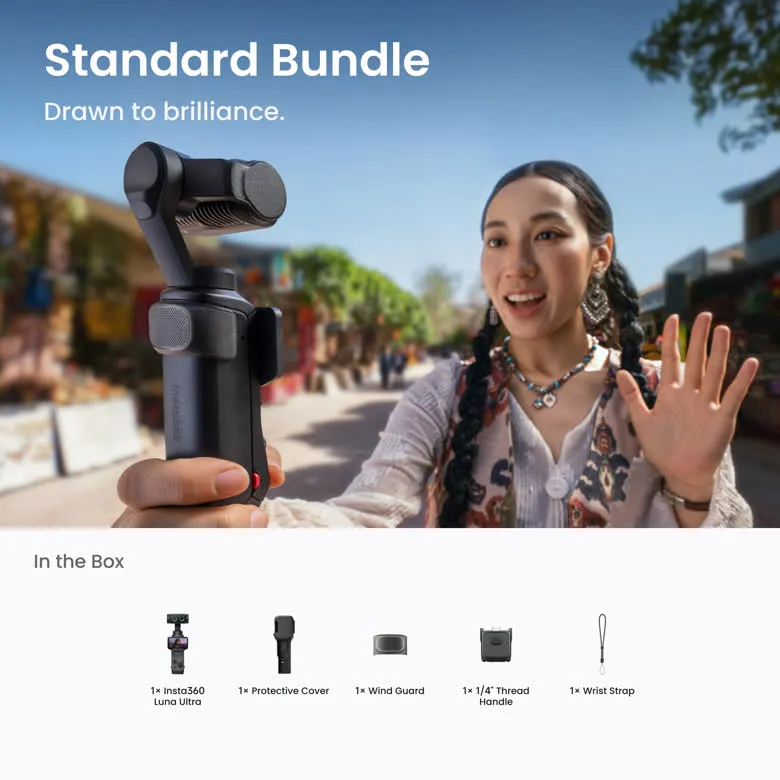
Luna Ultra Standard Bundle
The official Canadian Insta360 store listed this price and normally ships within two days when reviewed on July 21, 2026. Pricing and stock can change.
Pocket 4P and bundle availability
Confirm current CAD price, authorized supply, bundle contents, warranty path, accessories, and Toronto pickup before ordering.
Review the manufacturer material directly.
This article does not embed third-party videos. Use the official product-page links below to review manufacturer images, demonstrations, bundle details, and current regional availability.
Osmo Pocket 4P
Dual cameras, D-Log 2, 4K slow motion, ActiveTrack 8.0, official bundle details, and DJI product FAQs.
Open DJI official pageLuna Ultra
8K Leica imaging, detachable touchscreen, PureVideo, Canadian bundles, warranty, and current official pricing.
Open Insta360 Canada pageThe questions that decide the purchase.
Which camera is better overall: Pocket 4P or Luna Ultra?
Neither is universally better. Pocket 4P is the stronger specification for 4K slow motion, D-Log 2 latitude, long-range tracking, internal storage, and fast one-piece operation. Luna Ultra is stronger for 8K recording, integrated remote monitoring, 6x lossless zoom, Dolby Vision, and PureVideo.
Does 8K automatically make Luna Ultra look better?
No. 8K provides more recorded pixels, which can help with cropping and reframing, but final quality also depends on lens performance, exposure, noise, processing, dynamic range, motion, compression, and delivery resolution.
Which camera is better for slow motion?
Pocket 4P has the stronger 4K slow-motion specification: up to 4K/240fps on the wide camera and 4K/200fps on the med-tele camera. Luna Ultra supports up to 4K/120fps and 1080p/240fps.
Which camera is better for color grading?
Pocket 4P has the higher manufacturer-rated ceiling with up to 17 stops in 10-bit D-Log 2 at 1x. Luna Ultra supports 10-bit I-Log with a 14-stop claim and native DaVinci Resolve support. A controlled test is still needed because manufacturer dynamic-range methods may differ.
Is the 60mm camera on both products a real optical lens?
Yes. Both products use a dedicated 60mm equivalent camera rather than generating the 3x view only by cropping the wide sensor. Higher zoom settings still involve lossless processing or digital magnification depending on the camera and mode.
Which camera is better for solo creators?
Luna Ultra is more convenient when the camera must sit across the room because its detachable screen works as a live monitor, controller, and microphone. Pocket 4P is simpler for handheld solo vlogging and can add remote monitoring through the optional Osmo FrameTap.
Which camera is better for low light?
Luna Ultra offers PureVideo up to 4K/60fps for automated low-light processing and has an f/1.8 wide lens. Pocket 4P offers the brighter f/1.8 telephoto lens and a higher D-Log 2 dynamic-range claim at 1x. The better result depends on whether you want processed footage immediately or plan to grade.
Which camera has better zoom?
Luna Ultra has the clearer zoom advantage on paper because Insta360 states up to 6x lossless zoom and 12x maximum zoom. Pocket 4P uses a dedicated 3x optical med-tele camera and supports video zoom up to 12x, with ActiveTrack available at long zoom levels.
Which camera has better battery life?
Luna Ultra has the higher standalone laboratory maximum at 240 minutes, while Pocket 4P is rated at 210 minutes. Both figures are controlled test results, not typical 8K or high-frame-rate runtime. Pocket 4P charges to 80 percent faster: about 18 minutes versus about 23 minutes for Luna Ultra.
Are Pocket 4P and Luna Ultra waterproof?
Treat neither as a waterproof action camera. Insta360 explicitly states that Luna Ultra is not waterproof, splashproof, or dustproof. Protect both gimbal systems from rain, condensation, sand, and fine debris.
What should I test before buying?
Record a walk-and-talk clip, track a moving subject, compare the 20mm and 60mm cameras, test the highest zoom you will actually use, record speech, transfer one real file, and check how quickly you can change settings. For a demanding tracking test, ask whether a moving Unitree robot demo is available.
Can SpeedyDrone help choose and configure the camera?
Yes. SpeedyDrone can help compare current Canadian bundles, inspect the product, record the serial number, check firmware, pair the app and microphone, explain tracking and gimbal modes, and build a memory-card, filter, battery, microphone, case, and protection package.
Leave with a working creator kit, not another unopened box.
Suggested service structure for local pickup. Confirm staff availability and final pricing when booking.
Ready to record.
- Exterior, serial number, and power-on check.
- Basic settings and storage confirmation.
- Official warranty-path explanation.
Ready to create.
- Everything in Basic.
- Firmware, app pairing, and microphone setup.
- 15-minute tracking and gimbal walkthrough.
Ready for workflow.
- Everything in Plus.
- D-Log 2 or I-Log exposure and grading setup.
- Audio, transfer, accessory, and content workflow.
- Moving-subject or robot tracking test when available.
Checked against official pages.
Do not buy the specification. Buy the workflow.
Send us your main use case: travel, vlogging, events, products, real estate, family content, interviews, or professional production. We will recommend the camera, bundle, microphone, storage, filters, power, protection, and training level that fits the job.


