


Unitree Go2 vs As2 vs A2 vs B2: Which Robot Dog Fits Your Deployment?
Compare Unitree’s compact, professional and industrial quadruped platforms across payload, endurance, IP protection, LiDAR, computing, development access, terrain capability and deployment cost—then choose the right robot dog for Canada.
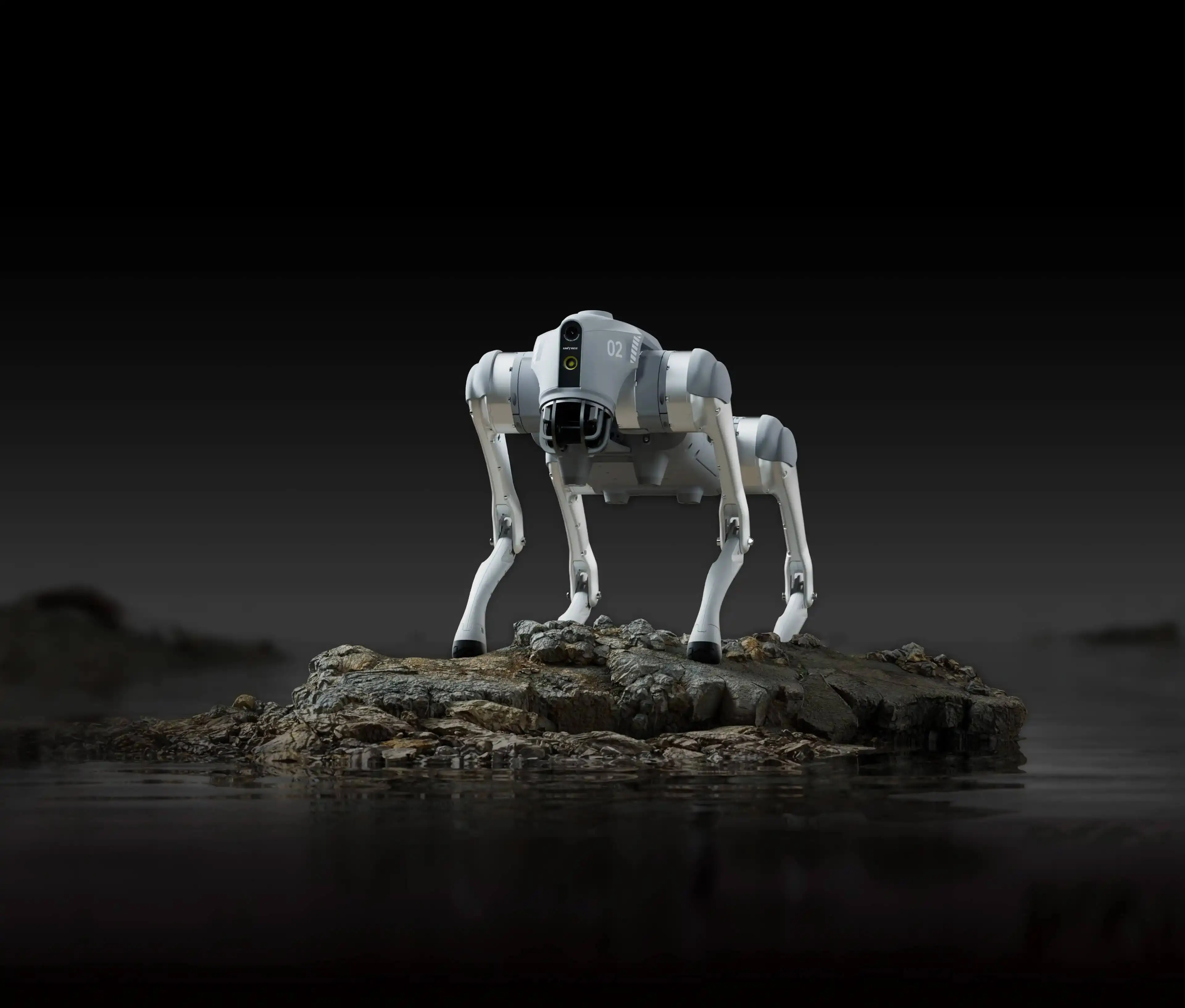 GO2
GO2
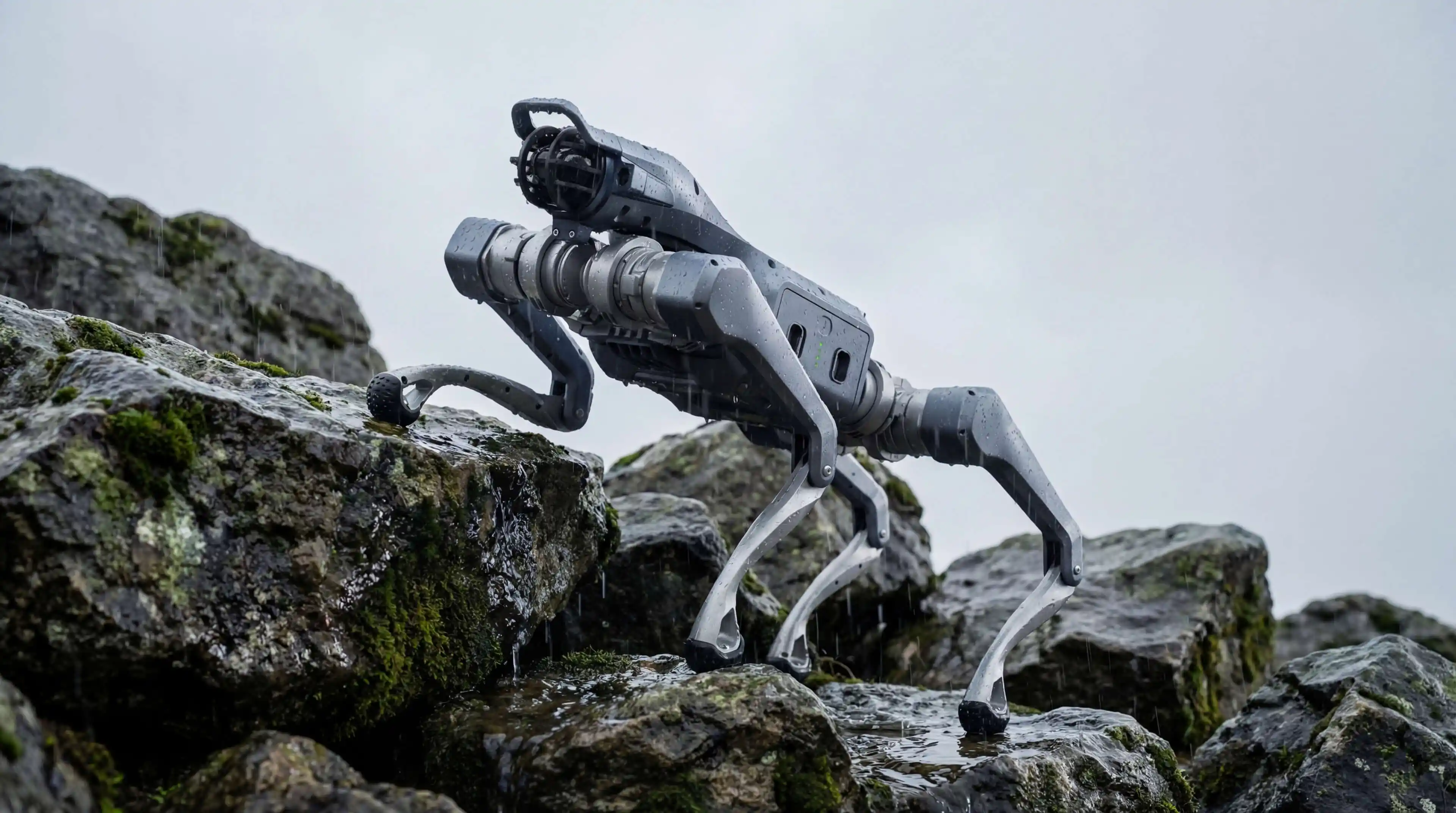 AS2
AS2
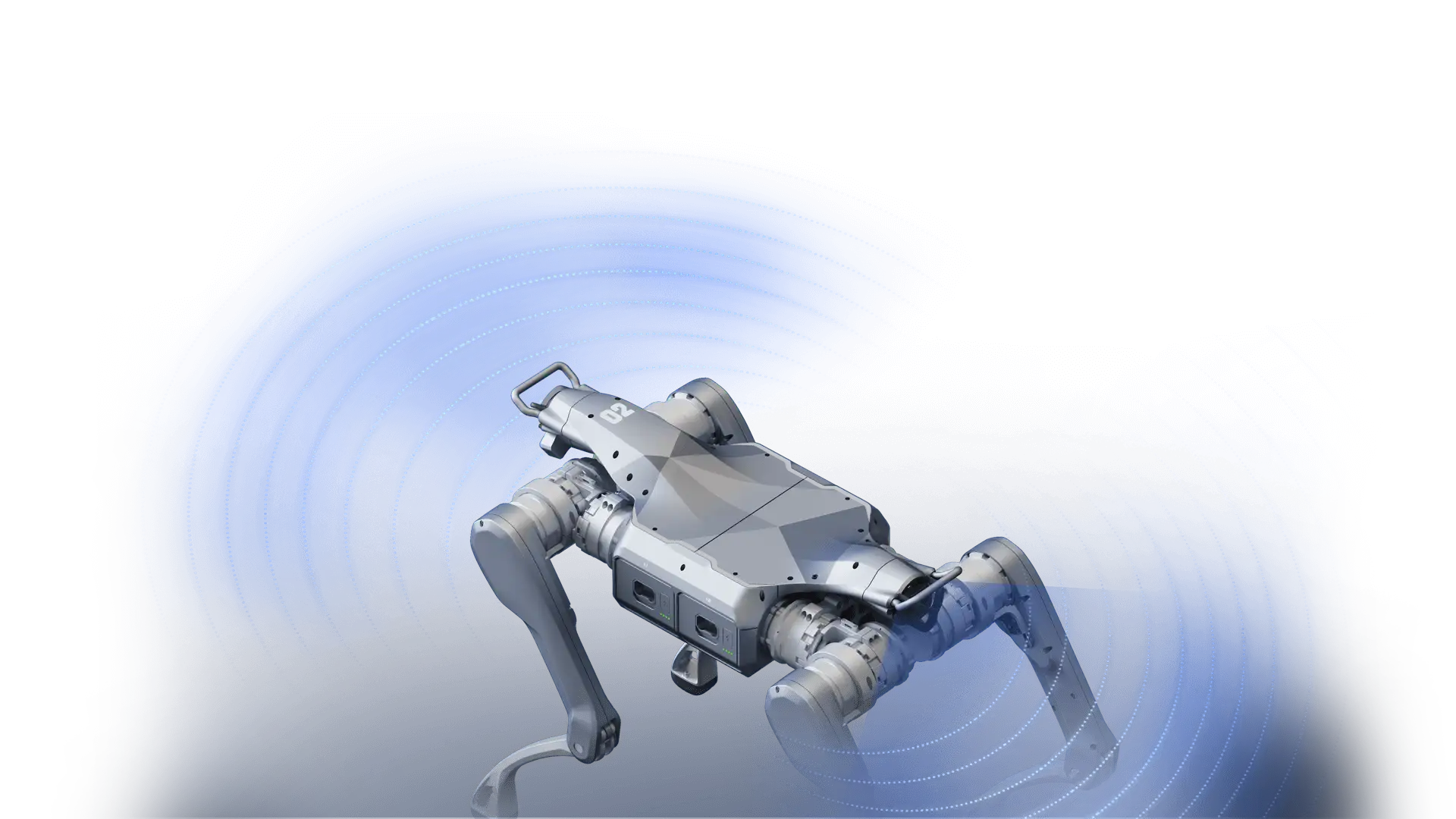 A2
A2
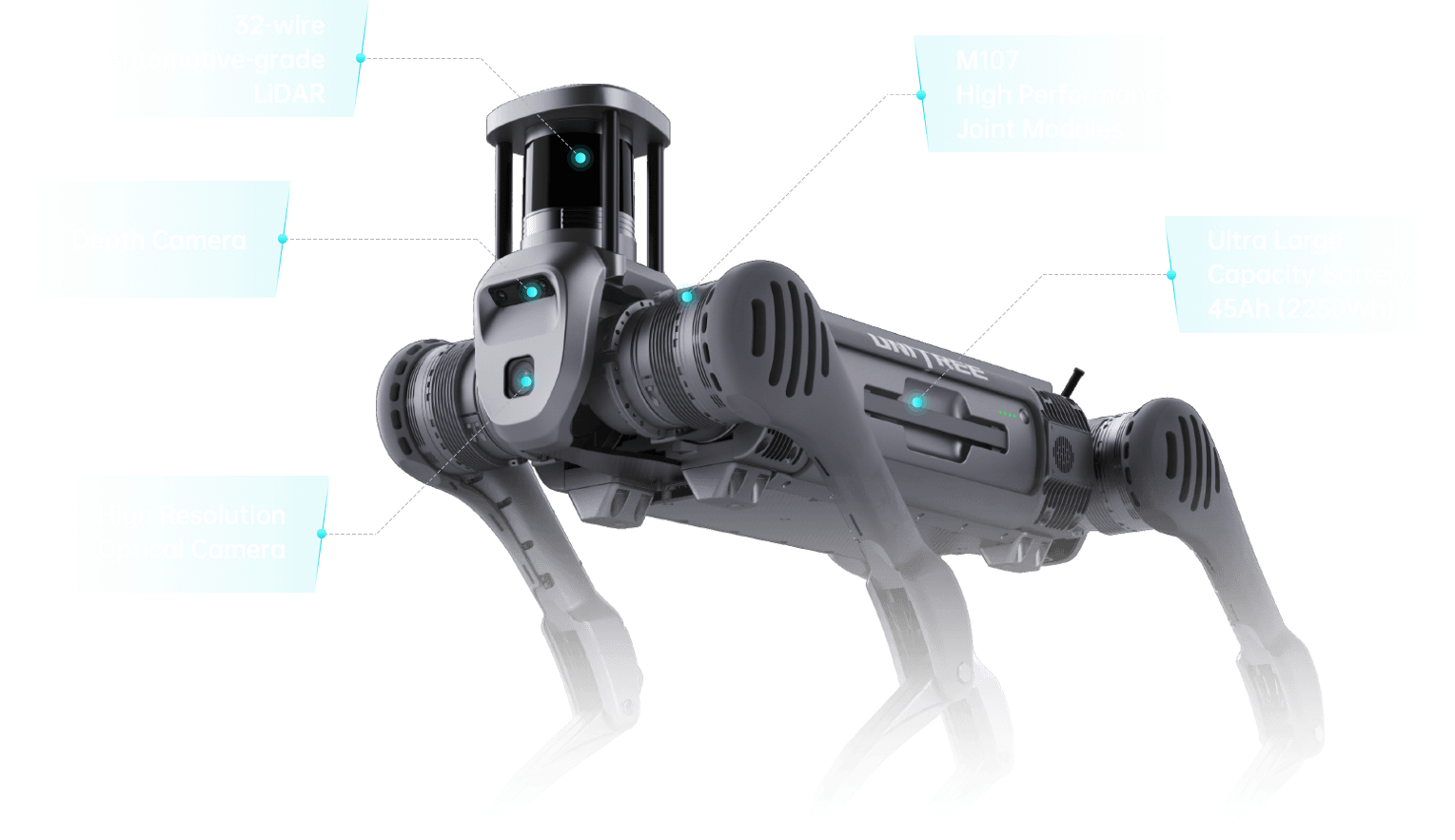 B2
B2
Choose Go2 for events, education and accessible robotics. Choose As2 when you need a compact platform with stronger payload, endurance and professional sensing. Choose A2 for medium-duty industrial inspection and logistics. Choose B2 for the highest payload, weather protection and heavy-duty field deployment.
Go2, As2, A2 and B2 serve different operational tiers
These robots share a quadruped form, but they are designed for very different buyers. The correct choice depends less on maximum speed and more on the job: public interaction, research, payload transport, outdoor inspection, autonomous charging, communications, environmental protection and the consequences of downtime.
Unitree Go2
Approximately 15 kg, highly portable and available in multiple configurations. It is the most accessible choice for demonstrations, STEM, events, content and controlled development with Go2 EDU.
Unitree As2
Approximately 18 kg with stronger motors, longer-endurance options, industrial-grade bearings, dual encoders and IP54 protection on Pro and EDU. It bridges Go2 portability and industrial capability.
Unitree A2
Approximately 42 kg with dual hot-swappable batteries, industrial computing, substantial payload and front/rear perception options. It targets inspection, logistics and field work.
Unitree B2
Approximately 60 kg with IP67 protection, 360 N·m listed joint torque, more than 40 kg continuous walking load and extensive payload interfaces. It is built for demanding industrial missions.
Official naming note: Unitree writes the compact model as As2, although many Canadian buyers search for “Unitree AS2.” This article uses the official product styling while retaining AS2 in relevant SEO metadata.
Unitree Go2 vs As2 vs A2 vs B2 comparison table
Go2 and As2 figures are shown as family ranges where configurations differ. A2 and B2 figures represent the official industrial platform specifications and may still vary by sensor, compute, wheel, charging and application package.
On smaller screens, swipe the table left to compare all four Unitree robot families.
| Specification | Go2 family | As2 family | A2 / A2 Pro | B2 |
|---|---|---|---|---|
| Primary category | Consumer, education and research | Compact professional, education and development | Industrial inspection and logistics | Heavy industrial inspection and field deployment |
| Standing size | 700 × 310 × 400 mm | 720 × 378 × 457 mm | 820 × 440 × 570 mm | Approx. 1098 × 450 × 645 mm |
| Weight with battery | About 15 kg | About 18 kg | About 42 kg | About 60 kg |
| Degrees of freedom | 12 | 12 | 12 | 12 |
| Listed joint torque | About 45 N·m on Pro, X and EDU | About 65–90 N·m by configuration | About 180 N·m | About 360 N·m |
| Listed speed | 2.5–3.7 m/s; maximum near 5 m/s on X/EDU | 3.0–3.7 m/s; maximum near 5 m/s on EDU | 3.7 m/s; maximum near 5 m/s | More than 6 m/s in special configuration* |
| Continuous walking payload | Approx. 7–8 kg working payload | Approx. 10–15 kg by configuration | Approx. 25 kg; ideal conditions may reach around 35 kg | More than 40 kg |
| Standing payload | Maximum figures near 10–12 kg | Approx. 45–65 kg by configuration | Approx. 100 kg | At least 120 kg |
| Unloaded endurance | About 1–4 hours by battery and version | Approx. 2 hours / 10 km Air; approx. 4 hours / 20 km Pro and EDU | More than 5 hours / about 20 km | More than 5 hours / more than 20 km |
| Loaded endurance example | Configuration and activity dependent | More than 2.5 hours / about 13 km with 13–15 kg on Pro/EDU | More than 3 hours / about 12.5 km with 25 kg | More than 4 hours / more than 15 km with 20 kg |
| Protection rating | No IP rating listed in the official Go2 comparison | Air not listed; Pro and EDU IP54 | IP56; A2 Pro core components rated IP67 | IP67 |
| Operating temperature | Not specified in the core Go2 comparison | -20°C to 50°C | -20°C to 55°C | -20°C to 55°C |
| Perception | 4D LiDAR and HD camera; EDU adds depth camera | Unitree L2 on Air; industrial 64–128-line LiDAR on Pro/EDU; HD camera | One LiDAR + HD camera; A2 Pro lists two LiDARs + HD camera | 3D LiDAR, two depth cameras and two optical cameras, configuration-dependent |
| Base computing | 8-core CPU on Pro, X and EDU; expansion available on EDU | 8-core CPU; EDU supports high-compute expansion such as Orin NX | 8-core platform CPU + Intel Core i7 user-development computer | Intel Core i5 platform + Intel Core i7 user development; optional extra compute |
| Secondary development | Full on EDU; limited on X; not listed for Air/Pro | Supported on EDU; not supported on Air or Pro | Supported | Supported; functions vary by configuration |
| Battery architecture | 8000mAh standard; 15000mAh on EDU | 8000mAh Air; 15000mAh Pro/EDU | Dual 9000mAh battery slots with hot-swap design | 45Ah / 2250Wh plug-in battery; optional autonomous charging solution |
| External interfaces | Configuration-dependent; EDU intended for development | Gigabit Ethernet, SBUS and BAT power output | RS485, CAN, dual Gigabit Ethernet, USB-C and 12V/24V/BAT outputs | Four Gigabit Ethernet, four USB 3.0 and multiple 5V/12V/24V/BAT outputs |
| Best default use | Events, education, demonstrations and accessible robotics | Compact professional mobility and higher-performance research | Inspection, logistics, patrol and medium-duty payload work | Heavy industrial inspection, difficult terrain and large payload integration |
| Canadian buying method | Retail or special order depending on model | Configuration quote | Enterprise configuration quote | Enterprise deployment assessment and quote |
*Unitree states that B2’s more-than-6 m/s result is realized in special configurations and that practical operation is speed-limited for safety. All maximum figures depend on configuration, payload, surface, temperature, firmware, battery condition and operating method.
Choose Unitree Go2 for portability, interaction and accessible robotics
Go2 is the easiest platform in this comparison to transport, demonstrate and integrate into public-facing programs. At roughly 15 kg, it can support events, STEM activities, institutional demonstrations, media production and controlled research without the transport and safety burden of a 42–60 kg industrial machine.
- Best price and accessibility in the four-platform comparison
- Compact body for showrooms, classrooms and controlled indoor spaces
- 4D LiDAR and HD camera across the core family
- ISS side-follow, voice and tracking available on Pro and higher tiers
- Full development and higher-computing options available on Go2 EDU
- Strong choice for events, STEM, content and embodied-AI exploration
Go2 is not automatically an industrial inspection platform. The official comparison does not publish an IP rating, payload and battery capacity are substantially lower, and full secondary development is tied primarily to Go2 EDU.
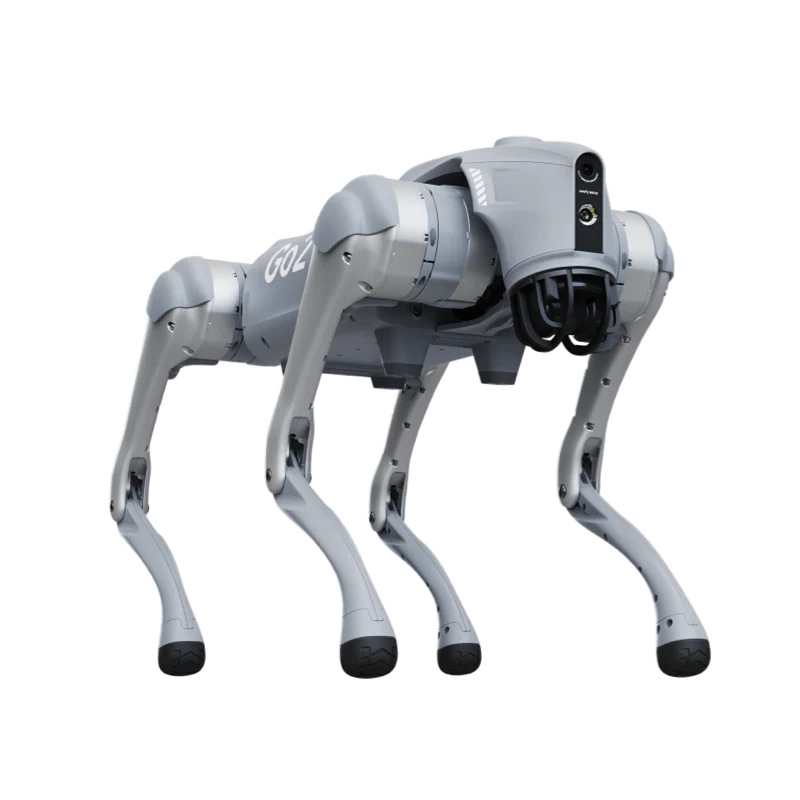
Best Go2 buyer: a school, event agency, museum, creator, innovation team or research group that values portability and interaction more than weather sealing, heavy payload or long autonomous industrial missions.
Choose Unitree As2 when Go2 is too light—but A2 is too large
As2 occupies the most interesting middle position. It remains comparatively portable at about 18 kg, but the official family adds industrial-grade crossed roller bearings, dual encoders, stronger motors, longer-endurance batteries and substantially higher standing and walking payload than Go2.
- Approximately 18 kg with battery
- Up to about 90 N·m listed joint torque on As2 EDU
- Up to about 15 kg continuous walking payload on EDU
- Up to about 65 kg standing payload on EDU
- Approximately four hours / 20 km unloaded on Pro and EDU
- Industrial 64–128-line LiDAR listed on Pro and EDU
- IP54 protection on Pro and EDU
Lower-cost mobility
Air lists 65 N·m torque, 10 kg continuous walking payload, about two hours unloaded endurance, Unitree L2 LiDAR and no published IP rating.
Professional field balance
Pro adds 75 N·m torque, 13 kg continuous payload, long-range battery, industrial LiDAR, ISS 3.0, controller and IP54 protection—but not secondary development.
Development configuration
EDU reaches the family’s 90 N·m and 15 kg continuous-payload figures, supports secondary development, high-compute expansion and a charging dock.
Critical difference: Unitree’s current comparison lists secondary development only for As2 EDU. As2 Pro may look like a professional development robot, but the official table marks secondary development as unsupported. Put software-access requirements into the quotation.
Choose Unitree A2 for inspection, logistics and long field missions
A2 is a major operational step up from As2. At approximately 42 kg with batteries, it offers a 25 kg listed continuous walking load, a 100 kg standing load, dual hot-swappable batteries and an industrial computing architecture that separates platform operation from user development.
- More than five hours / approximately 20 km unloaded endurance
- More than three hours / approximately 12.5 km with 25 kg load
- Dual 9000mAh battery slots with hot-swappable design
- About 180 N·m listed maximum joint torque
- IP56 on A2; A2 Pro core components listed at IP67
- One LiDAR on A2 and two LiDARs on A2 Pro
- 8-core platform CPU plus Intel Core i7 for user development
- RS485, CAN, Ethernet, USB and power-output interfaces
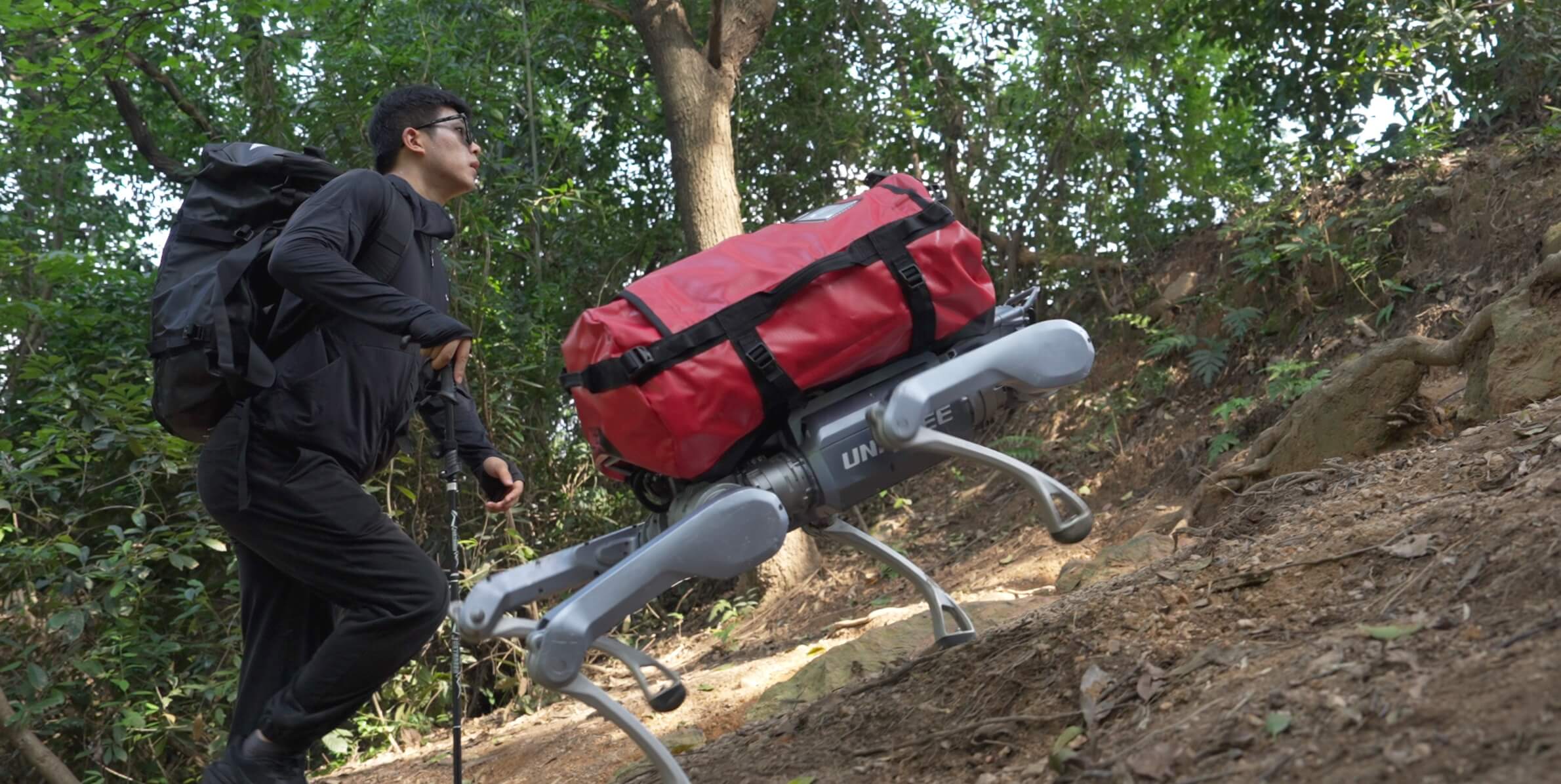
Why buyers choose A2 instead of B2: A2 delivers serious industrial payload, endurance, hot-swappable power and development access while remaining materially smaller and lighter than B2. This can simplify transport, indoor access, stairs, crew requirements and deployment logistics.
Choose Unitree B2 when payload, protection and mission severity dominate
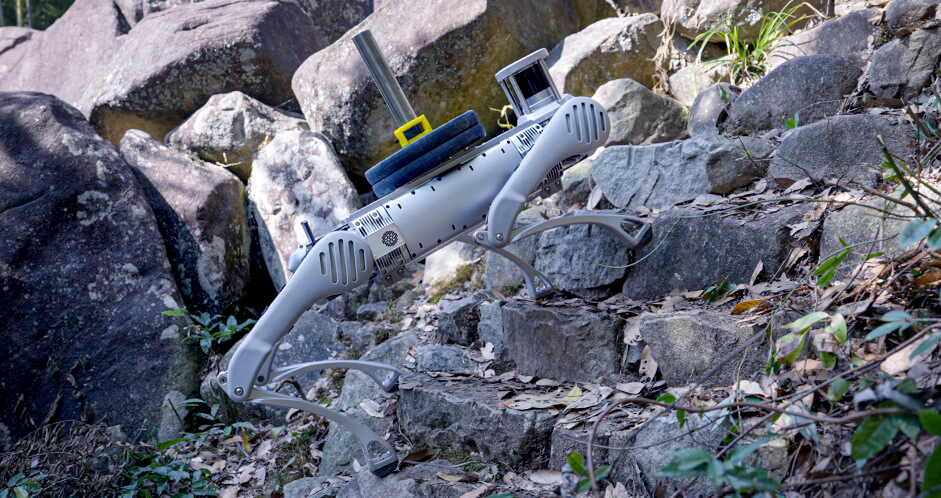
B2 is the largest and most capable legged platform in this comparison. It weighs approximately 60 kg, lists 360 N·m maximum joint torque, supports more than 40 kg continuous walking load and carries an IP67 rating. Its interface and compute options are intended for significant industrial integration.
- At least 120 kg listed standing load
- More than 40 kg continuous walking load
- More than four hours / 15 km with a 20 kg load
- More than five hours / 20 km unloaded
- Up to 40 cm forward obstacle or stair capability
- More than 45° listed climbing angle
- IP67 protection and -20°C to 55°C operating range
- Multiple Ethernet, USB and power-output interfaces
- Optional wheeled feet and autonomous charging solutions
B2 is not simply “the best robot.” Its mass, torque and payload increase transport requirements, fall consequences, operator training, site controls, maintenance planning and total project cost. Buy B2 when the mission requires its capability—not because the maximum specification is impressive.
Best Unitree robot dog by application
Go2 Pro
Go2 Pro combines portability, side-follow, voice, tracking and strong audience interaction without the operational burden of an industrial robot.
Go2 Air or Pro
Choose Air for accessible lessons and basic demos. Choose Pro when repeatable public interaction and follow behaviour are important.
Go2 EDU or As2 EDU
Go2 EDU prioritizes accessibility and research ecosystem. As2 EDU adds stronger payload, endurance, motors and IP54 protection in a still-portable platform.
As2 EDU or A2
As2 suits lighter, tighter deployments. A2 is stronger when long shifts, dual batteries, payloads and industrial interfaces are required.
A2 or B2
Choose A2 for medium-duty inspection and easier logistics. Choose B2 for harsher environments, heavier sensors and higher mission consequence.
A2 Pro or B2
Front/rear perception, industrial compute and payload interfaces make A2 Pro compelling; B2 adds heavier payload and IP67 protection.
A2 or B2
Match the robot to the sensor payload, terrain, communications, deployment duration and safe operating concept. The robot alone is not a complete response system.
A2 for medium; B2 for heavy
A2 lists about 25 kg continuous load. B2 lists more than 40 kg and should be considered when payload margin and terrain severity justify the added mass.
B2
B2’s IP67 rating is the strongest published protection in this comparison. The complete payload and connectors must also meet the environmental requirement.
How to size the robot for sensors, tools and cargo
Published payload numbers are useful, but they do not prove that every sensor or cargo package will work. Mounting height, centre of gravity, vibration, cable routing, power draw, thermal load and dynamic movement can matter as much as total weight.
Use operating payload, not maximum payload
Keep margin for acceleration, stairs, slopes, stopping and uneven surfaces. A stable standing figure should not be treated as a continuous mission rating.
Control the centre of gravity
A compact, centred payload behaves differently from a tall mast, offset arm or swinging load of the same weight.
Verify voltage and consumption
Confirm connector, voltage, current, startup surge, fuse protection and how payload draw changes mission endurance.
Plan the interface architecture
Match Ethernet, USB, CAN, RS485, SBUS and software requirements to the exact robot configuration and payload.
Protect the whole system
A robot’s IP rating does not automatically protect an unsealed computer, sensor, connector, cable or custom mounting plate.
Test the complete mission
Acceptance should include the actual payload, route, duration, surface, network and environmental conditions—not only an unloaded robot demo.
Secondary development: Go2 EDU vs As2 EDU vs A2 vs B2
Buyers often assume every expensive quadruped includes open development access. Unitree’s current specifications do not support that assumption. Development rights and interfaces vary by family and configuration.
EDU is the development choice
Go2 EDU lists full secondary development, depth camera and high-compute options. Go2 X is limited; Air and Pro do not list secondary development.
EDU only
The official As2 table marks Air and Pro as not supporting secondary development. As2 EDU supports it and offers high-compute expansion.
Industrial development standard
A2 lists an 8-core platform CPU, Intel Core i7 user-development computer, multiple interfaces and secondary-development support.
High-capacity integration
B2 lists platform and user computers, optional added compute, extensive interfaces and configuration-dependent secondary-development functions.
Procurement rule: specify the exact SDK, firmware entitlement, user computer, sensor access, interfaces, sample code, documentation and support pathway in writing. A general phrase such as “supports AI” is not an acceptance criterion.
Pricing and total ownership cost in Canada
Go2 has transparent retail configurations. As2, A2 and B2 are best treated as configured systems because final cost depends on the robot version, sensors, computing, communications, batteries, charging, payload integration, software and support.
Robot and configuration
- Base model and version
- Controller and communications
- LiDAR, cameras and thermal payload
- Computing and development access
- Batteries, charger and charging dock
Make it mission-ready
- Payload design and mounting
- Software and autonomy development
- Site survey and communications testing
- Operator training and procedures
- Commissioning and acceptance testing
Keep it operational
- Spare batteries and wear components
- Diagnostics, freight and repair
- Software maintenance and security
- Insurance and risk administration
- Future payload and mission expansion
Financing question: compare the monthly equipment cost against operator hours saved, access gained, safety exposure reduced, inspection frequency, data quality and service revenue. A useful business case is mission-specific—not based on the robot’s maximum specification.
Canadian pricing, currency conversion, freight, import structure, taxes, configuration, availability and lead times can change. Confirm landed cost and package contents before issuing a purchase order.
Unitree quadruped buying checklist
What must the robot accomplish?
Define route, duration, environment, payload, data outputs, human supervision and measurable success criteria.
What protection level is required?
Document rain, dust, temperature, stairs, slopes, loose terrain, chemicals, washdown and indoor access constraints.
What is the real installed mass?
Include sensor, mount, cable, computer, enclosure, antenna and tooling weight, plus balance and power requirements.
How long is one mission?
Plan the loaded route, battery swaps, charging location, temperature and reserve margin—not only the published unloaded maximum.
Which software access is mandatory?
State SDK, ROS, sensor streams, low-level control, compute, interface, logging and cybersecurity requirements.
How will the robot stay connected?
Validate Wi-Fi, private network, cellular, radio, latency, dead zones, remote supervision and data-security requirements.
What happens when something fails?
Confirm warranty, diagnostics, parts, shipping responsibility, response expectations and escalation contacts.
How will delivery be approved?
Test the exact robot, payload, route, runtime, data output and stop procedure against written pass/fail criteria.
Is this a demo or a program?
Pilot with a narrow use case, document results and decide whether software, payloads, charging or additional robots are justified.
Safety planning becomes more important as robot mass and torque increase
Every platform in this comparison is a powerful mobile machine. B2 is roughly four times the mass of Go2 and lists eight times Go2 Pro’s maximum joint torque. The safety system must scale with the robot and mission.
Separate people from motion tests
Establish a marked route, access control, safe observation points and protective clearance around stairs, slopes and payloads.
Use defined human roles
One person operates while another monitors surroundings, communications, bystanders, payload and the stop condition.
Increase complexity gradually
Begin unloaded and at low speed. Add payload, slopes, stairs, autonomy and public exposure only after lower-risk tests pass.
Test the stop procedure first
Confirm the controller, software stop, communications-loss behaviour, power isolation and safe recovery method.
Control mounted equipment
Secure batteries, sensors, antennas, cables and tools. Account for sharp edges, heat, electrical hazards and shifting loads.
Use lower-risk routines
Keep industrial robots away from uncontrolled crowds. Public demonstrations require barriers, staff, low speed and a pre-approved routine.
Unitree’s safety position: these robots have complex structures and powerful dynamics. Users should maintain a safe distance, avoid dangerous modifications and comply with applicable local laws, site rules and institutional procedures.
Request a Unitree quadruped deployment assessment
SpeedyDrone Canada supports Canadian organizations evaluating Unitree Go2, As2, A2 and B2 for education, research, demonstrations, inspection, logistics, public safety and industrial projects. Send your use case, environment, payload, runtime, development, communications, budget and timeline requirements for a platform and configuration review.
As2, A2 and B2 should be quoted against the exact configuration and mission. Confirm model, sensors, computing, batteries, charger, controller, communications, payload interfaces, software access, warranty, training and lead time before purchase.
Unitree Go2, As2, A2 and B2 FAQ
What is the main difference between Unitree Go2, As2, A2 and B2?
Go2 is the portable consumer, education and demonstration platform. As2 is a compact professional bridge with stronger payload and endurance. A2 is a medium industrial platform with dual batteries and development computing. B2 is the heavy-duty IP67 platform with the highest payload and joint torque.
Is Unitree As2 the same as AS2?
Yes. Unitree officially styles the model as “As2,” while buyers and retailers may write “AS2.” The product family includes Air, Pro and EDU configurations.
Is As2 an industrial robot?
Unitree places As2 in its consumer and education category while marketing compact industrial capability. As2 Pro and EDU list industrial-grade bearings, dual encoders, industrial LiDAR options and IP54 protection, but A2 and B2 are the dedicated industrial families.
Is Unitree As2 better than Go2?
As2 is stronger for payload, endurance, motors, professional sensing and weather resistance on Pro and EDU. Go2 remains better when price, portability, event interaction, established education use and accessible ownership are the priorities.
Should I buy As2 Pro or As2 EDU?
Choose As2 Pro for professional mobility, IP54 protection, industrial LiDAR, long endurance and ISS 3.0 when custom development is not required. Choose As2 EDU when secondary development, high-compute expansion, maximum family payload or charging-dock support is required.
What is the difference between Unitree A2 and B2?
A2 weighs about 42 kg and lists about 25 kg continuous walking payload, dual hot-swappable batteries and IP56 protection. B2 weighs about 60 kg, lists more than 40 kg continuous payload, 360 N·m joint torque and IP67 protection.
Which Unitree robot dog is best for industrial inspection?
A2 is the practical medium-duty choice for many inspection and patrol projects. B2 is more appropriate when the mission requires heavier sensors, harsher weather protection, higher payload, more difficult terrain or greater integration capacity.
Which Unitree robot dog is best for schools and events?
Go2 Air is suitable for accessible education and controlled demonstrations. Go2 Pro is the stronger event choice because it adds tracking, side-follow, voice functions and higher listed movement performance.
Which models support secondary development?
Go2 EDU supports full secondary development, while Go2 X is limited. As2 EDU supports secondary development, but As2 Air and Pro do not. A2 and B2 are industrial development platforms, subject to the exact configuration and interfaces.
Which Unitree robot dog has the best weather protection?
B2 has the strongest published protection in this comparison at IP67. A2 lists IP56, with A2 Pro core components rated IP67. As2 Pro and EDU list IP54. The official Go2 comparison does not publish an IP rating.
Which Unitree robot dog carries the most weight?
B2 has the highest published payload figures in this comparison, with at least 120 kg standing load and more than 40 kg continuous walking load. Payload performance still depends on mounting, balance, terrain, speed and operating conditions.
How much do Unitree Go2, As2, A2 and B2 cost in Canada?
SpeedyDrone listed Go2 Air at CAD $3,429 and Go2 Pro without controller at CAD $5,414.30 when checked on July 21, 2026. As2, A2 and B2 require configuration quotes because sensors, compute, batteries, charging, communications and integration vary.
Can A2 or B2 operate autonomously?
They provide industrial sensing, computing and development interfaces, and B2 can support an optional autonomous charging solution. A complete autonomous workflow still requires compatible sensors, software, mapping, communications, validation, supervision and site-specific safety controls.
Where can I compare Unitree robot dogs in Canada?
Contact SpeedyDrone Canada to discuss Go2, As2, A2 or B2 requirements, Toronto evaluation options, special-order configurations, financing and Canada-wide institutional or enterprise projects.
- Unitree Go2 official product page and Air, Pro, X and EDU comparison
- Unitree As2 official product page and Air, Pro and EDU specifications
- Unitree A2 official industrial platform page and specifications
- Unitree B2 official industrial platform page and specifications
- Unitree Go2 official development documentation
- Unitree A2 official SDK development guide
- Unitree B2 official development documentation
- SpeedyDrone Canada Unitree Go2 collection
- SpeedyDrone Canada Go2 Air product listing
- SpeedyDrone Canada Go2 Pro product listing
- SpeedyDrone Canada robotics consultation and quote request
- SpeedyDrone Canada financing information
Information and Canadian Go2 pricing were checked on July 21, 2026. Specifications, firmware, configuration names, sensors, computing, development access, communications, payloads, batteries, charging systems, protection ratings, package contents, prices, warranty procedures and lead times can change. Some functions require human operation or secondary development. Manufacturer maximum figures are configuration-dependent test results, not guarantees. Verify the exact Canadian configuration and complete mission requirements before purchase.


