


World Humanoid Robot Games 2026: What Canadian Robotics Buyers Should Learn From the Real-World Tasks
A 9.39-second sprint gets attention. Cable connection, material loading and error recovery provide better procurement evidence. The Games show Canadian buyers how to turn a robot demonstration into a measurable acceptance test.
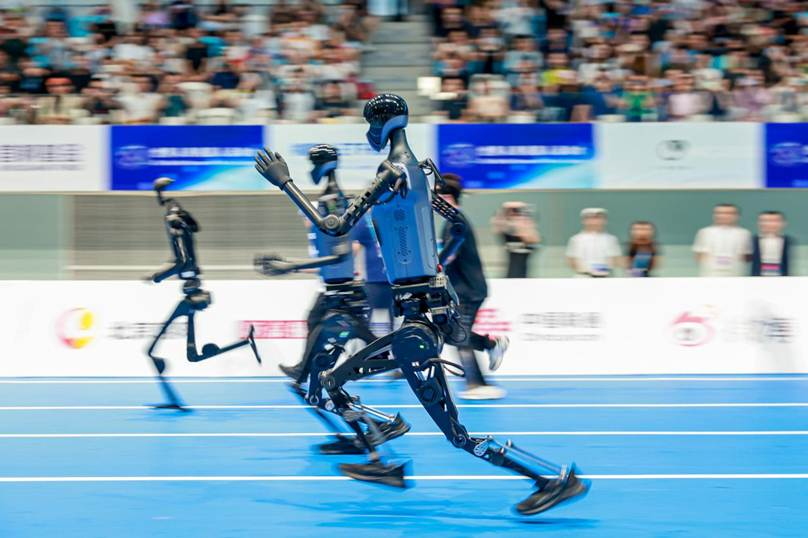
The most useful lesson from the 2026 Games is not that humanoids can outrun a human record. It is that buyers can evaluate a robot against a defined task: objects, environment, operating mode, cycle count, intervention rate, recovery, runtime and useful output. A successful competition run can justify a pilot. It cannot replace customer-operated acceptance testing.
The Games moved beyond sport
The second World Humanoid Robot Games opened in Beijing on August 22. The official programme contains 30 competitive events and 21 scenario-based events. Beijing government material describes tasks set in industrial, household, hotel, retail, office, library and emergency-response environments.
Reuters, in a report republished by SBS, focused on EV charging, restaurant work, emergency incident handling, industrial assembly, material loading and cable connection. It also reported that more than 40% of the events require full autonomy, attributing that figure to Huawei as a technology partner of the Games.
AP reported a 9.39-second result in the 100-metre event. That is a strong locomotion result under the event's conditions. Reuters also noted that braking remained a practical problem after the sprint. Both details matter: maximum speed and controlled completion are different engineering questions.
For the broader discussion of conference demonstrations and deployment readiness, read SpeedyDrone's World Robot Conference 2026 buyer analysis. This article has a narrower job: using scenario tasks to design procurement evidence.
A fast run proves motion, not a business workflow
A competition clip can establish that a capability exists. Procurement needs evidence that the configured system can deliver a useful result under the customer's conditions.
| Viral demonstration | What it can establish | What deployment still requires |
|---|---|---|
| Run fast once | Dynamic locomotion and control under the event setup. | Repeat the task across many cycles, stop safely and recover without damage. |
| Pick up a prepared object | The robot can perceive and grasp that object in that pose. | Handle agreed variation in object shape, weight, position, lighting and grip condition. |
| Work on a controlled stage | The team can prepare a successful operating envelope. | Operate in the buyer's workplace with people, clutter, network changes and schedule pressure. |
| Engineer standing nearby | The development team can supervise and recover the system. | Transfer startup, supervision, stop, recovery and maintenance to trained customer staff. |
| Best recorded result | The platform's demonstrated peak under the cited conditions. | Measured pass rate, intervention rate, cycle time, uptime and failure distribution. |
| Impressive movement | A reason to investigate the platform further. | A useful output such as a connected cable, moved item, completed inspection or validated dataset. |
This table is SpeedyDrone editorial guidance. It is not an official Games scorecard or a manufacturer rating.
What the practical events can tell a buyer
The value is not the medal table. Each task exposes a different part of the system, and each one suggests a follow-up test for the buyer's own objects and site.
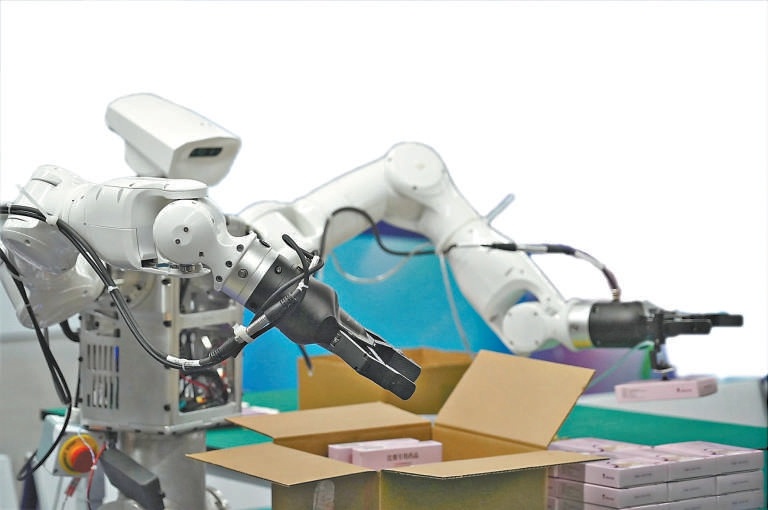
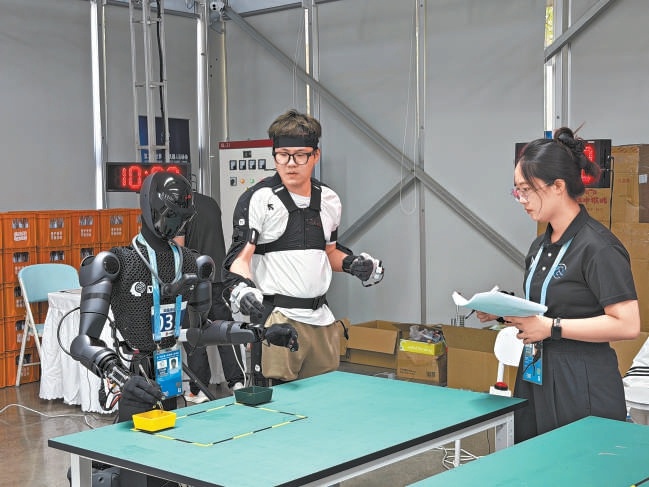
Cable connection
Vision · alignment · force
Reuters described cable connection as a test of vision, mechanical alignment and force control. A buyer should add connector orientation, cable slack, port-height variation, retry limits and damage inspection.
Material loading
Grasp · load · route
Industrial loading combines perception, manipulation and movement. A useful pilot varies box dimensions, weight, shelf position and aisle obstruction, then records mis-picks, drops and human resets.
EV charging
Pose · cable handling · safe stop
The connector must reach the correct port without uncontrolled contact. Buyer testing should define the vehicle set, cable condition, acceptable force, stop boundary and recovery after a failed insertion.
Restaurant work
Object variation · people · workflow
A restaurant is not a prepared lab bench. The purchasing team should define the exact items, work surface, customer separation, cleaning responsibility and what requires a person to take over.
Emergency response
Mobility · tools · fallback
A competition scenario can demonstrate a sequence in a controlled rule set. An emergency project still needs site-specific hazards, communications, supervision, safe withdrawal and a manual fallback approved by the responsible organization.
Full autonomy is a rule definition, not a universal readiness label
The phrase sounds absolute, but it always has a boundary: the task, environment, allowed assistance, timing, safety rules and scoring method. Buyers need the operating mode written into the acceptance test.
Teleoperation
A person supplies continuous or frequent control. This can be useful for research, data collection and high-judgement work, but labour and network needs remain part of the delivered workflow.
Supervised autonomy
The robot executes a bounded task while an operator monitors and can intervene. Buyers should record every intervention and define when the robot must pause or hand control back.
Competition full autonomy
The robot follows the event's autonomous-operation rules for a defined course or task. That result belongs to the exact entry, configuration and event conditions.
Commercial deployment
The customer owns safety, operators, integration, maintenance, updates, error handling and support. The robot must work inside that operating system, not only finish a scored run.
Turn the task into an acceptance test
A buyer does not need a full robot Olympics. One narrow mission with clear pass and fail conditions is enough to expose whether the proposed configuration deserves a larger pilot.
Write the test before the demonstration. If the success definition changes after the robot runs, the result is difficult to use in procurement.
- Task boundaryDefine the start state, finish state, useful output and maximum cycle time.
- Object setList the permitted sizes, weights, materials, poses, connectors, tools and tolerances.
- EnvironmentDocument floor, lighting, route, doors, people, obstacles, network and restricted space.
- Operating modeState what is teleoperated, supervised or autonomous and what human input is allowed.
- Cycle countRequire enough consecutive runs to expose intermittent faults, drift and battery effects.
- Success and interventionRecord complete success, partial completion, retry, reset, repositioning and remote takeover separately.
- Error recoveryTest a misaligned object, failed grasp, blocked route, communications loss and low-battery condition.
- Safety responseVerify stop access, safe state, restart control, fall or collision boundaries and operator procedure.
- Runtime and supportMeasure useful work between charging, maintenance and resets, then assign ownership for parts and software issues.
- Customer operationRepeat the test with trained customer staff and the customer's systems, not only the supplier's engineering team.
Connect the task to the robot form and configuration
The products below are real SpeedyDrone listings used as Canadian project examples. They are not presented as Games entries, and competition results should not be transferred to them.

Unitree G1 Series
A compact humanoid direction for motion, research and development evaluation. Confirm the exact edition, hands, compute and development entitlement before assigning a manipulation task.
Explore Unitree G1 configurations
AGIBOT X2 Series
A compact humanoid family for interaction and development-oriented projects. The base X2 and X2 Ultra do not have identical sensing, interfaces or secondary-development support.
Compare AGIBOT X2 modelsA full-size humanoid direction when adult-scale workspace and development scope matter. Confirm the safety area and exact H2 or H2 EDU configuration.
The family spans bipedal interaction models and a wheeled manufacturing platform. Select the model around interaction, manipulation and facility needs rather than the family name alone.
A wheeled embodied-robotics direction for data/model workflows and industrial operation. This can be a better fit than a biped when stability and dual-arm work matter more than legged motion.
A quadruped and wheel-leg direction for development, terrain, inspection or payload projects. If the job does not require human-scale manipulation, the humanoid form may add complexity without improving the output.
Read the broader humanoid versus robot dog buyer guide when the robot form is still undecided.
The Games are most useful when the buyer borrows the test discipline, not the medal result.
A sprint, cable connection or loading challenge can reveal what has become technically possible. A commercial decision starts one step later. The customer defines the task, acceptable variation, autonomy boundary, safety procedure, intervention limit and output, then tests the exact configuration under those conditions.
That approach also prevents a common purchasing mistake: choosing the most human-looking robot before deciding whether the project needs legs, hands, perception, SDK access, teleoperation, industrial mobility or a managed interaction workflow.
Request a robotics project recommendation
Send SpeedyDrone the task, site, objects, desired operating mode, development team, safety limits, integration requirements and target timeline. We can help narrow the robot form and configuration before a quote or demonstration.
World Humanoid Robot Games 2026 buyer FAQ
What are the World Humanoid Robot Games 2026?
The second World Humanoid Robot Games run in Beijing from August 22 to 26, 2026. Official Beijing material lists 51 events: 30 competitive events and 21 scenario-based events, with 1,301 competition sessions.
Did a humanoid robot really run 100 metres in 9.39 seconds?
AP reported a 9.39-second result during the 2026 Games. It is an event result under the cited competition conditions. It does not mean the robot can perform an unrelated warehouse, restaurant or emergency task.
Are all the World Humanoid Robot Games events fully autonomous?
No. Reuters reported that more than 40% require full autonomy, citing Huawei as a technology partner. Buyers should not apply that description to every event or treat it as proof of unsupervised commercial deployment.
What is the difference between competition autonomy and commercial autonomy?
Competition autonomy is defined by a particular rule set, course, allowed assistance and scoring method. Commercial deployment also includes customer operators, safety, integration, maintenance, change control, error recovery, support and accountability.
Why is cable connection a useful humanoid test?
Reuters described it as a test of vision, mechanical alignment and force control. A buyer can make the test more relevant by varying connector pose, cable slack and port height, then measuring retries, damage and human intervention.
What should a Canadian buyer measure during a humanoid pilot?
Measure repeated task completion, partial failures, cycle time, intervention, recovery, useful runtime, safe-stop behaviour and the quality of the final output. The test should include real objects, the intended site and trained customer staff.
Did the Unitree and AGIBOT products shown in this article compete at the Games?
This article does not make that claim. The product images are current SpeedyDrone examples for Canadian project planning. No competition result is transferred to a Unitree or AGIBOT listing without model-specific evidence.
Which humanoid robot should a Canadian university or business buy?
Start with the task, scale, object set, operating environment, hands or grippers, compute, sensors, SDK access, safety area and support scope. SpeedyDrone can compare the relevant Unitree and AGIBOT configurations after those requirements are defined.
Sources and methodology
- Beijing Municipal Government: 2nd World Humanoid Robot Games highlights and event figures
- Beijing Municipal Government: scenario-based events and real settings
- Beijing government report: industrial packaging, material handling and retail tasks
- Beijing government report: eight dexterous-hand tasks
- Reuters via SBS: autonomy share, practical task examples and sprint context
- Associated Press: opening-day Games report and 9.39-second result
Information checked August 23, 2026. Competition results belong to the cited teams, robots and event conditions. SpeedyDrone's buyer tables and acceptance-test framework are editorial guidance, not Games rules or manufacturer performance guarantees. Product images are from current SpeedyDrone listings and are not represented as Games photography or proof of participation.


