


How to Build a Municipal Drone Program in Canada
A municipality should not start by asking which drone to buy. It should start by defining the public-service problem, the legal operating category, the data that will be collected, who is accountable and how the program will earn public trust.

Build a public service, not a technology demonstration.
A municipal program succeeds when a repeatable drone mission improves safety, service speed, field visibility, infrastructure decisions or documentation without creating unmanaged aviation, privacy or operational risk.
Start with a measurable municipal problem.
- Faster emergency situational awareness.
- Safer roof, bridge or utility inspection.
- More frequent construction documentation.
- Better mapping of municipal assets.
- Reduced contractor mobilization for routine capture.
Match the aircraft and team to the flight category.
- Basic, Advanced, Level 1 Complex or SFOC.
- Aircraft declarations and payload weight.
- Airspace, people, aerodromes and altitude.
- Visual observer and incident-command roles.
- Weather, emergency and lost-link procedures.
Decide how data will be governed before collection.
- Purpose and legal authority.
- Privacy assessment and public notice.
- Retention, access and disclosure.
- Records and freedom-of-information handling.
- Cybersecurity, cloud and vendor controls.
Prioritize recurring missions with clear decisions and limited ambiguity.
The best first mission is not necessarily the most dramatic. It is the mission that can be governed, repeated, measured and explained to the public.
| Municipal mission | Typical department | Program value | Governance level |
|---|---|---|---|
| Construction and asset mapping | Public works, engineering, planning | Orthomosaics, progress records, site context and measurements | Strong first pilot Start here |
| Roof, bridge and facade documentation | Facilities, roads, asset management | Reduces exposure to heights and supports maintenance planning | Strong first pilot Start here |
| Fire and emergency situational awareness | Fire, emergency management | Thermal context, scene overview and responder support | High training and incident-command integration Scale carefully |
| Search support | Fire, emergency management, police where applicable | Rapid area overview and thermal search support | High operational, privacy and evidence review High control |
| Flood, storm and damage documentation | Emergency management, public works | Access to unsafe areas and repeatable recovery records | Strong municipal resilience use case Scale |
| Bylaw or enforcement surveillance | Bylaw, regulatory services | Potential evidence and situational information | Privacy, legal authority and public-trust review required Do not default |
| Festivals and public events | Events, emergency management, communications | Situational imagery and communications content | SFOC-RPAS required for advertised-event flight Special operation |
| Automated recurring inspection | Utilities, facilities, security, industrial sites | Scheduled capture, remote response and trend analysis | Introduce only after mature governance Phase later |
Name the accountable roles before naming the aircraft.
Municipal programs cross departmental boundaries. Governance should connect aviation, service delivery, procurement, IT, privacy, records, risk, labour relations and communications.
Owns mandate and public value.
Approves program scope, budget, risk tolerance, interdepartmental authority and escalation.
Owns the operating system.
Maintains policy, budget, vendors, metrics, audits, change control and deployment roadmap.
Owns aviation standards.
Approves pilots, mission plans, aircraft configuration, flight currency, emergency procedures and flight records.
Owns airworthiness and readiness.
Tracks firmware, inspections, batteries, service, defects, quarantine and return-to-service decisions.
Own the information lifecycle.
Review collection authority, notice, access, disclosure, retention, legal holds and destruction.
Own devices, accounts and cloud controls.
Manage identity, MFA, mobile devices, encryption, integrations, network access, vendor review and incident response.
Owns the decision supported by the flight.
Defines the operational question, receives the output and verifies whether the mission produced value.
Own contract and liability review.
Review authority, procurement, indemnity, claims, evidence, insurance, labour and third-party agreements.
Explains the program publicly.
Maintains public-facing purpose statements, notices, complaint paths and accurate descriptions of capabilities.
Procure a deployable capability, not a box of equipment.
The procurement document should describe the mission, outputs, support and acceptance standard. Avoid writing the tender around one headline specification without considering training, service, data and lifecycle cost.
Define need and authority.
Document service problem, department, public benefit, legal authority, data type, flight category and budget owner.
Conduct market sounding.
Review aircraft, payloads, Canadian support, training, software, interoperability and vendor implementation capability.
Run a structured demonstration.
Use a municipal site, real deliverable, written test plan and objective scoring rather than a generic product flight.
Select procurement process.
Apply the municipal procurement by-law, delegation authority, trade agreements and provincial municipal-contract rules.
Issue performance requirements.
Specify deliverables, aircraft assurance, training, support, cybersecurity, data rights, warranty, acceptance and service levels.
Evaluate total cost.
Include batteries, software, care, implementation, travel, integration, support, storage and annual renewal.
Complete acceptance testing.
Verify equipment, serials, firmware, payload output, accounts, training, documentation and a representative mission.
Hold contract review gates.
Review performance, incidents, service, renewals, data access, user licences and expansion before adding aircraft.
| Suggested evaluation category | Example weighting | What to evaluate |
|---|---|---|
| Mission and technical fit | 25% | Aircraft, payload, sensing, weather, flight time, safety assurance and deliverable quality |
| Implementation and training | 20% | Instructor qualifications, municipal workflow, SOP support, acceptance mission and recurrent training |
| Support and lifecycle | 15% | Canadian service, warranty, care, parts, turnaround, loaner or contingency options |
| Data, cyber and privacy | 15% | Ownership, location, encryption, accounts, logs, retention, subprocessors, export and offboarding |
| Total cost of ownership | 15% | Hardware, software, batteries, training, renewal, installation, maintenance and storage |
| Vendor experience and references | 10% | Comparable municipal deployments, implementation team, references and risk management |
Match the system to the operating model.
A municipality can begin with one mobile system, share it across approved departments, and add specialized payloads or automation only when mission demand and governance are proven.
Public works, construction and mapping pilot.
- Compact enterprise mapping platform.
- Mechanical shutter and RTK-capable workflow.
- Three-battery SpeedyDrone configuration.
- Good first aircraft for engineering and asset teams.
- Add mapping software, control, insurance and training.
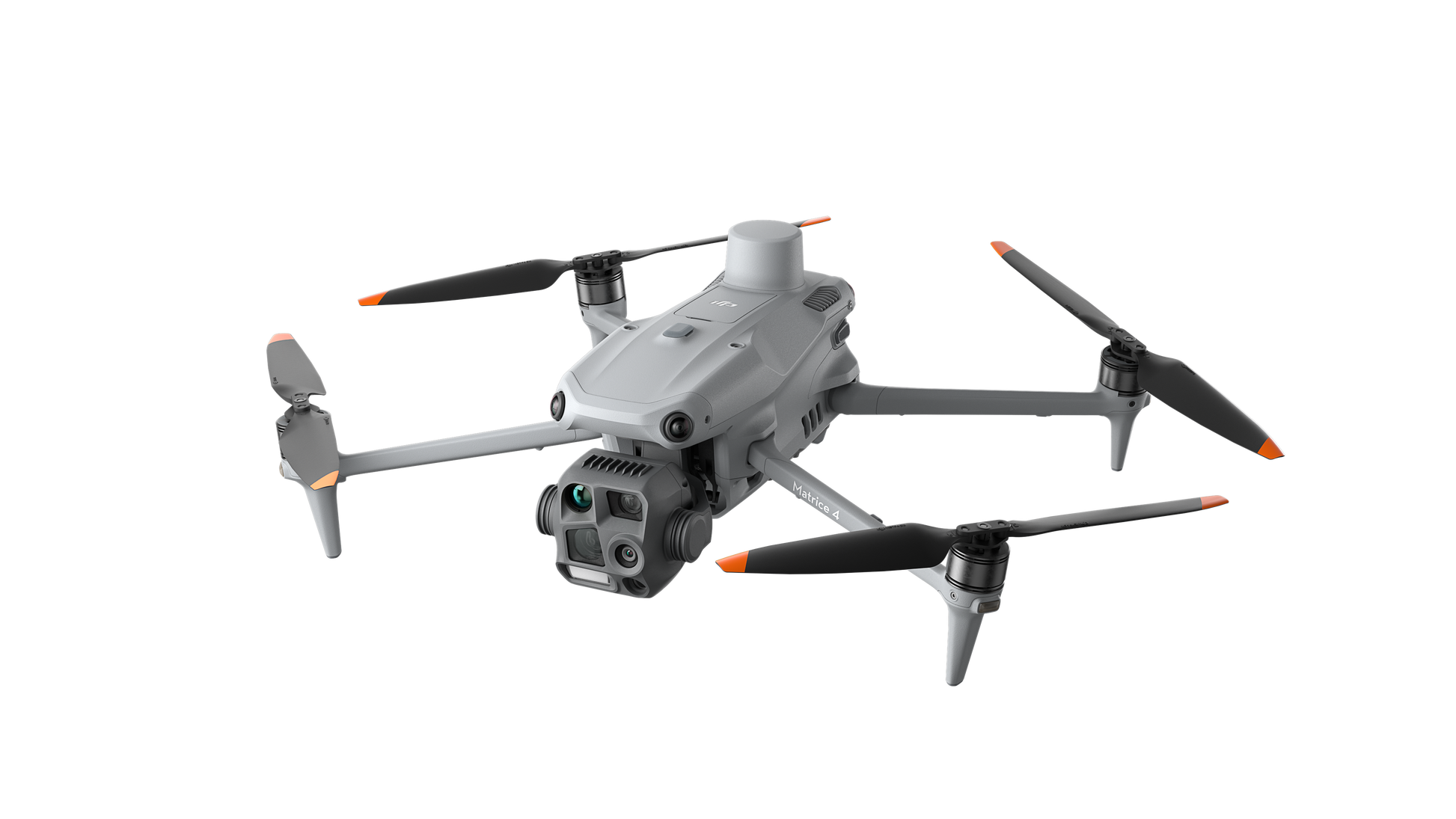
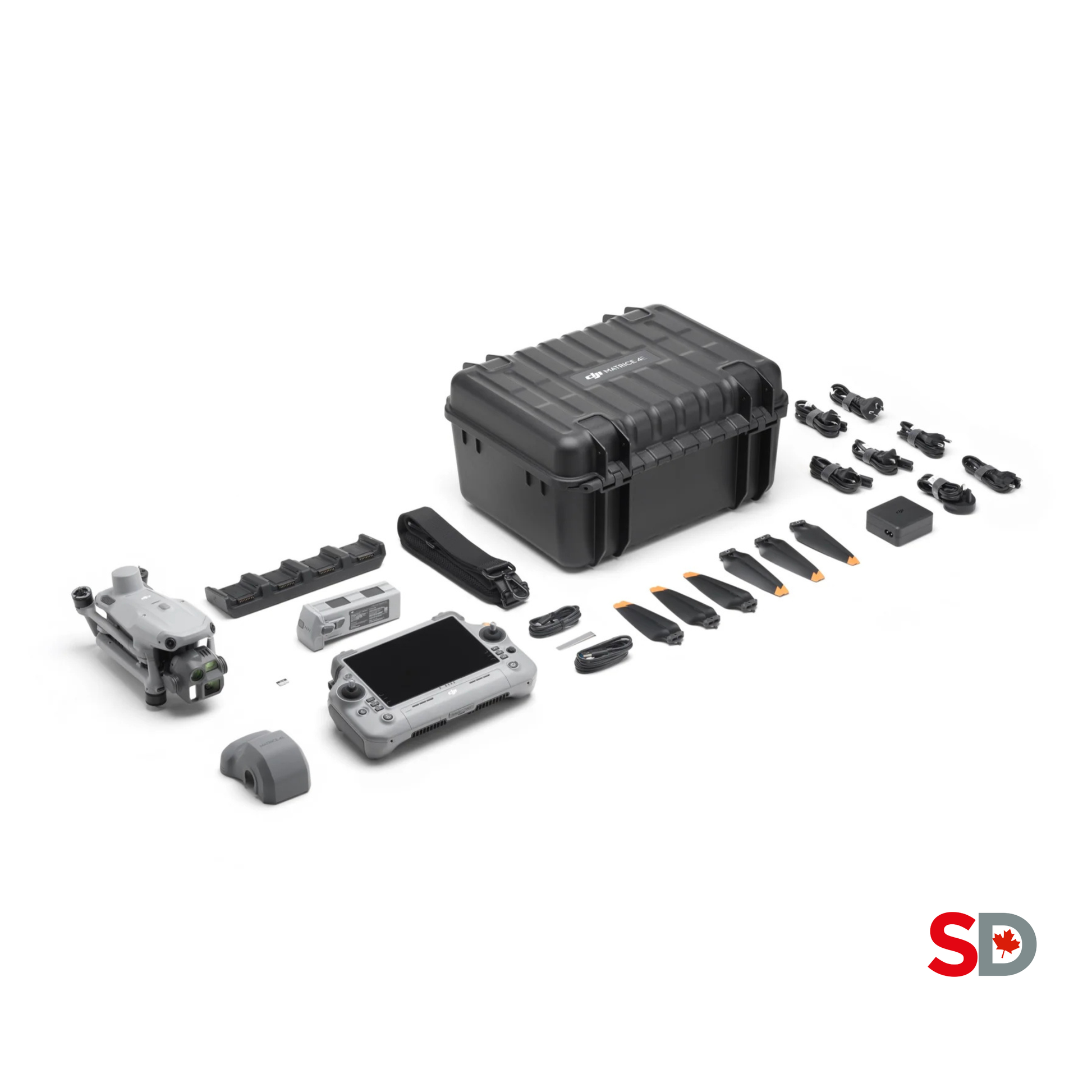
Fire, emergency management and thermal inspection.
- Thermal, zoom, low-light and laser measurement tools.
- AS1 speaker and AL1 spotlight in the current package.
- Field-ready battery configuration.
- Good compact platform for response and facilities teams.
- Requires department-specific training and incident-command integration.
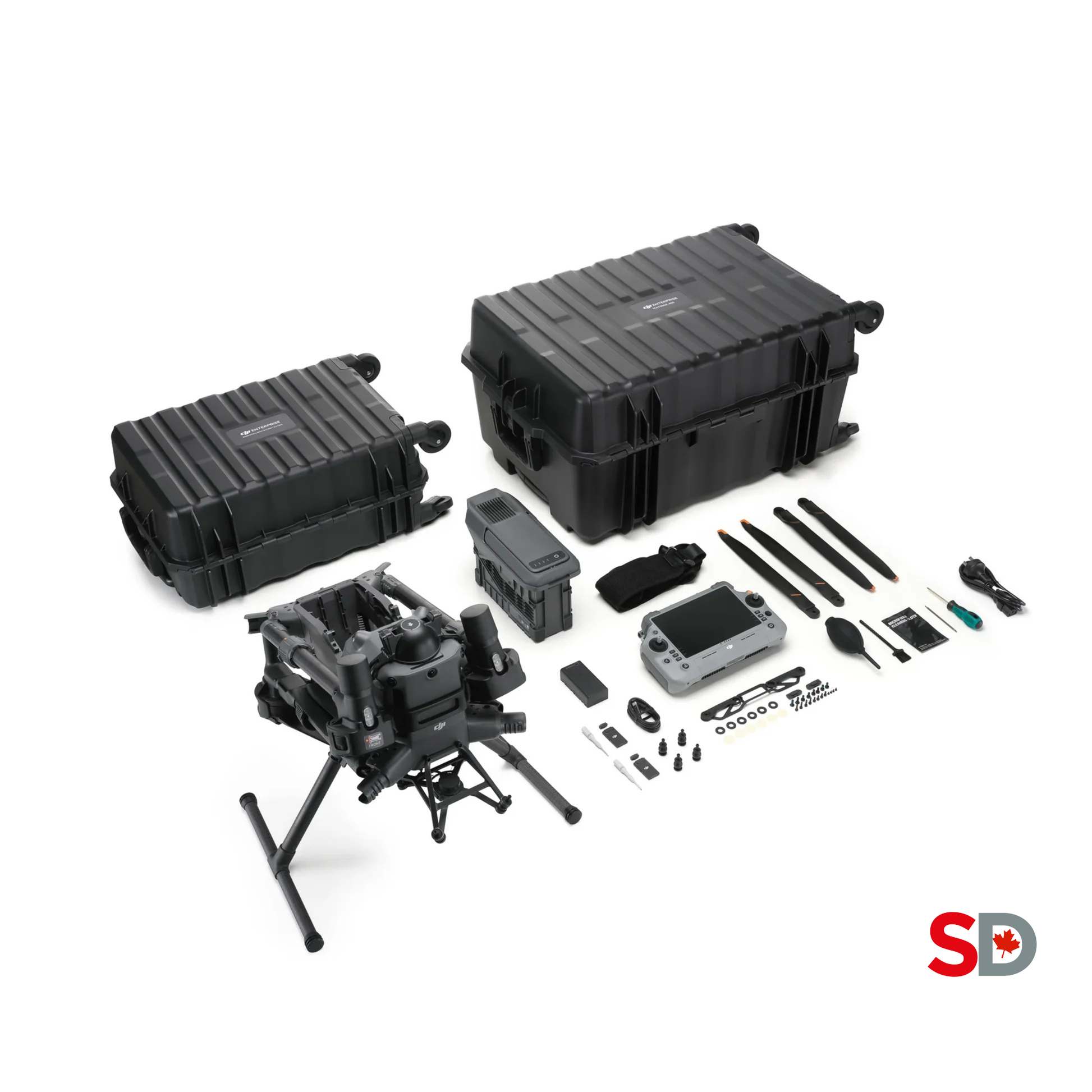
Heavy enterprise and specialized municipal operations.
- Supports specialized thermal, zoom, LiDAR and other payloads.
- Designed for longer-duty enterprise operations.
- Suitable for utilities, major inspection and advanced public safety.
- Payload, additional batteries and software are separate.
- Best after the municipality has a mature operating team.
Remote recurring capture and response infrastructure.
- Dock hardware price excludes aircraft and site deployment.
- Requires power, network, mounting, security and software.
- Requires remote-operations procedures and maintenance access.
- Best for stable recurring missions and controlled sites.
- Do not procure before the mobile workflow is proven.
Certification is the entry requirement, not the training program.
Municipal pilots need aviation knowledge, equipment proficiency, mission competence, public-sector data awareness and recurrent practice. Visual observers and managers also need defined training.
| Training layer | Who needs it | Minimum outcome |
|---|---|---|
| Transport Canada certificate | Pilot-in-command | Basic, Advanced or Level 1 Complex certificate matched to the mission |
| Flight review and hands-on skills | Pilots | Manual control, normal procedures, emergencies, RTH, landing and site assessment |
| Aircraft and payload training | Pilots and payload operators | Setup, sensor modes, batteries, firmware, maintenance, limitations and field troubleshooting |
| Mission qualification | Department-specific crew | Mapping, thermal, search support, inspection, emergency response or dock workflow |
| Visual observer training | Observers | Airspace scan, communication, people and hazard monitoring, lost-link and emergency roles |
| Privacy and records | All users with data access | Collection limits, access, retention, disclosure, FOI and incident reporting |
| Cybersecurity and account use | Pilots, analysts and administrators | MFA, device security, exports, removable media, cloud access and offboarding |
| Recurrent competency | All operational crew | Documented recency, emergency drills, scenario exercises and annual evaluation |
Write procedures for the complete mission lifecycle.
SOPs should be short enough to use, specific enough to audit and controlled through version management. Separate policy, general operations and mission-specific checklists.
Scope and approval.
- Approved departments and use cases.
- Prohibited or high-review uses.
- Authority to approve missions.
- Roles and escalation.
Site, airspace and risk.
- Airspace and aerodrome review.
- Weather and visibility.
- People, roads and property.
- Contingency and emergency landing areas.
Briefing and communication.
- Pilot, observer and payload roles.
- Radio or verbal calls.
- Incident-command integration.
- Abort authority.
Aircraft readiness.
- Firmware and account status.
- Battery, propeller and sensor checks.
- Home point, RTH and geozone review.
- Defect and quarantine process.
Act before improvising.
- Lost link and flyaway.
- Low battery and forced landing.
- Injury, property damage and airspace conflict.
- Police, aviation and internal notifications.
From capture to destruction.
- File naming and project ID.
- Transfer, encryption and storage.
- Access, export and disclosure.
- Retention, legal hold and deletion.
Keep the fleet serviceable.
- Scheduled inspections.
- Battery cycle and storage logs.
- Firmware-change approval.
- Return-to-service sign-off.
Explain the mission respectfully.
- Public notice and signage.
- Questions and complaint channel.
- Media and communications protocol.
- Protection of incident details.
Improve every deployment.
- Mission objective and result.
- Safety and privacy events.
- Equipment and software issues.
- Corrective actions and policy changes.
The aircraft lands. The information risk continues.
Drone data can contain people, vehicles, homes, licence plates, location information, incident details and critical infrastructure. Municipal controls must follow the data throughout its lifecycle.
Collect only what the municipal purpose requires.
- Document legal authority and operational necessity.
- Complete the applicable privacy impact assessment or review.
- Use flight paths, zoom and framing to reduce incidental collection.
- Provide notice where required and operationally appropriate.
- Restrict access to personnel who need the data.
- Set a defensible retention period before collection.
- Document disclosure, complaint and incident processes.
Treat imagery, logs and derived maps as managed records.
- Classify raw video, thermal, maps, screenshots and flight logs.
- Assign record series, retention and disposition authority.
- Preserve metadata required to interpret the record.
- Support freedom-of-information searches and legal holds.
- Separate authoritative records from temporary working copies.
- Control deletion across devices, cloud platforms and exports.
Govern devices, identities, networks and vendors.
- Classify data before selecting cloud or local storage.
- Use named accounts, MFA and least-privilege access.
- Manage controllers and tablets as municipal devices.
- Encrypt transfers, backups and removable media.
- Review vendor subprocessors, support access and breach terms.
- Log exports, administrator actions and offboarding.
- Test backup, recovery and incident response.
Apply the public-sector law that governs the municipality.
- Ontario municipalities and many municipal bodies are governed by MFIPPA.
- Ontario requires documented safeguards against unauthorized record access.
- Quebec public bodies must establish and publish personal-information governance rules.
- Quebec governance expressly addresses video surveillance and staff training.
- Local legal and privacy officers should approve the final framework.
Choose the mission category before scheduling the flight.
Municipal purpose does not create a separate general exemption. The aircraft, weight, people, airspace, distance, altitude and operating method determine which Transport Canada category applies.
| Operating category | Municipal relevance | Core planning point |
|---|---|---|
| Microdrone under 250 g | Low-risk documentation or training in limited situations | No pilot certificate or registration, but negligent or reckless operation remains prohibited |
| Basic | Rural public works and open-area missions | Small drone, VLOS, uncontrolled airspace, more than 30 m from people and required aerodrome distances |
| Advanced | Most urban, emergency and municipal enterprise operations | Advanced certificate, flight review, registration, aircraft safety assurance and permissions matched to the operation |
| EVLOS or sheltered operations | Selected inspection and linear missions | Advanced privileges, defined observers or shelter geometry and current category conditions |
| Level 1 Complex | Lower-risk BVLOS programs in eligible areas | Level 1 Complex pilot, RPOC, declared aircraft and organizational safety system |
| SFOC-RPAS | Advertised events, flights above 122 m and operations outside standard categories | Operation-specific application, conditions and preparation; event flights require permission at all drone weights |
Budget for implementation, governance and annual operation.
The ranges below are first-year planning allowances before tax. Final cost depends on procurement, number of pilots, software, insurance, union or staffing arrangements, site installation and the selected service level.
One department and one mobile aircraft system.
- Matrice 4E or 4T class aircraft.
- Three-battery field kit.
- Two to four trained pilots or crew.
- Initial SOP and privacy work.
- Insurance, cases, data and software.
- Representative pilot project and review.
Shared fleet, broader training and centralized governance.
- Two mobile systems or one compact plus one heavy platform.
- Mapping, thermal and shared enterprise software.
- Department mission qualifications.
- Dedicated program management and maintenance reserve.
- Formal privacy, records and cyber controls.
- Expanded insurance and recurrent training.
Specialized payloads, RPOC or dock infrastructure.
- Matrice 400, H30T, LiDAR or other payloads.
- Dock, compatible aircraft and installation.
- FlightHub, integrations and cyber review.
- Level 1 Complex or SFOC pathway where applicable.
- Site engineering, power, network and physical security.
- Ongoing monitoring, maintenance and remote procedures.
| Recurring annual category | Budget treatment | Examples |
|---|---|---|
| Insurance | Quote by aircraft, mission, liability limit and operator profile | Liability, hull where available, deductibles and special-use endorsements |
| Software and cloud | Annual or multi-year procurement | FlightHub, mapping, LiDAR, CAD, storage, integrations and user seats |
| Maintenance and batteries | Reserve by equipment value and mission intensity | Care, repairs, batteries, props, calibration, shipping and downtime |
| Training and currency | Per pilot and role | Emergency drills, recurrent evaluation, new payloads and regulatory changes |
| Program administration | Loaded staff hours | Procurement, policy, privacy, records, audits, scheduling and reporting |
| Operational labour | Mission hours x crew cost | Planning, travel, pilot, observer, analyst, reporting and after-action review |
Scale only after the municipality can govern the first mission.
A phased rollout reduces procurement risk, exposes hidden workload and gives privacy, records, IT and operational teams time to test the program before expansion.
Charter the program.
Appoint sponsor and manager, define approved use cases, establish working group and set success measures.
Complete assessments.
Review aviation category, procurement, privacy, records, IT, cyber, insurance, labour and public communication.
Demonstrate and procure.
Run representative tests, score vendors, finalize specifications and award under municipal procurement rules.
Train and document.
Complete certificates, hands-on training, mission qualifications, SOPs, data controls and maintenance procedures.
Run controlled pilot missions.
Use approved sites, observe all crew roles and document time, quality, risks, complaints and decisions supported.
Audit the program.
Review records, access, privacy, maintenance, training, flight logs, vendor performance and actual cost.
Approve production use.
Correct gaps, publish the program purpose, confirm metrics and approve only the use cases that met acceptance.
Add departments or automation.
Expand aircraft, payloads, Dock 3 or complex operations only through formal change control.
Measure service outcomes, safety and trust together.
Mission count alone rewards activity rather than value. A municipal dashboard should show what the drone changed, what it cost, and whether the program remained safe and accountable.
| KPI group | Example measures |
|---|---|
| Service delivery | Deployment time, missions completed, departments served, report turnaround and decisions supported |
| Financial value | Cost per mission, contractor cost avoided, staff hours, repeat work and asset utilization |
| Safety | Hazard reports, incidents, aborts, defects, emergency drills and corrective-action closure |
| Privacy and records | Complaints, access requests, unauthorized access, retention compliance and disclosure events |
| Operational readiness | Pilot currency, aircraft availability, battery health, maintenance downtime and software readiness |
| Public trust | Published policy, public inquiries, complaint resolution, transparency reports and community engagement |
Most municipal programs fail through governance gaps, not aircraft limitations.
These failures can be prevented by defining authority, data, support and performance before operations begin.
Equipment does not create a mission.
The aircraft is purchased without a service owner, accepted deliverable or annual flight volume.
The program stops when one person is unavailable.
Build at least a small cross-trained crew and define succession, recency and backup coverage.
Imagery is copied across devices and shared drives.
Assign privacy, records and IT ownership before the first capture.
The manual does not match the municipality.
Adapt procedures to departments, airspace, software, records, emergency plans and labour structure.
Software, batteries and training disappear in year two.
Approve a recurring operating budget with the initial capital purchase.
The permanent site exposes unresolved workflow issues.
Prove mobile missions, software, privacy and maintenance before adding infrastructure.
Procurement, training, SOP and governance questions answered.
What is a municipal drone program?
A municipal drone program is a governed operating capability, not merely an aircraft purchase. It combines approved use cases, procurement, qualified personnel, aviation compliance, standard operating procedures, privacy and records controls, cybersecurity, maintenance, insurance, public communication and performance measurement.
Which municipal department should launch the first drone pilot?
The best first department is usually the one with a recurring, measurable and low-ambiguity mission. Common starting points include public works mapping, infrastructure documentation, emergency-management situational awareness and fire-service thermal assessment. High-surveillance or enforcement uses need additional legal, privacy and public-trust review.
Does every municipal pilot need an Advanced Drone Pilot Certificate?
Not every mission is legally Advanced, but Advanced certification is a practical municipal baseline because municipalities often operate in controlled airspace, near people, around urban infrastructure or with aircraft that require declared safety features. The exact certificate and aircraft declaration must match the operation.
When does a municipality need a Level 1 Complex certificate and RPOC?
Level 1 Complex certification and an RPAS Operator Certificate are required for lower-risk BVLOS operations under the current Canadian framework. The organization must appoint an accountable executive, identify maintenance responsibility, implement training and SOPs, and maintain a safety-risk process.
Can a municipality fly a drone at a public festival or advertised event?
A drone flight at an advertised event is a special operation and requires an SFOC-RPAS regardless of aircraft weight. Event-organizer approval, site planning, crowd separation, airspace and any additional conditions also apply.
How should a municipality protect privacy when using drones?
Start with a defined lawful purpose, collect only what is necessary, complete the applicable privacy review, limit operators and viewers, use visible public notices where appropriate, set short and defensible retention periods, control disclosure, log access and create a process for access requests, complaints and incidents.
Are municipal drone images public records?
Drone photographs, video, thermal files, maps, flight logs and derived outputs may become municipal records subject to access, privacy, retention, litigation-hold and records-management rules. The municipality should classify each data type before operations begin rather than deciding after a request is received.
What should be included in a municipal drone RFP?
A strong RFP defines the mission, required aircraft assurances, sensor outputs, Canadian support, training, warranty or care, cybersecurity, data ownership, cloud terms, export formats, acceptance testing, documentation, spare parts, service levels, pricing transparency and implementation responsibilities.
Should a municipality buy DJI Dock 3 during the first phase?
Usually not. A dock is best introduced after the municipality has proven the mission, operating area, staffing, privacy controls, network, software, maintenance and regulatory pathway. Starting with a mobile pilot team exposes workflow issues before the municipality commits to permanent site infrastructure.
How much does a municipal drone program cost in Canada?
A focused mobile pilot program may require approximately CAD 15,000-30,000 before tax. A multi-department program may require CAD 35,000-75,000. Heavy enterprise, specialized payload or automated dock programs can reach CAD 60,000-150,000 or more. These are planning ranges rather than quotations.
Which drone is best for municipal emergency response?
Matrice 4T is a compact thermal and zoom option for response teams. Matrice 400 supports larger payloads, longer-duty workflows and specialized inspection or public-safety missions. The correct aircraft depends on mission, environment, redundancy, weather, people proximity, payload, data and procurement requirements.
How should a municipality measure program success?
Track missions completed, deployment time, staff hours, data turnaround, avoided contractor cost, operational decisions supported, safety events, maintenance downtime, public complaints, privacy incidents, training currency and whether each mission met a documented service-level objective.
Verify the provincial and municipal rules before procurement.
Build the municipal operating model before issuing the equipment order.
Send the municipality, province, department, proposed use cases, operating environment, privacy and cloud requirements, number of pilots, procurement timeline, budget range and whether the team needs a demonstration, equipment quote, training, SOP support, financing or a phased deployment assessment.


