


Portable power buyer guide · Canada
One is easier to move. The other gives you twice the stored energy.
The useful comparison is not simply 1000 versus 2000. It is how much energy, continuous output, charging flexibility and carrying weight your actual workflow can support.
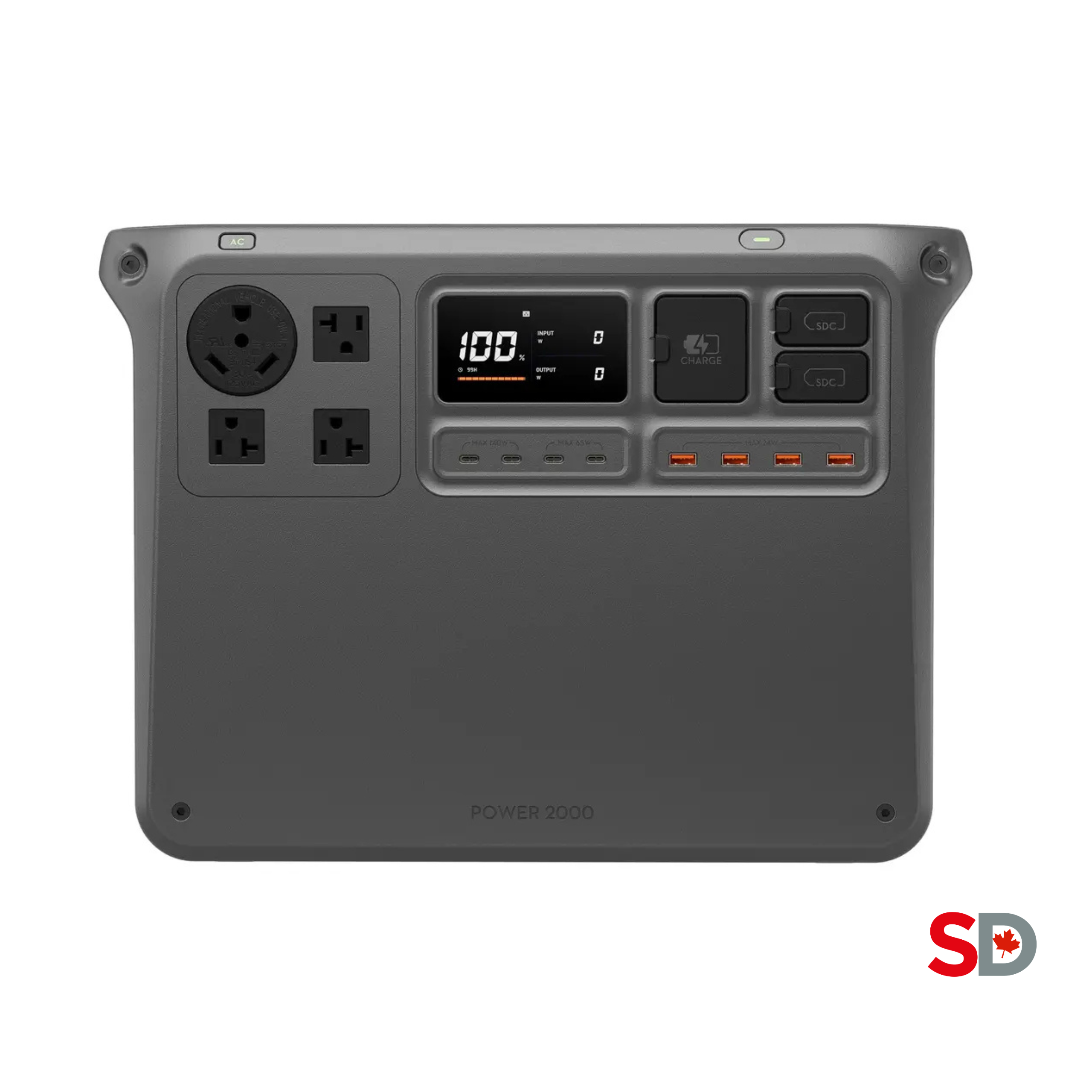
Choose DJI Power 1000 V2 when a 1024Wh station with 2600W continuous output covers your creator gear, travel setup or shorter backup window and portability matters. Choose DJI Power 2000 when 2048Wh, 3000W continuous output, two SDC ports and a larger expansion path justify a heavier unit. Both live SpeedyDrone listings were marked backorder when checked August 5, 2026, so confirm timing before ordering.
Compare Current DJI Power Options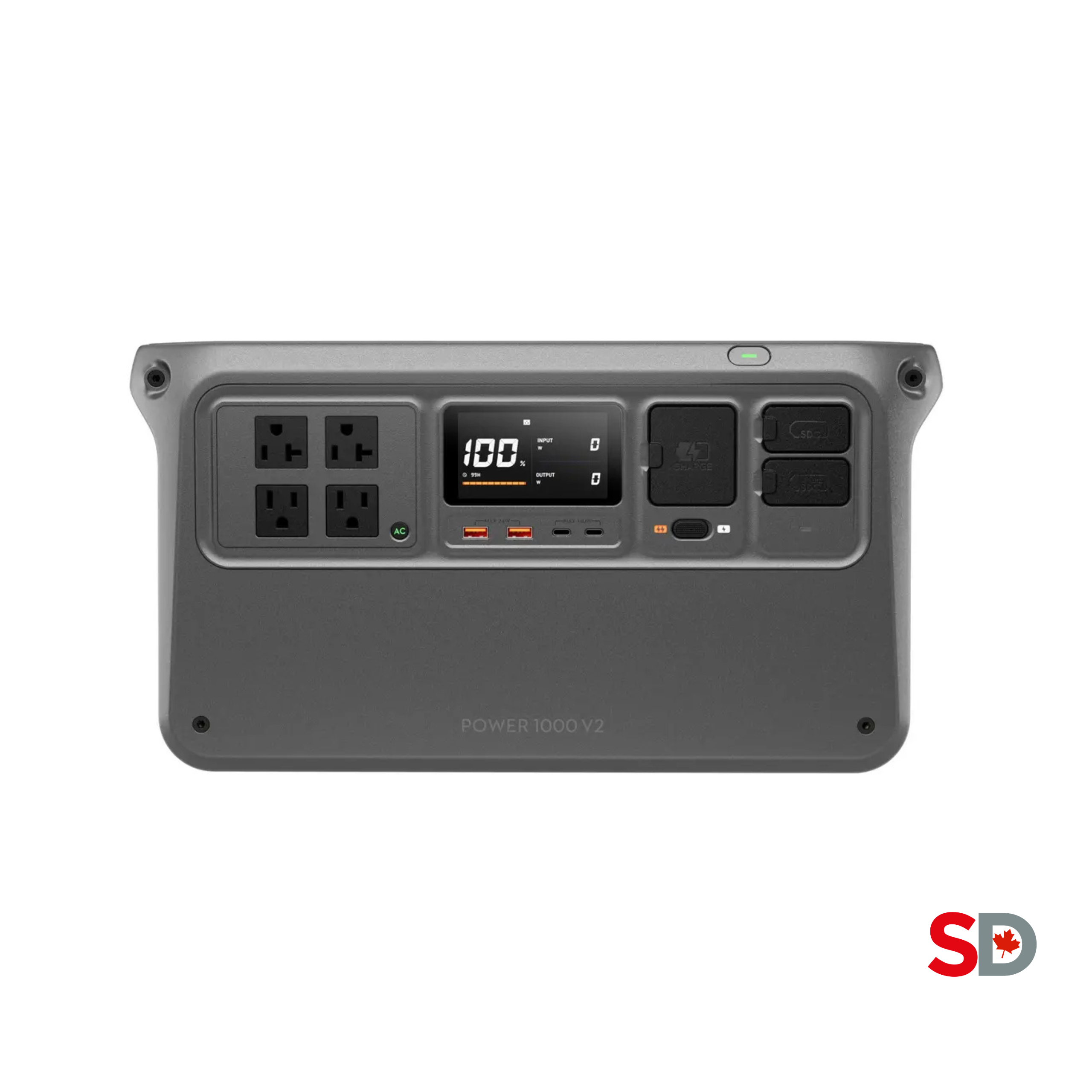
Verified comparison
Size the station from energy and load, not the model name.
Power 1000 V2: 1024Wh. Power 2000: 2048Wh. Real usable energy is lower after conversion losses and varies with temperature, load and battery condition.
Power 1000 V2: 2600W. Power 2000: 3000W. Confirm the continuous and startup demand of every device before connecting it.
SpeedyDrone lists a 56-minute full-recharge reference for Power 1000 V2. DJI lists 55 minutes to 80% and 90 minutes to full for Power 2000 on 120V under stated lab conditions.
Power 2000 has two complete SDC ports and DJI publishes expansion up to 22,528Wh with separately sold batteries. Expansion accessories and compatibility must be confirmed.
Runtime planning: divide the station's watt-hours by the average watt load, then apply a conservative loss and reserve allowance. A 500W device will not run for exactly 2.048 hours from a 2048Wh station.
Four-step power plan
Turn the buying decision into a small energy audit.
Record every device, its normal draw, startup surge and expected hours of use. Separate critical loads such as communications and flight-battery charging from convenience loads such as lighting or a coffee maker. The highest-watt appliance determines output headroom; the full list determines daily energy.
Multiply each device's average watts by its operating hours, add the results, then include a reserve for conversion losses, cold conditions and schedule changes. If the plan already approaches 1024Wh before reserve, the Power 2000 becomes easier to justify. If it does not, the smaller station can avoid carrying unused capacity.
A station that can be recharged between production blocks needs less stored energy than one supporting a remote day with no input. Confirm whether the team will use wall power, a compatible vehicle path or solar, then verify the required cables, input limits and real time available at the site.
Do not connect every load for the first time on a client day. Run the intended chargers, laptops, lights or appliances together, verify startup behaviour and observe the station's remaining-time estimate. A rehearsal reveals hidden surge, cable and workflow problems that a specification table cannot.
Canadian field note: cold-weather operations can change battery performance and charging behaviour. Store and operate the station within DJI's published conditions, protect it from moisture and allow additional reserve rather than treating the label capacity as guaranteed usable energy.
Buyer fit
Pick the smaller system unless the larger energy budget solves a named problem.
Power 1000 V2 fits:
Creators charging laptops, cameras and lights; road trips; shorter outages; compact mobile workstations; buyers who move the unit frequently.
Power 2000 fits:
Longer backup windows; higher simultaneous loads; field teams with more devices; RV or job-site use; buyers planning a larger SDC-based ecosystem.
Check before purchase
List every device's running watts, startup surge, daily hours, outlet type and criticality. Add charging source, solar conditions, storage temperature and transport limits.
Do not assume
A portable station is not a whole-home generator, electrical-panel installation or guaranteed UPS for every sensitive device. Use qualified electrical advice where required.
Decision rule: choose Power 1000 V2 if a documented rehearsal completes the work with adequate reserve and the team values easier movement. Move to Power 2000 when the rehearsal exposes a repeatable energy shortfall, a higher simultaneous load or a need for the published expansion path. Do not select Power 2000 solely because its number is larger. Also confirm the current Canadian listing status, included cables, separately sold charging accessories and planned vehicle or solar connection. That check prevents a technically capable station from arriving without the accessory needed to recharge it in the field.
FAQ
DJI Power comparison questions
What is the main difference between DJI Power 1000 V2 and Power 2000?
Power 1000 V2 stores 1024Wh and provides 2600W continuous output. Power 2000 stores 2048Wh and provides 3000W continuous output, with a larger published expansion path.
Which model is easier to use for travel and mobile production?
Power 1000 V2 is usually the better fit when the required energy and output are sufficient and the station must be moved frequently. Confirm actual weight and transport requirements on the official specification page.
Does twice the capacity mean exactly twice the runtime?
No. Runtime depends on conversion losses, load profile, temperature, device efficiency and reserve policy. Capacity is a planning input, not a guaranteed runtime.
Can either station run any appliance below its continuous-output rating?
Not automatically. Check startup surge, power quality, outlet requirements and the appliance manual in addition to continuous watts.
Can both systems recharge from solar or a vehicle?
Both product families support compatible solar and vehicle charging paths, but accessories, input limits and connection methods differ. Confirm the exact accessory combination before ordering.
Are Power 1000 V2 and Power 2000 currently in stock in Canada?
The live SpeedyDrone pages were marked available on backorder when checked August 5, 2026. Open the current listing or contact SpeedyDrone for timing.
Which model is better for drone field charging?
Choose from the total battery energy required, compatible charging cable, charge cycles per day and ability to recharge the station between missions. The larger model is not automatically necessary.
Where can I compare current Canadian DJI Power options?
Use SpeedyDrone's live Power 1000 V2 collection, the Power 1000 V2 product page and the Power 2000 product page for current status and specifications.
Sources checked August 5, 2026
Build the power plan before choosing the box.
Compare your total watt load, daily energy, recharge access, transport needs and reserve margin against the current Canadian listings.
Compare Current DJI Power Options


