


DJI Drone Lineup 2026: Latest Consumer, Enterprise, Agriculture & Delivery Drones
A practical map of DJI’s most current aircraft—from palm-launch creator drones to automated docks, enterprise payload platforms, agricultural applicators and heavy-lift delivery systems—written for Canadian buyers and organizations.
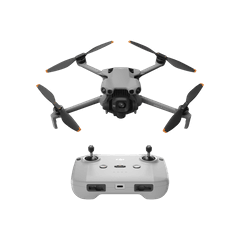 Mini 5 ProLatest mini camera line
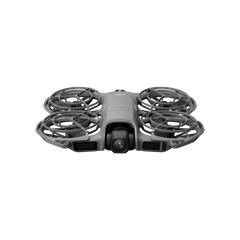 Neo 2Follow-me creator line
 Matrice EnterpriseInspection, mapping & response
 Agras T100High-capacity agriculture
DJI no longer has one simple ladder. Neo 2, Lito, Flip and Mini 5 Pro cover approachable creation; Air 3S and Mavic 4 Pro cover higher-end imaging; Matrice 4, Dock 3 and Matrice 400 cover enterprise operations; and T25P, T55, T70P, T100 and FlyCart 100 cover application, lifting and logistics.
“Current,” “latest” and “still supported” are not the same thing
DJI often sells several generations at once. A platform may remain commercially useful after a newer model launches, especially in enterprise, agriculture and regulated fleet environments. This guide separates the newest headline platform from earlier systems that remain active or specialized.
Neo 2, Lito, Mini 5 Pro, Avata 360
DJI’s newest creator-facing launches emphasize simpler operation, stronger sensing, larger sensors, immersive capture and automated subject tracking.
Matrice 4, Dock 3, Matrice 400
Compact AI-enabled multisensor aircraft, 24/7 remote deployment and a high-capacity flagship form DJI’s newest enterprise architecture.
T25P, T55, T70P and T100
The line now spans compact targeted application through very high-capacity spraying, spreading and lifting.
Air 3S, Flip, Avata 2, M3E/M3T, T50, T25, Mavic 3M
These are not necessarily the newest launch in every segment, but they remain useful because of price, maturity, payload, workflow or regional availability.
Regional availability matters: DJI’s global product catalogue is broader than what can be immediately purchased or supported in Canada. Confirm the Canadian version, included controller, batteries, warranty path and firmware region.
Current DJI consumer drone lines in 2026
The modern DJI consumer range covers hands-free follow cameras, beginner camera drones, guarded vlog aircraft, advanced mini drones, dual-camera travel platforms, triple-camera flagships, immersive FPV and professional cinema.
DJI Neo 2
Neo 2 is built around palm takeoff and return, gesture control, SelfieShot and faster ActiveTrack. It uses a 12MP 1/2-inch sensor, records 4K video, provides 49GB of internal storage and adds omnidirectional monocular vision with forward LiDAR.
151gPalm launchFull prop protectionBeginner contentDJI Lito 1 and Lito X1
Lito introduces a newer compact path between very simple selfie drones and advanced mini aircraft. Lito X1 is the premium model, pairing a 1/1.3-inch camera, ActiveTrack, omnidirectional obstacle sensing and forward LiDAR. Lito 1 is the simpler value-oriented entry.
Compact4K creator useX1 sensing upgradeDJI Flip
Flip combines a foldable full-coverage propeller guard with a 1/1.3-inch camera, intelligent subject tracking and up to 4K/60fps HDR. It suits buyers who want a more conventional camera-drone result with approachable launching and physical protection.
Under-250g class31-min test maximumSocial videoDJI Mini 5 Pro
Mini 5 Pro brings a 50MP 1-inch sensor, f/1.8 aperture, true vertical shooting, 225° gimbal roll rotation, upgraded ActiveTrack 360°, forward LiDAR and nightscape omnidirectional obstacle sensing to the mini category.
1-inch 50MP42GB storage36-min standard battery*Travel creatorDJI Air 3S
Air 3S remains DJI’s balanced dual-camera travel platform: a 1-inch 50MP wide camera, a 70mm-equivalent 48MP medium tele camera, 4K/120fps slow motion, up to 45 minutes of tested flight time, 42GB storage and nightscape omnidirectional sensing.
Dual camera724gWide + 3× teleDJI Mavic 4 Pro
Mavic 4 Pro leads the foldable camera-drone range with a 100MP 4/3 Hasselblad main camera, medium tele and 168mm tele cameras, 6K/60fps HDR, an Infinity Gimbal with 70° upward shooting and 360° rotation, and up to 51 minutes of tested flight time.
Triple camera100MP HasselbladProfessional creatorDJI Avata 360 and Avata 2
Avata 360 is DJI’s newest 360° immersive aircraft, combining 1-inch 8K 360° imaging, O4+ transmission, obstacle sensing and guarded flight. Avata 2 remains the established conventional FPV option with a 155° view, goggles and motion-control workflow.
Immersive flightFPV controlReframingDJI Inspire 3
Inspire 3 remains DJI’s dedicated aerial cinema system, built around a full-frame Zenmuse X9-8K Air workflow, professional crew operation and interchangeable lenses. It is a production platform rather than a consumer upgrade from Mavic.
Full-frame 8KDual operatorCinema productionMini 4 Pro, Neo and earlier Mavic options
Earlier models may remain attractive when discounted or when a team already owns compatible batteries, controllers and accessories. Compare total ecosystem cost rather than buying solely by release date.
Mature accessoriesLower entry cost
*Mini 5 Pro’s operating category depends on the exact ready-to-fly weight, battery and accessories. Verify the operating weight in Canada rather than relying only on the model family.
Which current DJI camera drone is right for you?
On tablets and phones, swipe the table left to compare every model.
| Model | Core camera concept | Flight / protection concept | Best for | Main trade-off |
|---|---|---|---|---|
| Neo 2 | 12MP 1/2-inch, 4K creator camera | 151g, full prop guards, palm and gesture control | Follow-me, families, first flights, social capture | Shorter endurance and smaller sensor than larger camera drones |
| Lito 1 | Entry compact camera platform | Beginner-oriented operation | Buyers moving beyond a palm drone | Less capable than X1 in imaging and sensing |
| Lito X1 | 1/1.3-inch premium compact camera | Omnidirectional sensing and forward LiDAR | Beginner-premium travel and tracking | Not the same image or flight tier as Mini 5 Pro |
| DJI Flip | 1/1.3-inch camera, 4K/60fps HDR | Foldable full-coverage prop guards | Vlogging, approachable travel, guarded operation | Less compact and less advanced than Mini 5 Pro |
| Mini 5 Pro | 50MP 1-inch, 4K/60 HDR, 4K/120 slow motion | Mini form, LiDAR-assisted night sensing, vertical capture | Travel, low light, creators, flexible social content | Battery choice can affect operating weight and rules |
| Air 3S | 1-inch wide + 70mm medium tele | 724g, up to 45-min test maximum, night sensing | Travel creators needing two useful focal lengths | Heavier; registration and certification apply in Canada |
| Mavic 4 Pro | 100MP 4/3 Hasselblad + two tele cameras | Up to 51-min test maximum, Infinity Gimbal | Professional aerial photo, film and commercial creation | Higher purchase, battery, storage and insurance cost |
| Avata 360 | 1-inch 8K 360° capture | Guarded immersive aircraft with O4+ | Reframed action, immersive storytelling, one-take coverage | 360 editing workflow and larger files |
| Avata 2 | 1/1.3-inch ultra-wide FPV camera | Integrated prop guards, goggles and motion control | Traditional FPV-style motion and dynamic proximity shots | Different learning and viewing workflow |
| Inspire 3 | Full-frame 8K aerial cinema system | Professional crew and production architecture | Film, television, high-end commercial production | Cost, logistics, training and regulatory complexity |
Simple shortlist: choose Neo 2 for effortless follow content, Mini 5 Pro for compact high-quality creation, Air 3S for dual-camera travel, Mavic 4 Pro for flagship imaging, and Avata 360 or Avata 2 when immersive movement is the product.
DJI’s newest enterprise drone architecture
The current enterprise lineup is organized around three deployment scales: portable multisensor aircraft, automated dock operations and a heavy flagship platform that accepts specialized payloads.
DJI Matrice 4E
Matrice 4E is designed for geospatial work such as surveying, mapping, construction and mining. Its wide camera uses a 4/3 20MP sensor with a mechanical shutter, complemented by medium tele, telephoto, laser range finding and RTK-oriented workflows.
MappingMechanical shutterRTKDJI Matrice 4T
Matrice 4T is the public-safety, inspection and low-visibility model. DJI positions it for electricity, emergency response, public safety and forestry, combining visible zoom, thermal imaging, laser measurement and AI-assisted detection.
ThermalPublic safetyInspectionDJI Matrice 400
Matrice 400 is DJI’s current heavy enterprise flagship, with a 59-minute manufacturer test maximum, up to 6kg payload capacity, IP55 protection, rotating LiDAR, millimetre-wave radar and support for multiple DJI and third-party payloads.
Up to 6kg payload*LiDAR + radarMulti-payloadMavic 3 Enterprise and Mavic 3 Thermal
M3E and M3T remain current because they are portable, mature and widely integrated. M3E suits compact mapping; M3T supports thermal inspection and rapid situational awareness. They may deliver lower fleet cost than the newest compact platform.
Matrice 30 Series
The M30/M30T line remains relevant where teams want an integrated, weather-resistant, portable enterprise platform. Compare it with Matrice 4T and Matrice 4TD based on payload, dock, camera and fleet-standardization requirements.
Matrice 350 RTK
M350 RTK remains an active payload platform for established Zenmuse workflows. Matrice 400 is the newer flagship, but organizations may retain M350 where approved payloads, training, spares and procurement standards are already built around it.

Matrice 400 payload and flight-time maximums are manufacturer results under specified conditions. Payload, altitude, weather and mission profile change real performance.
DJI Dock 3 and the Matrice 4D Series
Dock 3 is DJI’s first dock designed to support vehicle-mounted deployment as well as fixed installation. Paired with Matrice 4D or 4TD, it enables scheduled, remotely supervised and event-triggered workflows through FlightHub 2.
- Matrice 4D: mapping and detailed visible inspection
- Matrice 4TD: thermal response, inspection and low-light operations
- Fixed deployment: recurring patrols, progress capture and asset inspection
- Vehicle deployment: mobile public-safety and multi-site operations
- Standalone option: M4D/M4TD can pair with RC Plus 2 Enterprise
A dock does not eliminate people. It changes the team’s work toward mission design, monitoring, maintenance, exception handling and data governance.
Choose automation only when repetition creates value
The same site must be flown repeatedly, data must arrive quickly, connectivity and infrastructure must be supportable, and FlightHub, data retention, cybersecurity and maintenance must have owners.
Canada caution: remote, EVLOS or BVLOS capability depends on the operating category, pilot privileges, aircraft declarations, procedures and permissions—not simply on purchasing Dock 3.
Current DJI Agras and smart-farming lines
DJI’s agriculture range spans compact targeted application, balanced commercial platforms, very high-capacity spraying and spreading, lifting, multispectral observation and farm-management software. Availability varies by country and province.
DJI Agras T25P
T25P is the entry point in the newest global generation. DJI lists a 20kg spraying payload, up to 16L/min flow in the supported configuration and a 25kg spreading payload. It suits more targeted applications and smaller operational footprints.
Targeted workCompact transportDJI Agras T55
T55 is a current 50L spraying platform with up to 50kg spray payload, standard two-nozzle flow up to 40L/min, optional four-nozzle flow up to 50L/min, and spreading or hoisting configurations.
50L tankHigh-flow applicationRegional availabilityDJI Agras T70P
T70P sits between compact T25P and flagship T100. It is designed for operators who need stronger throughput and broader spraying, spreading and lifting capability without selecting the largest aircraft in the range.
Commercial scaleMulti-functionDJI Agras T100
T100 is DJI’s high-capacity flagship, with a 100L spray tank, up to 40L/min flow, a 150L spreading tank, up to 400kg/min listed spreading flow and up to 100kg lifting under manufacturer test conditions.
100L spraying100kg lift*Large-scale operationDJI Agras T50 and T25
T50 and T25 remain practical where Canadian inventory, training, financing, service and known workflows outweigh the benefits of a newer global generation. T50 remains a balanced core platform for many spraying and spreading operations.
Established workflowCanadian supportDJI Mavic 3M
Mavic 3M collects RGB and multispectral data using a 20MP 4/3 RGB camera and four 5MP multispectral bands. It supports crop observation, scouting and data collection—but does not automatically create an agronomic prescription.
RGB + multispectralRTKSmart-farm observation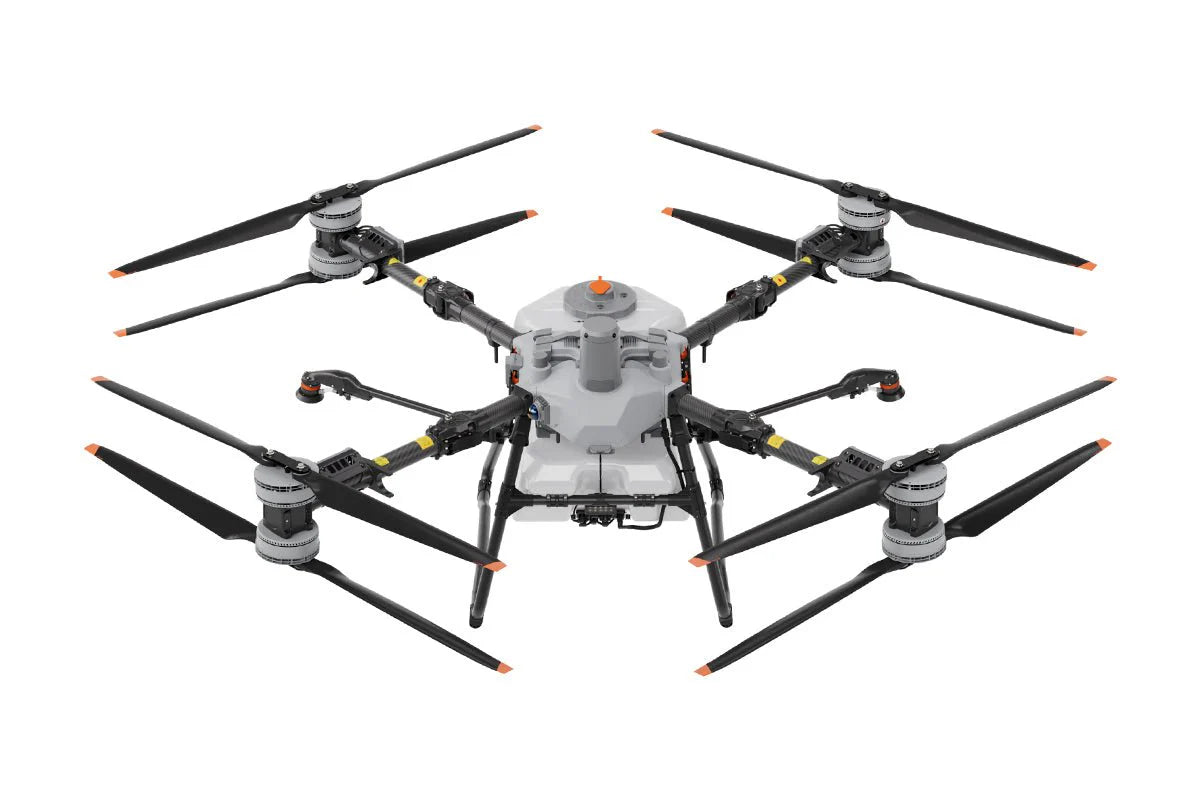
Agriculture compliance: aviation authorization and pesticide authorization are separate. Before chemical application, verify the Health Canada-approved label, provincial pesticide licensing, insurance, recordkeeping, operating category and local requirements. A water-only demo is not authorization to apply pesticide.
T100 payload, flow and speed figures are manufacturer maximums under specified conditions. Operational payload must account for altitude, temperature, material, battery, route and safety margin.
DJI FlyCart 100 and the delivery line
FlyCart 100 is DJI’s current delivery flagship. DJI positions it for high-payload transport using LiDAR, penta-vision and millimetre-wave radar with cargo or winch workflows. It sits above FlyCart 30 in capacity and newer-generation safety architecture.
- Construction, energy, forestry and remote-site materials
- Winch delivery where landing is impractical
- Emergency and infrastructure logistics concepts
- DeliveryHub-oriented fleet planning
- High-complexity ground and air safety planning
Evaluate delivery as a transport system: aircraft, load interface, route, communications, crew, emergency plan, landing or winch zone, maintenance and approval.
Start with a route and operating case
Define payload mass and dimensions, pickup and delivery points, elevation, wind, duty cycle, bystander exposure, communications, alternate landing points and economic value before selecting FlyCart 100.
Special-operation warning: heavy cargo operations can fall into advanced, complex or special categories. Do not plan a commercial delivery operation from manufacturer range or payload figures alone.
Choose the DJI line by the result you need
Neo 2
Best when the camera should follow a person with minimal setup, palm launch and protected propellers.
Mini 5 Pro
Best when a creator wants a 1-inch camera, vertical flexibility and advanced sensing in the smallest practical foldable package.
Air 3S
Best when the 70mm medium tele camera materially improves landscape, architecture, portrait and compressed-detail shots.
Mavic 4 Pro
Best for serious creators and commercial teams that need three focal lengths, Hasselblad image quality and advanced gimbal movement.
Avata 360 or Avata 2
Choose Avata 360 for 360° reframing; choose Avata 2 for a more traditional FPV camera direction and established goggles workflow.
Matrice 4E
Best for survey, construction and mapping teams that need a portable mechanical-shutter and RTK-oriented enterprise system.
Matrice 4T
Best for public safety, utility, thermal inspection and rapid situational awareness.
Dock 3 + M4D/M4TD
Best when repeatable remote missions produce enough value to justify infrastructure, software and operational governance.
Matrice 400
Best for long-endurance, heavy-payload inspection, mapping, emergency response and advanced custom workflows.
Mavic 3M
Best for RGB and multispectral collection within a verified agronomy and data-processing workflow.
T25P, T50/T55, T70P or T100
Select by crop, acreage, material, application rate, weather window, transport, refill logistics and service capacity.
FlyCart 100
Best when a validated cargo route and operational approval justify a dedicated delivery platform.
What the current DJI lineup means under Canadian drone rules
In Canada, the aircraft’s operating weight, operation, airspace, distance from people and safety declaration determine the rules. Buying a capable aircraft does not authorize a capable operation.
Microdrone rules
No registration or pilot certificate is normally required, but the drone must still be flown safely and legally. Anything attached or carried counts toward operating weight; privacy, trespass, emergency-site and restricted-airspace rules still apply.
Registration and pilot certification
Register and mark the drone, hold the certificate required for the category, obtain controlled-airspace permission where required, and verify whether a safety declaration is needed for the intended advanced operation.
Special permission applies to every size
Transport Canada requires an SFOC-RPAS to fly any drone at an advertised event when the operation falls within the event criteria, including a microdrone.
Operation-specific approval
EVLOS, BVLOS, medium aircraft, heavy cargo, automated deployment and public-safety work may require advanced or complex privileges, declarations, procedures or an SFOC-RPAS.
Operating-weight warning: weigh the aircraft in its ready-to-fly configuration, including the actual battery, guards, payload and attached accessories.
What current DJI systems really cost to own
Aircraft + batteries + protection + editing
Budget for the controller, batteries, charging hub, ND filters, storage, spare propellers, DJI Care where available, computer performance and archive capacity.
Payload + software + training + uptime
Budget for aircraft, payload, controller, FlightHub or Terra, batteries, field power, procedures, data governance, pilot training, care plans, maintenance and spares.
Site infrastructure and lifecycle management
Budget for installation, power, connectivity, security, weather exposure, FlightHub, data integration, remote crew, maintenance, exception response and approvals.
Crew, water, charging and application logistics
Budget for batteries, charging and power generation, mixing, filling, transport, rinse equipment, RTK, software, insurance, licensing, records, parts and seasonal service.
Best procurement discipline: write the mission, output, compliance plan, crew model and annual operating volume before choosing the aircraft.
Build the right DJI system—not just the newest cart
SpeedyDrone Canada supports consumer purchases, enterprise assessments, Matrice and Dock demonstrations, agriculture fit-checks, training, financing discussions and Canada-wide procurement. Send your application, province, operating environment, budget and required deliverable for a practical platform recommendation.
For faster recommendations, include intended use, province, operating environment, desired output, operating weight, flight frequency, sensor or payload, crew experience, target purchase date and whether training or financing is required.
Current DJI drone lineup FAQ
What is DJI’s newest consumer camera drone in 2026?
DJI’s current newest consumer families include Mini 5 Pro, Neo 2, Lito 1/X1 and Avata 360. Mavic 4 Pro remains the current foldable camera flagship, while Air 3S and Flip remain active current models.
What is the best current DJI drone for most creators?
Mini 5 Pro is the strongest compact default for creators who value a 1-inch camera, vertical shooting and advanced sensing. Air 3S is better when a physical medium tele camera matters, and Mavic 4 Pro is better for flagship image quality.
What is the difference between Neo 2, Lito X1 and Mini 5 Pro?
Neo 2 prioritizes palm-launch follow-me simplicity. Lito X1 is a beginner-premium compact camera drone with stronger imaging and sensing. Mini 5 Pro is the advanced mini platform with a 1-inch 50MP camera and a broader creator workflow.
Is Mavic 4 Pro DJI’s latest flagship?
Yes. Mavic 4 Pro is DJI’s current foldable flagship camera drone, with a triple-camera system, 100MP 4/3 Hasselblad main camera, Infinity Gimbal and extended manufacturer-rated endurance.
What is DJI Avata 360?
Avata 360 is DJI’s current 360° immersive drone line. DJI positions it around 1-inch 8K 360° capture, O4+ transmission, obstacle sensing and guarded flight, allowing the final perspective to be reframed after capture.
What is DJI’s newest compact enterprise drone?
The Matrice 4 Series is DJI’s current compact intelligent multisensor flagship. Matrice 4E is oriented toward mapping and geospatial work; Matrice 4T is oriented toward thermal inspection, public safety, emergency response and utilities.
What is DJI’s newest heavy enterprise platform?
Matrice 400 is DJI’s current enterprise flagship, featuring a manufacturer-rated 59-minute maximum, payload capacity up to 6kg under specified conditions, LiDAR and millimetre-wave radar, and support for multiple payloads.
What is the current DJI dock system?
DJI Dock 3 is the current remote-operation platform. It works with Matrice 4D or 4TD and supports fixed installation plus vehicle-mounted deployment, with FlightHub 2 managing remote workflows.
What is DJI’s newest agriculture drone?
DJI’s current agriculture family includes T25P, T55, T70P and T100, with T100 positioned as the high-capacity flagship. T50 and T25 remain active where their established workflow and support are valuable.
What is the difference between Mavic 3M and an Agras drone?
Mavic 3M collects RGB and multispectral data for observation and mapping. Agras platforms perform spraying, spreading or lifting. Data collection does not automatically create an agronomic prescription.
What is DJI FlyCart 100 used for?
FlyCart 100 is a high-payload delivery platform for aerial logistics, including construction, energy, forestry, remote-site and winch-delivery use cases. It requires route, payload, crew, safety and regulatory planning.
Do I need to register a DJI drone in Canada?
A drone with an operating weight of at least 250g must be registered and marked. A drone under 250g normally does not require registration, but attached equipment and payload count toward operating weight.
Do I need a pilot certificate for a DJI Mini or Neo in Canada?
A drone operating below 250g normally does not require a pilot certificate. If its operating weight reaches 250g or more, the applicable Basic, Advanced or higher operating-category requirements apply.
Can I fly a microdrone at a public festival or advertised event?
Transport Canada requires an SFOC-RPAS for drone operations at advertised events that fall within the event criteria, including microdrones under 250g.
Does owning Dock 3 allow automatic BVLOS operations in Canada?
No. Hardware capability does not authorize the operation. BVLOS, EVLOS and automated workflows depend on pilot privileges, aircraft declarations, the operating category, procedures and any required permission.
Where can Canadian buyers compare the latest DJI drone lines?
SpeedyDrone Canada supports consumer, enterprise and agriculture buyers through its Toronto showroom, Canada-wide sales, product consultations, training and deployment discussions. Confirm demo and inventory availability before visiting.
- DJI Store: Current camera-drone selection
- DJI Store: Mini 5 Pro product and comparison
- DJI Store: Neo 2 product information
- DJI Store: Mavic 4 Pro product information
- DJI Enterprise: Current product catalogue
- DJI Enterprise: Matrice 4 Series
- DJI Enterprise: Dock 3 and Matrice 4D Series
- DJI Enterprise: Matrice 400
- DJI Agriculture: Current agriculture and delivery catalogue
- DJI Agriculture: Agras T100
- DJI Agriculture: Agras T55 specifications
- Transport Canada: Drone operation categories
- Transport Canada: Microdrone rules
- Transport Canada: Drone registration
- Transport Canada: Advertised-event operations
- SpeedyDrone Canada: Enterprise drones
- SpeedyDrone Canada: Agriculture solutions
- SpeedyDrone Canada: Mini 5 Pro collection
- SpeedyDrone Canada: Mavic 4 Pro collection
- SpeedyDrone Canada: Agras T100 Canadian listing
Product specifications, prices, stock, package contents, firmware, regional functions and regulations can change. All manufacturer maximums are controlled-condition results and may not reflect real missions. Verify the current Canadian product, operating weight, airspace, certification, declaration, label, insurance and permission requirements before purchase or operation.


