


DJI Avata 360 vs Antigravity A1
Both drones let creators fly first and choose the camera angle later. Avata 360 prioritizes image quality, speed, controller choice, single-lens flexibility and a stronger sensing system. Antigravity A1 prioritizes travel weight, a foldable body, immersive look-around goggles and an intuitive motion-control experience.
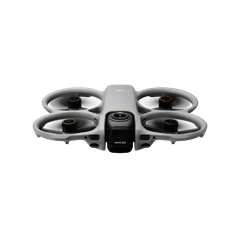
DJI Avata 360
8K/60fps HDR, 360 plus single-lens modes, O4+, integrated guards.
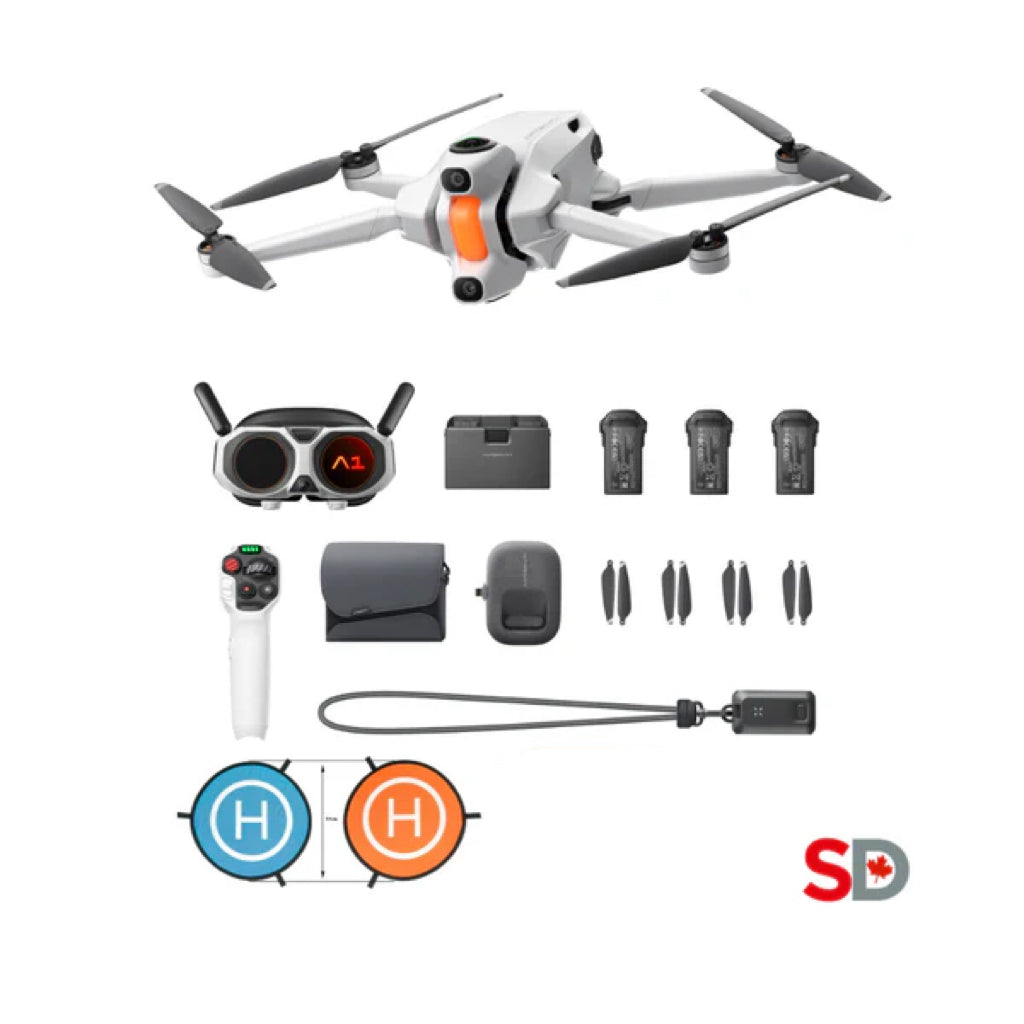
Antigravity A1
8K/30fps, 249 g standard battery, foldable design, Vision Goggles.
Avata 360 is the better camera drone. A1 is the better travel experience.
Choose Avata 360 when the deliverable comes first: smoother 8K 360 footage, action, client content, controller choice or a traditional forward-view option. Choose A1 when portability, sub-250 g operation, immersive guest viewing and intuitive one-handed flight are the real reasons for buying.
For higher-output content production.
- 8K 360 video up to 60fps.
- Dual 1/1.1-inch square CMOS sensors and f/1.9 lenses.
- Single-lens 4K/60fps and 2.7K/120fps modes.
- Standard RC, motion-control and FPV-controller options.
- O4+ 1080p/60 live view.
- Omnidirectional sensing in 360 mode and integrated propeller guards.
For travel and immersive flight.
- 249 g with the standard battery.
- Foldable body and included travel case.
- Vision Goggles with dual 2560 x 2560 micro-OLED displays.
- FreeMotion point-to-fly control.
- 24-minute standard or 39-minute high-capacity battery.
- Insta360-powered invisible-drone stitching and social editing workflow.
Creation platform versus flight experience.
- Avata has stronger capture and flight-system specifications.
- A1 has the stronger weight and portability story.
- Avata can behave like a 360 drone or a normal FPV camera drone.
- A1 is built around 360 capture, goggles and motion control.
- Avata has a lower Canadian entry price.
- A1 Explorer includes a more complete immersive kit from the start.
Frame rate, weight, controls and sensing.
Both cameras record a complete spherical scene. The products diverge in how much image data they capture, how the pilot controls the drone and how much equipment must travel with the aircraft.
More temporal detail for movement, reframing and action-oriented edits.
Microdrone status in Canada with the standard battery and no weight-adding attachment.
High-capacity laboratory maximum, with takeoff weight increased to 291 g.
O4+ live view with DJI controller and goggles options.
Compare the aircraft, camera, control and post-production system.
Headline range and flight-time figures are controlled-test references. They do not replace Canadian VLOS rules, battery reserves, interference planning or a safe return-to-home decision.
| Category | DJI Avata 360 | Antigravity A1 |
|---|---|---|
| Product concept | 360 creator drone plus single-lens FPV and camera-drone modes | 360-only immersive drone built around Vision Goggles and Grip control |
| Camera system | Dual 1/1.1-inch square CMOS sensors; 1-inch-equivalent panoramic imaging area | 1/1.28-inch imaging system with top-and-bottom 360 lenses |
| Aperture | f/1.9 | f/2.2 |
| Maximum 360 video | 8K 7680 x 3840 up to 60fps Capture winner | 8K 7680 x 3840 up to 30fps |
| Other 360 modes | 6K up to 60fps | 5.2K up to 60fps; 4K up to 100fps |
| Flat video mode | Single-lens 4K up to 60fps and 2.7K up to 120fps More flexible | No separate traditional single-lens capture mode published |
| Maximum stills | 120 MP 360 photo | 55 MP or 14 MP 360 photo |
| Dynamic range | Up to 13.5 stops, manufacturer claim | No directly comparable official stop figure on the specification page |
| Colour workflow | D-Log M and Pro mode supported | H.264 or H.265 INSV export workflow through Antigravity App or Studio |
| File format | OSV for 360; MP4 HEVC for flat video | INSV video; INSP and DNG photos |
| Weight | Approximately 455 g in published hands-on review specifications | 249 g standard battery; 291 g high-capacity battery Weight winner |
| Dimensions | Approximately 246 x 199 x 55.5 mm; non-folding | 141.3 x 96.2 x 81.4 mm folded; 308.6 x 382.3 x 89.2 mm unfolded |
| Maximum flight time | 23 minutes | 24 minutes standard; 39 minutes high-capacity Endurance winner |
| Maximum horizontal speed | Approximately 18 m/s in published hands-on specifications | 16 m/s in Sport mode |
| Wind resistance | Do not fly at 10.7 m/s wind or higher | 10.7 m/s manufacturer rating |
| Operating temperature | -10 C to 40 C | -10 C to 40 C |
| Sensing | Omnidirectional in 360 mode, forward only in single-lens mode; forward LiDAR and fisheye sensing | Forward and downward vision plus bottom infrared sensing |
| Published sensing light condition | Recognizable texture and at least 1 lux for omnidirectional sensing | Recognizable texture and more than 15 lux |
| Propeller protection | Integrated propeller guards Close-flight advantage | Open folding arms and propellers |
| Live-view system | DJI O4+ at 1080p/60fps | OmniLink 360 at 2K/30fps |
| Maximum transmission reference | 20 km FCC; 10 km CE, SRRC and MIC | 10 km FCC; 6 km CE |
| Published average latency | No single latency figure stated on the store FAQ reviewed | Approximately 150 ms in an open, interference-free test |
| Standard controller | DJI RC 2, RC-N2 or RC-N3 | Grip Motion Controller only within the published A1 system |
| Immersive controller | RC Motion 3 or FPV Remote Controller 3 with Goggles 3 or N3 | Grip Motion Controller with Vision Goggles |
| Unique control feature | Head Tracking, Easy ACRO, ActiveTrack 360 and Spotlight Free vary by controller and mode | FreeMotion lets the pilot look around independently and point the Grip to fly |
| Internal storage | Approximately 42 GB in published hands-on review specifications | 20 GB |
| Expandable storage | microSD slot | microSD up to 1 TB |
| Charging hub | One battery: about 47 min 0-100; three parallel batteries: about 100 min with qualifying power | Standard battery: about 45 min; high-capacity: about 60 min |
| Lens repair | User-replaceable front lens elements with official tool kit | Replacement lens kit offered for the A1 system |
| Canadian weight category | At least 250 g: registration and pilot-certificate requirements apply | Standard battery: microdrone; high-capacity battery: at least 250 g Battery changes rules |
Avata records more motion information. Both spread 8K across a sphere.
Full-sphere recording removes the need to aim the camera during flight, but it changes how resolution should be understood. A normal flat edit crops a window out of the spherical master.
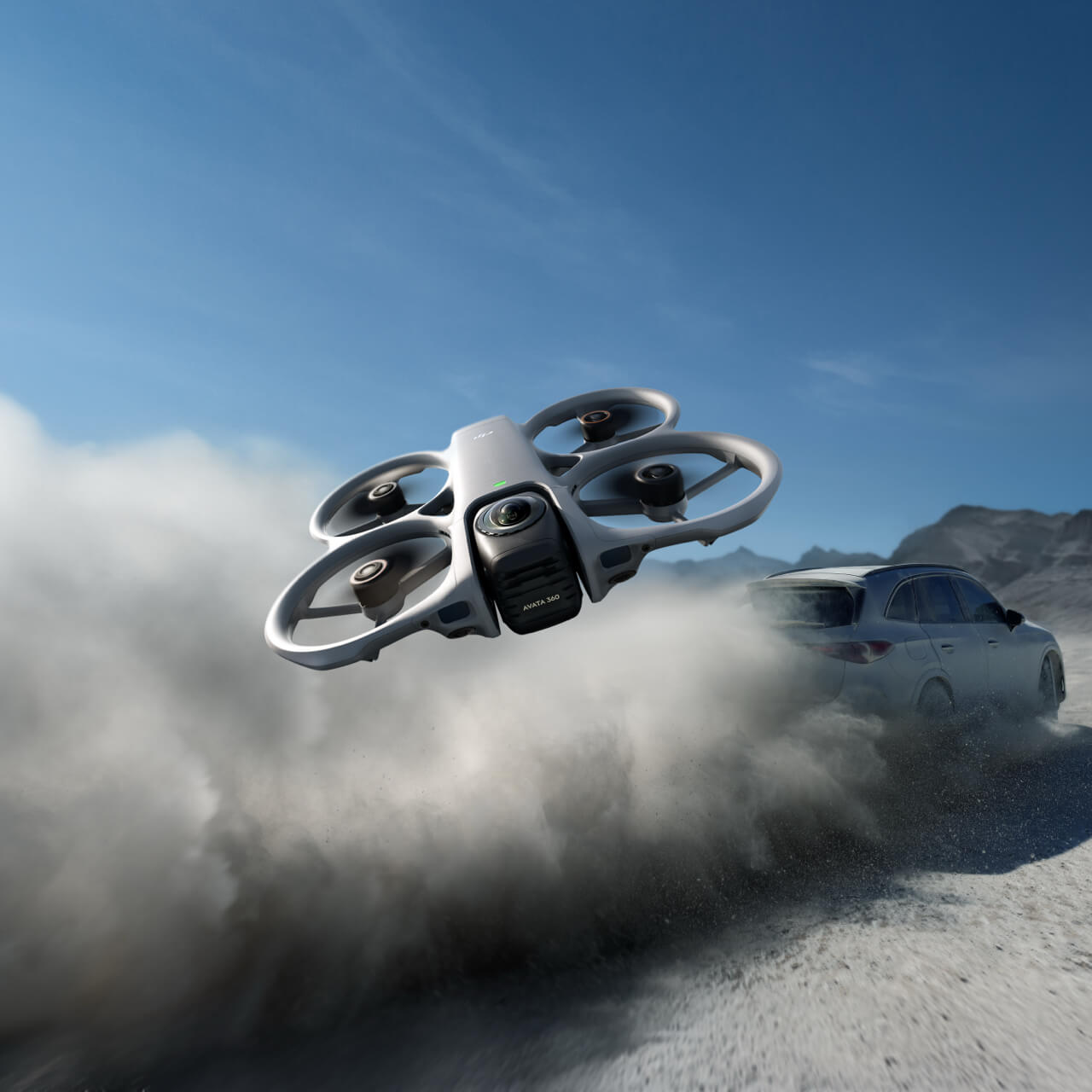
Stronger for movement and demanding client edits.
8K/60fps gives editors more temporal information for fast flight, action subjects and smoother reframed movement. Single-lens mode also creates direct flat files when 360 is unnecessary.
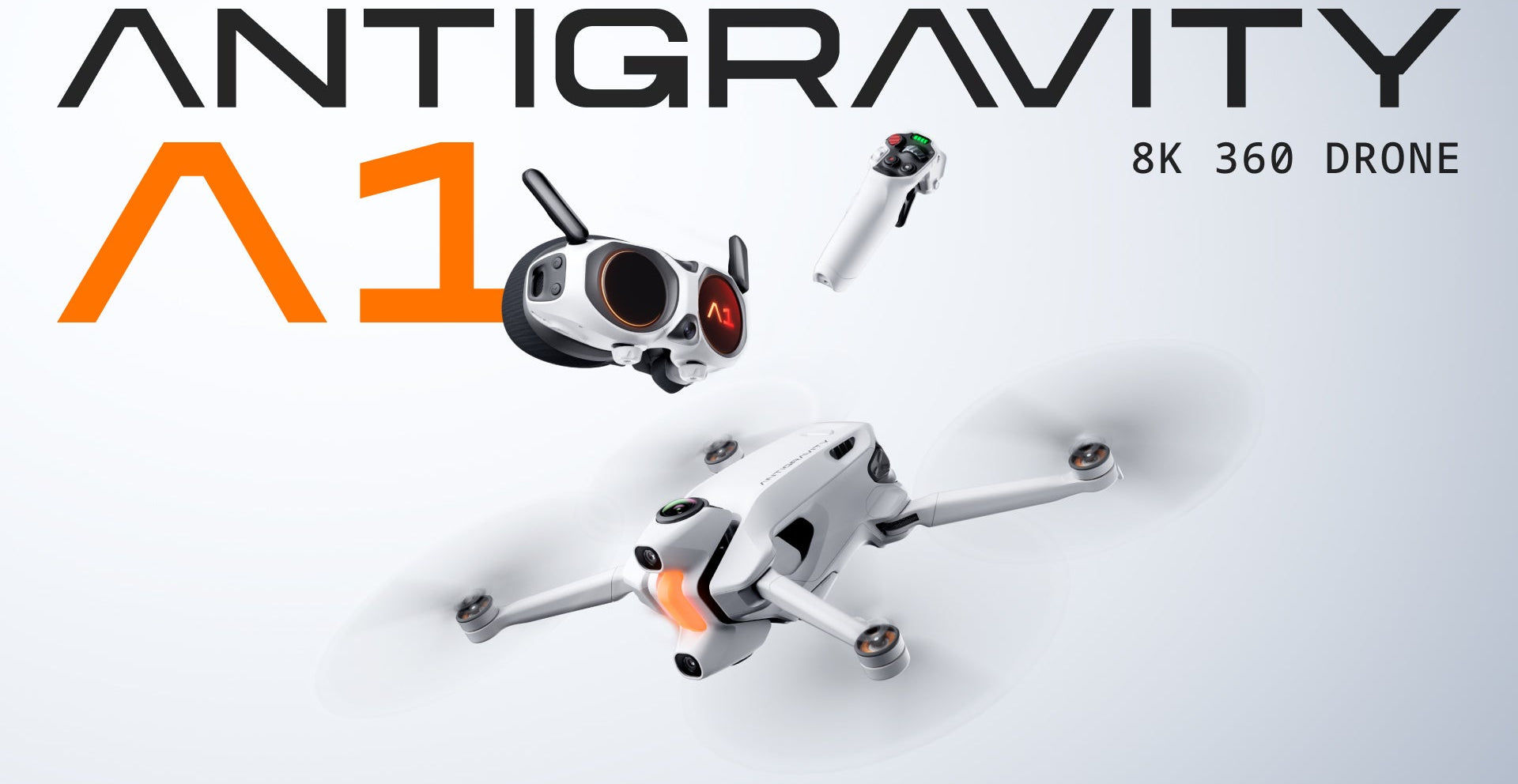
Stronger for simple fly-first, frame-later storytelling.
Insta360-powered stitching removes the drone from the scene, while the Antigravity App and Studio provide a familiar 360 reframing path for travel memories and social media.
More modes from one aircraft.
- 8K/60fps and 6K/60fps 360 capture.
- 120 MP 360 stills.
- D-Log M and Pro controls.
- Single-lens 4K/60fps for normal delivery.
- 2.7K/120fps when high-speed flat capture matters.
More focus on the immersive experience.
- 8K/30fps 360 capture.
- 5.2K/60fps for smoother spherical footage.
- 4K/100fps capture option.
- 55 MP 360 stills and DNG support.
- Invisible-drone stitching and mature Insta360-style editing.
The best drone changes with the deliverable.
These are creator tools, not general replacements for camera drones, racing quads, mapping aircraft or enterprise inspection platforms.
Follow motion and reframe the best angle later.
Avata's 8K/60fps, speed, integrated guards and controller options create the stronger action package.
Pick Avata 360Reduce packed size and regulatory friction.
A1 folds and remains 249 g with its standard battery, making it the more practical travel platform.
Pick A1 standard batteryPrioritize smooth frame rate and confident control.
Avata is better suited on paper, but roads, vehicles, uninvolved people and flight location must be controlled legally.
Pick Avata 360Let a viewer look around the destination.
A1's Vision Goggles and FreeMotion experience are compelling for immersive destination storytelling and guided demonstrations.
Pick A1Create horizontal, vertical and tracking edits from one flight.
Both work, but Avata's 60fps 8K master and flat single-lens option provide more production flexibility.
Pick Avata 360Make the flight experience part of the product.
A1 is easier to frame as an immersive memory tool, especially when portability is more important than advanced camera modes.
Pick A1Skip spherical editing when the shot is already known.
Avata's single-lens mode records direct 4K flat footage and follows the aircraft attitude.
Pick Avata 360Trade microdrone status for endurance.
A1's high-capacity battery reaches a 39-minute lab maximum, but the 291 g weight changes Canadian requirements.
A1 with rule checkUse guards and sensing as assistance, not permission.
Avata is the stronger paper choice, but both require space, VLOS planning, permission and a controlled environment.
Avata, controlled setupLet customers experience a prerecorded aerial world.
A1's look-around goggles are a strong experience tool, but outdoor advertised-event flying requires an SFOC.
A1 experienceDo not substitute creator footage for measured data.
Use an enterprise thermal, zoom or mapping platform when the deliverable requires accuracy, telemetry or repeatable evidence.
Choose enterprise droneCapture the full environment for headset viewing.
Avata offers stronger capture specs; A1 offers the more integrated capture-to-viewing experience.
Choose by productionAvata gives choices. A1 gives one integrated experience.
Controller choice changes the product more than many buyers expect. Some Avata features are available only with standard RC, while other immersive functions require goggles and motion control.
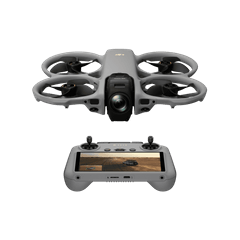
Traditional control or immersive FPV.
Use RC 2, RC-N2 or RC-N3 for camera-drone control. Use Goggles 3 or N3 with RC Motion 3 or FPV Remote Controller 3 for the immersive path.
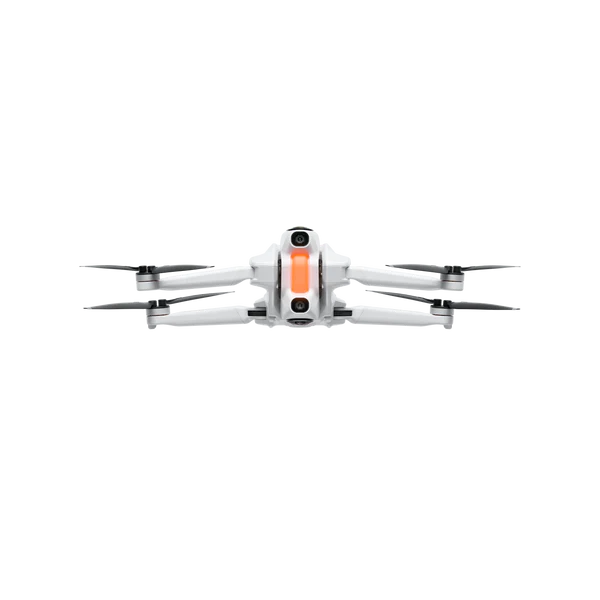
Look around while the drone follows the command direction.
FreeMotion separates where the pilot looks from where the drone travels. FPV mode provides a more direction-linked experience without introducing a traditional two-stick controller.
Mode and controller determine availability.
- ActiveTrack 360 and QuickShots require a standard remote controller.
- Head Tracking and acrobatic functions require goggles and motion control.
- 360 virtual gimbal and omnidirectional sensing require 360 mode.
- Single-lens mode uses forward sensing only.
- 4:3 flat modes require Goggles 3 or N3 with compatible immersive controls.
The product is built around Vision and Grip.
- FreeMotion uses pointing and a trigger to direct flight.
- FPV mode links wrist direction more closely to the aircraft.
- Vision Goggles display the 360 live environment.
- Dual 2560 x 2560 micro-OLED displays run at 72 Hz.
- The goggles system adds approximately 340 g plus a separate battery.
Avata sees more directions. Neither sees every hazard.
Fisheye lenses, low light, water, snow, thin branches, wires and reflective surfaces create special risks. Build the flight around a site survey and separation, not around the obstacle-avoidance marketing line.
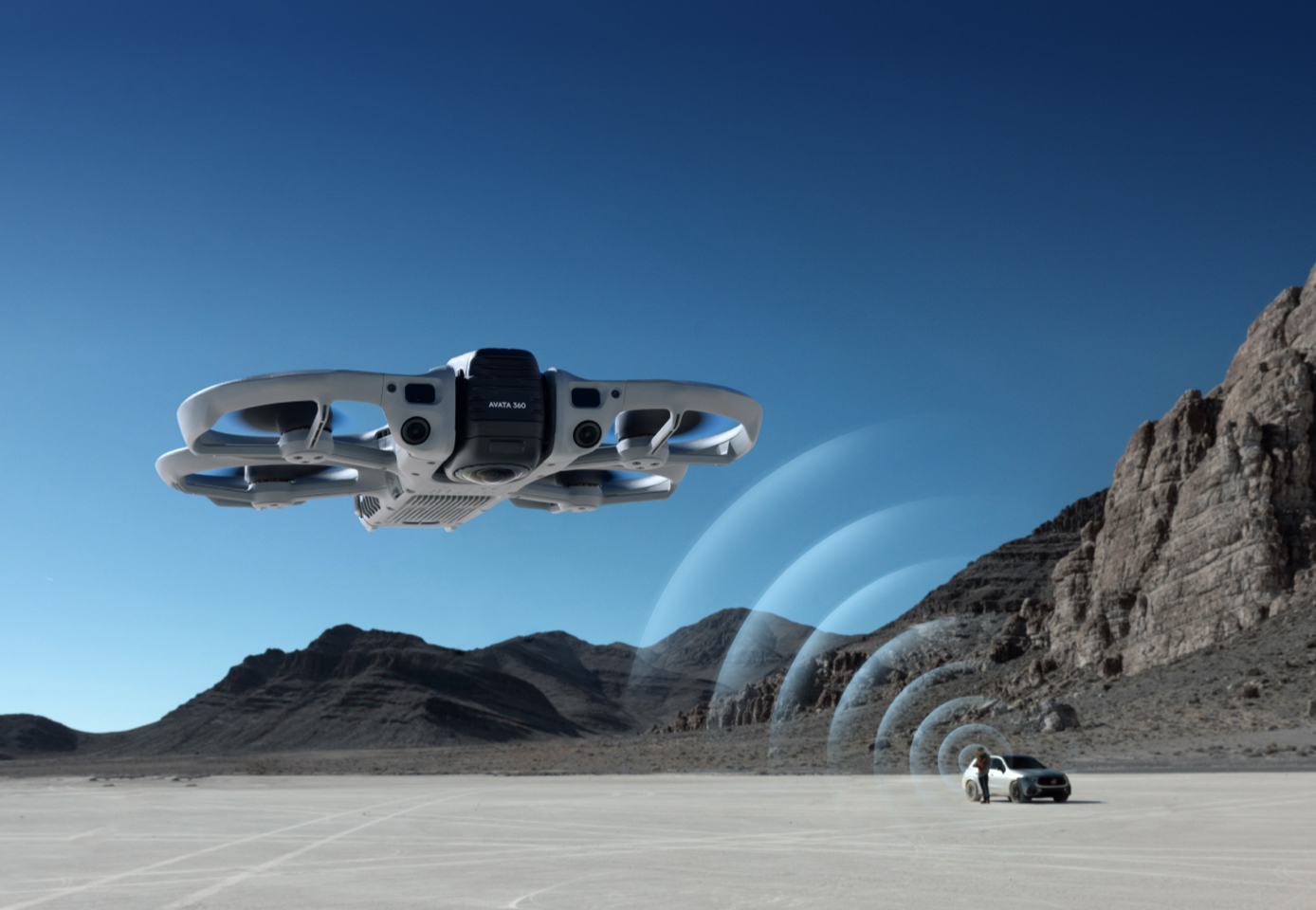
Omnidirectional assistance in 360 mode.
Side and rear sensing use the fisheye cameras. DJI states the system needs recognizable texture and at least 1 lux. Single-lens mode supports forward sensing only.
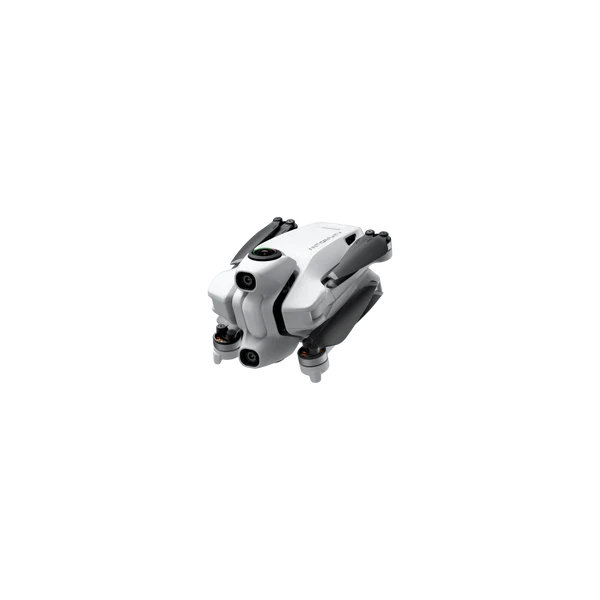
Forward and downward vision.
A1 publishes forward vision from 0.5 to 18 m and downward vision from 0.3 to 7.5 m, with recognizable texture and more than 15 lux.
| Risk | Avata 360 | Antigravity A1 | Operating response |
|---|---|---|---|
| Thin wires and branches | May remain difficult despite broader sensing | Forward and downward system leaves more unsensed directions | Survey, mark and maintain separation |
| Low light | Nightscape sensing has stated minimum conditions | Official sensing requires more than 15 lux | Use good light and reduce speed |
| Lens impact | Replaceable front elements available | Replacement lens kit available | Use caps, inspect before flight and avoid abrasive surfaces |
| Water, snow and reflective surfaces | DJI warns sensing can be affected | Vision systems also require suitable surface texture | Avoid unsuitable weather and reflective launch zones |
| Close-proximity flight | Integrated guards add protection, not invulnerability | Open folding propellers require greater physical clearance | Use a controlled location and no uninvolved people |
A 360 drone moves camera decisions into the edit.
The flight becomes data acquisition for a spherical master. Editing time, computer performance, storage and export strategy should be included in the buying decision.
Fly for path and proximity.
Prioritize a safe route, subject distance, lighting and smooth aircraft movement.
Import the spherical master.
Avata uses OSV in the DJI workflow. A1 uses INSV in Antigravity App or Studio.
Choose the virtual camera.
Set direction, field of view, horizon, keyframes, tracking and transitions after the flight.
Export for each platform.
Create horizontal, vertical, square or immersive versions from the same flight.
More camera modes and action-ready masters.
- 8K/60fps for smoother reframed movement.
- Spotlight Free for subject-centred quick output.
- Flat MP4 files when single-lens mode is used.
- D-Log M for a professional colour workflow.
- One flight can generate several conventional edits.
A 360-first ecosystem shaped by Insta360.
- Invisible-drone stitching from top-and-bottom lenses.
- Antigravity App for mobile reframing and social output.
- Antigravity Studio for detailed desktop control.
- Sky Path and immersive replay concepts support experience sharing.
- DNG stills provide more photo flexibility.
The A1 battery can change the legal category.
Canadian rules follow actual takeoff weight and the operation. The drone's camera capability does not create permission to fly beyond visual line of sight, over crowds or at a public event.
| Configuration | Published weight | Canadian starting point | Important conditions |
|---|---|---|---|
| A1 with standard battery | 249 g | Microdrone: no registration or pilot certificate required Microdrone | Attachments must not raise weight to 250 g; fly safely, legally and away from restricted airspace |
| A1 with high-capacity battery | 291 g | Registration and pilot certificate required Small drone | Operation must fit Basic, Advanced or another approved category |
| Avata 360 | Approximately 455 g | Registration and pilot certificate required Small drone | Controller and goggles do not change the aircraft weight category |
| Any drone at an advertised event | All weights | SFOC-RPAS required Special permission | Includes publicly advertised concerts, festivals, markets and sporting events |
| Immersive goggles operation | All weights | Maintain the VLOS and observer arrangement required by the operating category | Goggles block the pilot's unaided sight; document crew roles before the flight |
Avata starts lower. A1 includes the immersive system.
Compare package contents before comparing prices. A1 bundles include Vision Goggles and Grip control. Avata lets the buyer choose RC 2 or a goggles-and-motion package.
DJI RC 2 package
Public SpeedyDrone reference checked July 21, 2026.
- Fly More Combo with RC 2: CA$1,268.99.
- Motion Fly More Combo: CA$1,268.99.
- Exclusive packages with case and memory card: CA$1,499.
- Extra battery publicly listed at CA$129.
- Best value for buyers who prioritize camera output or already own compatible DJI controls.
Explorer Bundle reference
Public SpeedyDrone reference checked July 21, 2026.
- Explorer includes Vision Goggles, Grip Controller and three standard batteries.
- Infinity includes three high-capacity batteries.
- Infinity promotional reference: CA$1,839 against regular CA$2,299.
- High-capacity batteries increase aircraft weight to 291 g.
- Best value when the goggles experience and longer battery are used regularly.
Choose the system that will be used after the novelty wears off.
A 360 drone is worth the extra editing only when the ability to reframe or deliver an immersive experience is central to the content plan.
You are building repeatable creator deliverables.
- You shoot action, automotive, travel campaigns or dynamic social media.
- You need 8K/60fps rather than only 8K/30fps.
- You want a normal 4K single-lens option.
- You prefer standard stick control or already own DJI controllers.
- You need stronger all-direction sensing assistance in 360 mode.
- You want a lower entry price and broader accessory ecosystem.
You are buying portability and an immersive experience.
- You want a foldable 249 g 360 drone for travel.
- You want guests or clients to look around through Vision Goggles.
- You prefer motion control over a traditional two-stick controller.
- You value a 39-minute high-capacity option and accept the weight-category change.
- You already edit Insta360-style spherical footage.
- Your content is 360-first rather than conventional aerial video first.
Avata 360 and Antigravity A1 questions answered.
Which is better overall: DJI Avata 360 or Antigravity A1?
DJI Avata 360 is the stronger all-round creator platform for 8K at 60fps, single-lens 4K, controller choice, O4+ transmission, integrated propeller protection and omnidirectional sensing in 360 mode. Antigravity A1 is the stronger travel and immersive-experience platform when the 249 g standard-battery weight, foldable body, Vision Goggles, FreeMotion control or 39-minute high-capacity battery are the main priorities.
Which drone has better 360 video specifications?
Avata 360 has the stronger headline specification with 8K 360 video up to 60fps, dual 1/1.1-inch square CMOS sensors, f/1.9 lenses and a manufacturer claim of up to 13.5 stops. A1 records 8K up to 30fps, 5.2K up to 60fps and 4K up to 100fps from a 1/1.28-inch imaging system.
Does 8K 360 footage export as an 8K flat video?
Not necessarily. The 8K resolution covers the complete sphere. A normal reframed view uses only part of those pixels, so the exported flat frame has less effective detail than a conventional camera that directs its full sensor resolution into one forward view.
Which drone is better for action sports and chase shots?
Avata 360 is generally the stronger fit because it records 8K at 60fps, reaches a published maximum horizontal speed of approximately 18 m/s, offers integrated propeller guards, supports DJI motion and stick-controller options, and provides omnidirectional sensing in 360 mode. Every high-speed or close-proximity flight still requires a legal location, safe separation and a planned flight path.
Which drone is better for travel?
A1 with the standard battery is the easier travel choice because it folds and weighs 249 g. In Canada, a drone under 250 g does not require registration or a pilot certificate, provided no accessory increases the takeoff weight to 250 g or more. All safety, privacy, airspace and advertised-event rules still apply.
What changes when A1 uses the high-capacity battery?
A1 increases from 24 to 39 minutes of advertised laboratory flight time, but takeoff weight increases from 249 g to 291 g. In Canada, that changes it from a microdrone to a registered drone that requires the appropriate pilot certificate and operating category.
Does DJI Avata 360 require registration in Canada?
Yes. Independent published specifications place Avata 360 at approximately 455 g, well above the 250 g threshold. Drones weighing at least 250 g must be registered in Canada, and the pilot needs the certificate and operating permissions required for the flight.
Which drone is easier for a first-time pilot?
A1 is designed around its Grip Motion Controller and FreeMotion mode, which lets the pilot point in a direction to fly. Avata 360 gives the buyer more control choices, including RC 2, RC-N2, RC-N3, RC Motion 3 and FPV Remote Controller 3. A1 is more guided; Avata provides a broader path from standard camera-drone control to immersive FPV.
Which drone has better obstacle sensing?
Avata 360 has the stronger published system. In 360 mode it supports omnidirectional sensing and forward LiDAR under stated lighting and texture conditions; in single-lens mode only forward sensing is available. A1 publishes forward and downward vision sensing plus a bottom infrared sensor. Neither system makes the drone collision-proof.
Which drone has better flight time?
A1 with the high-capacity battery has the highest manufacturer-rated maximum at 39 minutes, but it weighs 291 g. A1 with the 249 g standard battery is rated for 24 minutes. Avata 360 is rated for up to 23 minutes. All are controlled-test figures and actual flight time falls with wind, speed, temperature, recording, manoeuvres and reserve requirements.
Which drone is better for normal non-360 video?
Avata 360. It has a dedicated single-lens mode with up to 4K/60fps and 2.7K/120fps. A1 is built around an INSV 360 capture and export workflow rather than a separate traditional forward-camera mode.
Which drone has the better immersive headset experience?
A1 provides the more distinctive look-around experience because its Vision Goggles and FreeMotion system allow the pilot to look around the 360 live view while directing flight with the Grip controller. Avata 360 offers immersive FPV through DJI Goggles 3 or N3 and RC Motion 3, while also supporting standard controllers.
Can these drones be used for real estate mapping or inspection?
They can create immersive marketing footage and visual context, but neither should be presented as an RTK mapping, survey-grade inspection or enterprise data-capture platform. Use an enterprise or mapping drone when measurement accuracy, thermal imaging, repeatable inspection data or georeferenced deliverables are required.
Can I fly either drone at a public festival or advertised event?
Not without the required permission. Transport Canada requires an SFOC-RPAS to fly any drone at an advertised event, including a microdrone under 250 g. Landowner or organizer permission, crowd separation and other operating conditions also apply.
Which drone is cheaper in Canada?
When checked on July 21, 2026, SpeedyDrone listed Avata 360 with DJI RC 2 at CAD 898.99 and both Fly More versions at CAD 1,268.99. A1 Explorer was listed at CAD 2,199, while the Infinity Bundle showed a promotional CAD 1,839 price against a regular CAD 2,299 price. Prices and promotions can change.
Verify the live specification and Canadian configuration.
Choose the drone around the experience and the final edit.
Send the main application, flight location, travel requirements, preferred controller, need for 60fps, expected battery duration, editing computer and whether the drone must remain under 250 g. SpeedyDrone can compare live Canadian packages, arrange a product consultation and recommend the correct control system.


