


Local AI Platform Guide · Canada
128GB unified memory or 96GB GDDR7? Choose for model fit, real throughput, software compatibility and the work beyond AI.


NVIDIA DGX Spark and an RTX PRO 6000 workstation can both run serious local AI workloads, but they solve different problems. Spark is a complete, compact Arm-based AI computer with 128GB of shared system memory. RTX PRO 6000 is a 96GB professional GPU that must be installed in a compatible workstation—and brings far more dedicated GPU bandwidth plus professional graphics, rendering and media capability.
Choose DGX Spark when your priority is fitting larger model configurations into one coherent 128GB memory pool, using NVIDIA's preloaded AI environment and keeping the system compact. Choose an RTX PRO 6000 workstation when the workload fits within 96GB of dedicated VRAM and you want higher GPU throughput, x86 workstation flexibility, Windows or Linux options, direct professional graphics, CAD, rendering or video work.
DGX Spark vs RTX PRO 6000 at a glance
| Decision point | DGX Spark | RTX PRO 6000 workstation |
|---|---|---|
| What it is | Complete desktop AI system | Discrete professional GPU plus a separate workstation |
| Architecture | GB10 Grace Blackwell Superchip | Blackwell professional desktop GPU |
| CPU | 20-core Arm CPU included | Depends on the host workstation |
| Memory | 128GB LPDDR5x coherent unified system memory | 96GB ECC GDDR7 dedicated GPU memory |
| Published bandwidth | 273 GB/s | 1,792 GB/s |
| Published AI metric* | Up to 1,000 AI TOPS / 1 PFLOP FP4 | Up to 4,000 AI TOPS |
| Software platform | DGX OS based on Ubuntu 24.04; Arm64 | Host-dependent Windows or Linux workstation stack |
| Power reference | 140W GB10 TDP; 240W external PSU | Up to 600W GPU power before the rest of the workstation |
| Model positioning | NVIDIA claims up to 200B inference and up to 70B fine-tuning | Model support depends on memory use, precision, runtime and workload |
| Professional graphics | Not the primary buying reason | Major use case: AI, CAD, 3D, rendering, simulation and media |
| Upgrade path | Fixed appliance | Configurable workstation platform |
* NVIDIA's AI TOPS figures are peak theoretical low-precision metrics and are not promises of tokens per second, latency or application speed. Specifications above refer to the full 600W RTX PRO 6000 Blackwell Workstation Edition, not the 300W Max-Q variant.
Unified memory and VRAM are not the same thing
The most tempting comparison is also the easiest to misunderstand: 128GB versus 96GB. DGX Spark's 128GB is unified system memory. Its Arm CPU and integrated Blackwell GPU access the same physical LPDDR5x pool dynamically. That can remove some CPU-to-GPU copies and lets a large AI workflow use a shared address space instead of being constrained by a smaller discrete VRAM boundary.
But the operating system, CPU work, runtime, model, key-value cache and other processes all draw from that 128GB pool. It is not accurate to call Spark a computer with 128GB of conventional dedicated VRAM.
RTX PRO 6000's 96GB is dedicated ECC GDDR7 GPU memory. The workstation also needs separate system RAM. Its 1,792 GB/s published memory bandwidth is much higher than Spark's 273 GB/s, which matters for many bandwidth-sensitive GPU workloads. That does not mean every application is 6.56 times faster: compute utilization, kernels, precision, batch size, model architecture, PCIe transfers, CPU and software all affect the result.
Best when: the required configuration benefits from a larger coherent address space and the Arm64 NVIDIA AI stack is acceptable.
Watch: system use and runtime overhead reduce what remains available to the model.
Best when: the working set fits in 96GB and high dedicated bandwidth, GPU compute or graphics capability drives the result.
Watch: it is a GPU, not a complete system; the host must be engineered around it.
Model fit and model speed are two different questions
NVIDIA positions a single DGX Spark for inference with models up to 200 billion parameters and fine-tuning up to 70 billion. Those are capability claims for supported configurations, not a guarantee that every 200B model, context length, quantization or runtime will fit—or perform at a particular speed.
A rough weight-only estimate shows why parameter count cannot answer the buying question on its own. For a hypothetical 70B model, the weights alone are approximately:
Real use also needs runtime workspace, metadata, context, KV cache, temporary buffers and operating headroom. Fine-tuning adds optimizer and training-state requirements; the method matters enormously. A model that “fits” by weight arithmetic can still fail at the intended context or concurrency.
If your real configuration needs more than 96GB but can stay inside Spark's usable unified memory, Spark may unlock the job locally. If the same workload fits comfortably in both systems, RTX PRO 6000's substantially higher dedicated bandwidth and compute class can become more important. The only responsible winner is the one measured on the intended model, precision, context, batch and runtime.
AI TOPS does not settle the comparison
DGX Spark is listed at up to 1,000 AI TOPS, while the RTX PRO 6000 Workstation Edition is listed at up to 4,000. These are peak theoretical FP4 figures using sparsity. They are valuable for understanding product class, but “4× TOPS” is not “4× faster in every local LLM.”
Check whether the selected framework and model actually use the advertised precision and optimized kernels. Then measure time to first token, output tokens per second, throughput at realistic concurrency, quality at the chosen quantization, power at the wall and whether the model stays resident. A smaller model can favour raw throughput; a larger configuration may make capacity the first gate.
Why DGX Spark can be the smarter local AI appliance
Large coherent memory space
The 128GB pool is the main attraction. It can enable model configurations that exceed a 96GB discrete-memory ceiling, provided system and runtime overhead still leave enough room.
Complete system, not a component
GB10, 20-core Arm CPU, 4TB NVMe storage, networking, power supply and NVIDIA's software stack arrive as one 1.2kg desktop system.
AI-first software path
DGX OS is based on Ubuntu 24.04 and includes NVIDIA drivers, libraries, frameworks and tools. That reduces initial platform assembly for supported AI workflows.
Compact power envelope
A 140W SoC TDP and 240W external supply are a different deployment class from a 600W GPU inside a high-end workstation.
Spark is especially compelling for developers, researchers and teams that want a dedicated local AI node rather than a general workstation. It is also an Arm64 platform. Before buying, check container images, Python wheels, compiled extensions, proprietary software and USB or PCIe dependencies for Arm support. “Runs on Linux” does not automatically mean “runs unchanged on Arm64.”
Why RTX PRO 6000 can be the smarter workstation
RTX PRO 6000 becomes the stronger choice when the workload fits within 96GB and the system must do more than run a large model. NVIDIA positions it for AI development, data science, CAD, simulation, 3D graphics, rendering and video. It provides four NVENC and four NVDEC engines, direct display outputs and a conventional professional workstation path.
The host can be designed around x86 software, large system RAM, fast local storage, high-core-count CPUs, multiple PCIe devices and application-specific certification. That flexibility is valuable—but it also means integration is part of the purchase. The 600W GPU rating is not a PSU recommendation. Chassis clearance, airflow, power connectors, motherboard slot spacing, CPU, system memory, storage and driver support must all be validated together.
NVIDIA also offers a 300W RTX PRO 6000 Max-Q Workstation Edition intended for higher-density configurations. Do not mix its 300W power and 3,511 TOPS figures with the full Workstation Edition's 600W and 4,000 TOPS when comparing proposals.
AI plus CAD, rendering or video changes the answer
If the same machine must run a local assistant and also handle certified CAD, complex 3D scenes, GPU rendering, simulation, colour work or parallel media encoding, the RTX PRO workstation is usually the more natural platform. Its professional GPU feature set and application ecosystem are part of the value, not side benefits.
DGX Spark can drive a display and perform graphics compute, but it is marketed and engineered as an AI system. It should not be treated as a default replacement for a Windows workstation or as a drop-in answer for an existing professional graphics pipeline. The correct question is not “Which box has more memory?” It is “Which platform supports the full production workflow?”
Compare total systems, not a complete Spark to one GPU
A fair cost comparison must put a complete DGX Spark against a complete RTX PRO 6000 workstation. Spark includes the processor, memory, storage, networking, enclosure, power supply and AI software environment. RTX PRO 6000 pricing covers the accelerator; the finished solution also needs a suitable workstation, CPU, system RAM, storage, power, cooling and integration.
Operating cost also differs. Measure idle and loaded wall power for the intended duty cycle, not only component TDP. Include software validation, deployment time, support, downtime risk and whether the workstation replaces other CAD or media hardware. A lower component price is not automatically a lower project cost.
What about multiple Sparks or multiple RTX PRO 6000 GPUs?
Multi-device scaling must be treated as a software architecture decision. NVIDIA's current DGX Spark marketing page says ConnectX networking can link up to four Spark systems for models up to 700B. Its current hardware overview still says two systems and up to 405B. Because NVIDIA's own pages conflict, confirm the supported topology, software version and model workflow before procurement; this article does not choose one claim as universally current.
For RTX PRO 6000, NVIDIA positions the 300W Max-Q version for up to four GPUs and describes up to 384GB of combined memory. “Combined” does not mean every application sees one transparent 384GB VRAM pool. The framework must partition or distribute the workload, and interconnect, CPU, PCIe topology, thermals and power all matter. Benchmark the intended multi-GPU implementation rather than multiplying single-card specifications.
Which platform fits your local AI scenario?
| Scenario | Likely starting point | Why |
|---|---|---|
| A model configuration needs more than 96GB but fits within Spark's usable pool | DGX Spark | Capacity is the feasibility gate; validate runtime overhead and performance. |
| The model fits in 96GB and throughput is the priority | RTX PRO 6000 workstation | Higher dedicated bandwidth and compute class may matter more; benchmark to confirm. |
| Local AI plus CAD, 3D, simulation or video | RTX PRO 6000 workstation | Professional graphics, media engines and workstation integration are core strengths. |
| Compact, dedicated AI development node | DGX Spark | Complete 1.2kg system, integrated storage/networking and NVIDIA AI environment. |
| Windows-only or x86-only production software | RTX PRO workstation | Spark is an Arm64 Linux platform; validate every dependency before considering it. |
| Several concurrent models or users | Benchmark both | Memory residence, batching, latency target, concurrency and runtime design determine the result. |
| Future multi-device scaling | Architecture review | Distributed memory, networking, topology, framework support, power and cooling cannot be inferred from headline capacities. |
Shop DGX Spark or step down to RTX PRO 5000
SpeedyDrone currently lists DGX Spark as a special-order/backorder product. Contact the team before ordering to confirm price, allocation, approval and estimated availability. SpeedyDrone does not currently have a verified public RTX PRO 6000 product page, so this guide does not invent one. If 96GB is unnecessary, the listed RTX PRO 5000 48GB and 72GB cards may provide a more appropriately sized workstation tier.

NVIDIA DGX Spark AI Supercomputer GP 10 Superchip 128GB Memory
Complete compact AI system · 128GB unified memory · special order/backorder at verification
View DGX Spark at SpeedyDrone →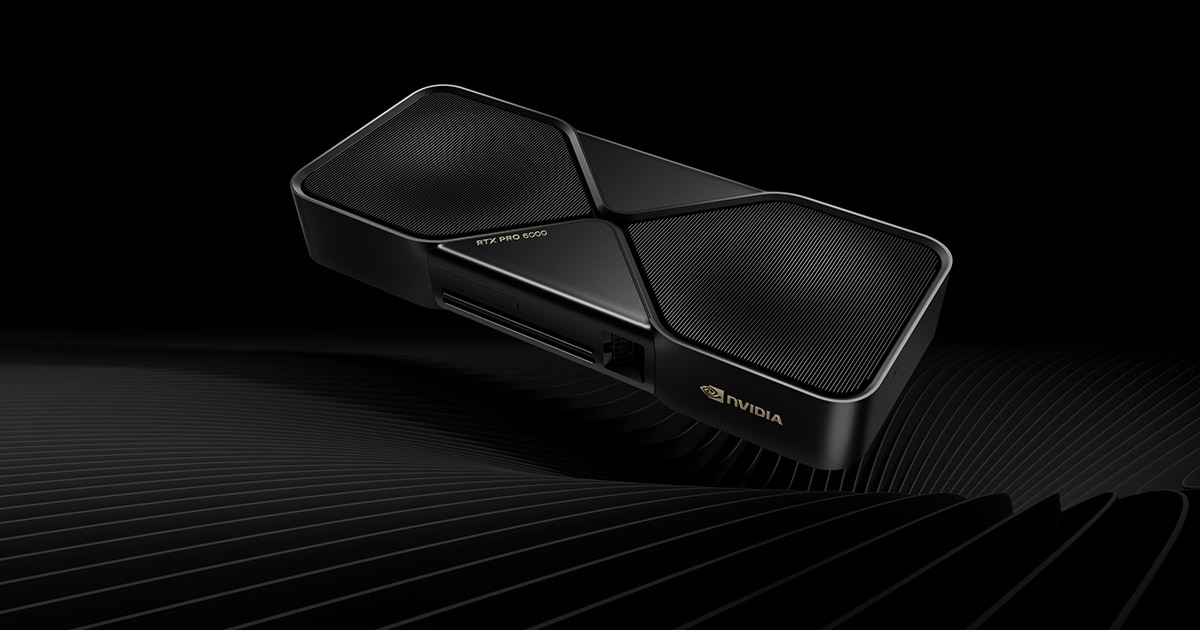
NVIDIA RTX PRO 6000 Workstation Planning
96GB ECC GDDR7 · full workstation configuration required · no verified SpeedyDrone product page at this check
Discuss an RTX PRO workstation with SpeedyDrone →
NVIDIA RTX PRO 5000 Blackwell 48GB Graphics Card | PNY
48GB ECC GDDR7 · 1,344 GB/s · 300W
View the 48GB RTX PRO 5000 →
NVIDIA RTX PRO 5000 Blackwell 72GB Graphics Card | PNY
72GB ECC GDDR7 · capacity-led RTX PRO 5000 option · 300W
View the 72GB RTX PRO 5000 →For the full 16GB-to-72GB ladder, read the NVIDIA RTX PRO Blackwell Buyer's Guide. That guide owns the choice within SpeedyDrone's listed RTX PRO range; this page owns the architectural decision between an AI appliance and a high-end workstation.
Run this acceptance test before you buy
Bring one representative workload
- Record the exact model, revision, precision or quantization, context length, batch and concurrency.
- List the runtime and version—such as TensorRT-LLM, vLLM, Ollama or the application's own engine.
- Measure peak memory, time to first token, output tokens per second and sustained throughput.
- Verify output quality; a faster quantization is not equivalent if it misses the required result.
- Test every compiled dependency on the intended OS and CPU architecture.
- Measure wall power, thermals and noise under a workload long enough to reach steady state.
- For a workstation, validate chassis, PSU, connectors, airflow, slot topology and application certification.
- For multi-device plans, test the actual distributed framework and network—not a multiplied spec sheet.
The practical objective is not to award a universal winner. It is to prove that the proposed system holds the production workload, meets the latency or throughput target and fits the team's software and operating environment with headroom.
Frequently asked questions
Is DGX Spark faster than RTX PRO 6000 because it has 128GB?
No. Spark has more addressable unified system memory, while RTX PRO 6000 has 96GB of dedicated GDDR7 GPU memory with much higher published bandwidth and a higher theoretical compute class. Capacity and speed are separate questions.
Does DGX Spark have 128GB of VRAM?
Not in the conventional discrete-GPU sense. NVIDIA specifies 128GB of coherent unified system memory shared dynamically by the Arm CPU and integrated GPU. The operating system and other workloads also use that pool.
Can DGX Spark really run a 200B model?
NVIDIA positions one Spark for inference with models up to 200B, but the result depends on the exact model, quantization, context, cache, runtime and overhead. Treat 200B as a supported-positioning ceiling, not a guarantee for every configuration or a speed claim.
Will RTX PRO 6000 run every model faster?
No. It offers much higher dedicated memory bandwidth and published AI TOPS, but a configuration that exceeds 96GB may not fit on one card. Real speed also depends on precision, kernels, framework, model, batch, context, CPU and data movement.
Can I compare 1,000 TOPS with 4,000 TOPS directly?
Only as peak theoretical FP4 hardware indicators under NVIDIA's stated conditions. Do not convert the ratio into a tokens-per-second promise. Benchmark the exact workload and quality target.
Can DGX Spark replace a Windows CAD workstation?
It should not be assumed. Spark is an Arm64 system running DGX OS based on Ubuntu 24.04 and is designed primarily for AI development. An RTX PRO workstation is the more natural starting point for Windows-only, x86-only or certified professional graphics applications.
Does four RTX PRO 6000 GPUs create one 384GB VRAM pool?
Not automatically. NVIDIA describes 384GB of combined memory for a four-GPU Max-Q configuration, but software must distribute the model or workload. Framework support, PCIe topology, communication, power and cooling determine usability and performance.
Why not compare prices directly?
DGX Spark is a complete computer; RTX PRO 6000 is a GPU installed in a larger workstation. A fair comparison includes the RTX system's CPU, RAM, storage, chassis, PSU, cooling, integration and support. SpeedyDrone availability and pricing should also be rechecked before ordering.
Should I choose RTX PRO 5000 instead?
Possibly. If 48GB or 72GB is sufficient, SpeedyDrone's listed RTX PRO 5000 cards can be a more proportionate workstation tier. Confirm the memory floor first, then compare compute, bandwidth, power and total system cost.
Choose the platform with evidence
Send SpeedyDrone your model, quantization, context length, runtime, target throughput, OS requirements and any CAD, rendering or media applications. We can help frame the right DGX Spark or RTX PRO workstation acceptance test before you order.
Request a local AI platform reviewSource note: Hardware and platform claims were checked against NVIDIA's DGX Spark Hardware Overview, DGX Spark Porting Guide, DGX Spark product page, RTX PRO 6000 Workstation Edition and RTX PRO 6000 Max-Q Workstation Edition. SpeedyDrone product status was checked September 25, 2026 and can change. Reconfirm specifications, software compatibility, allocation and availability before purchase.


