


Robots are nearing a “ChatGPT moment.”
The phrase describes a future robot that can take an ordinary language instruction, understand an unfamiliar place and complete a new physical task with little task-specific preparation. It does not describe a capability that current humanoids can perform universally today.
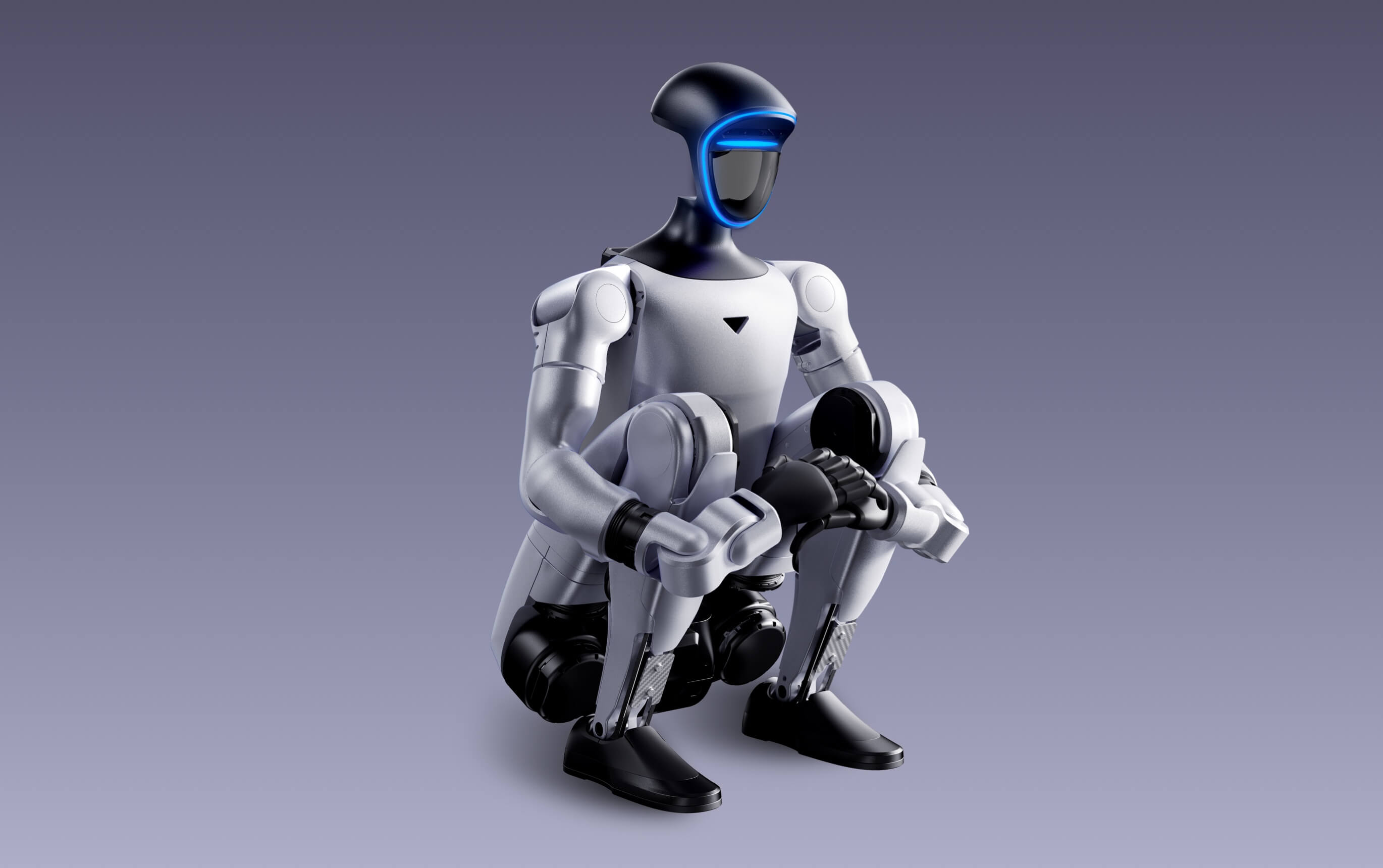
A robotics “ChatGPT moment” would mean a large jump in generalization: a robot could receive a normal voice or text instruction, interpret an unfamiliar environment, plan the work, manipulate objects, detect failure and adjust. Unitree founder Wang Xingxing described that as a future threshold and discussed a roughly two-to-ten-year range, with faster progress possible under favourable conditions. Canadian buyers should evaluate current, testable tasks and development access now, rather than purchase against a promise of general-purpose autonomy.
The benchmark is unfamiliar work, not a better demonstration.
Wang described taking a robot into an unfamiliar environment and asking it, through ordinary language, to complete most of the tasks placed before it.
A future threshold, not a current product specification.
The idea is that a robot should complete roughly four out of five requested tasks in unfamiliar settings from language instructions. That is a useful way to discuss generalization, but it is not an acceptance result for G1, H2 or any other current platform.
Wang discussed a faster case of roughly two to three years and a slower range of five to ten years. That is an industry forecast, not a Unitree release date.
Current humanoids can be useful without being general-purpose workers.
The mistake is treating a bounded capability as proof that the robot can generalize to a new job on its own.
Manufacturer-supported movements, teleoperated motion and task-specific learned policies in controlled conditions.
Stable motion selected and adapted automatically for a new task and environment.
Predefined commands, scripted routines or a narrow vocabulary connected to known behaviours.
Ordinary language grounded in the robot's surroundings, constraints and available tools.
Sensor feeds and recognition pipelines designed for a defined object set, workspace and lighting range.
Reliable interpretation of unfamiliar objects, clutter, people and changes that were not staged in advance.
Prepared grasps and motions developed around specific hands, objects, poses and contact conditions.
New grasps and tool use with force control, placement accuracy and damage avoidance across variation.
Human intervention, reset procedures or task-specific recovery logic.
The robot recognizes why the attempt failed, replans and recovers without creating a new hazard.
Skills may need retraining, reprogramming or integration when the object, site or robot configuration changes.
A skill learned in one setting transfers to another with little additional data or engineering.
Fast legs attract attention. The autonomy stack determines the job.
Running, jumping and dancing demonstrate valuable progress in motion control. A useful autonomous task adds several coupled problems, and a small error in one layer can invalidate the result.
Perception
Identify objects, people, free space, contact surfaces and hazards under changing lighting and occlusion.
Language grounding
Connect a human instruction to the exact objects, locations, permissions and constraints in front of the robot.
Planning
Break a broad goal into ordered actions while accounting for reach, balance, collision and available tools.
Manipulation
Control hands, wrists and whole-body motion closely enough to handle physical variation without damaging the object.
Verification and recovery
Confirm that each action worked, detect a bad grasp or missed placement and choose a safe next step.
Reliability and safety
Repeat the workflow across shifts with bounded behaviour, human override, controlled energy and supportable uptime.
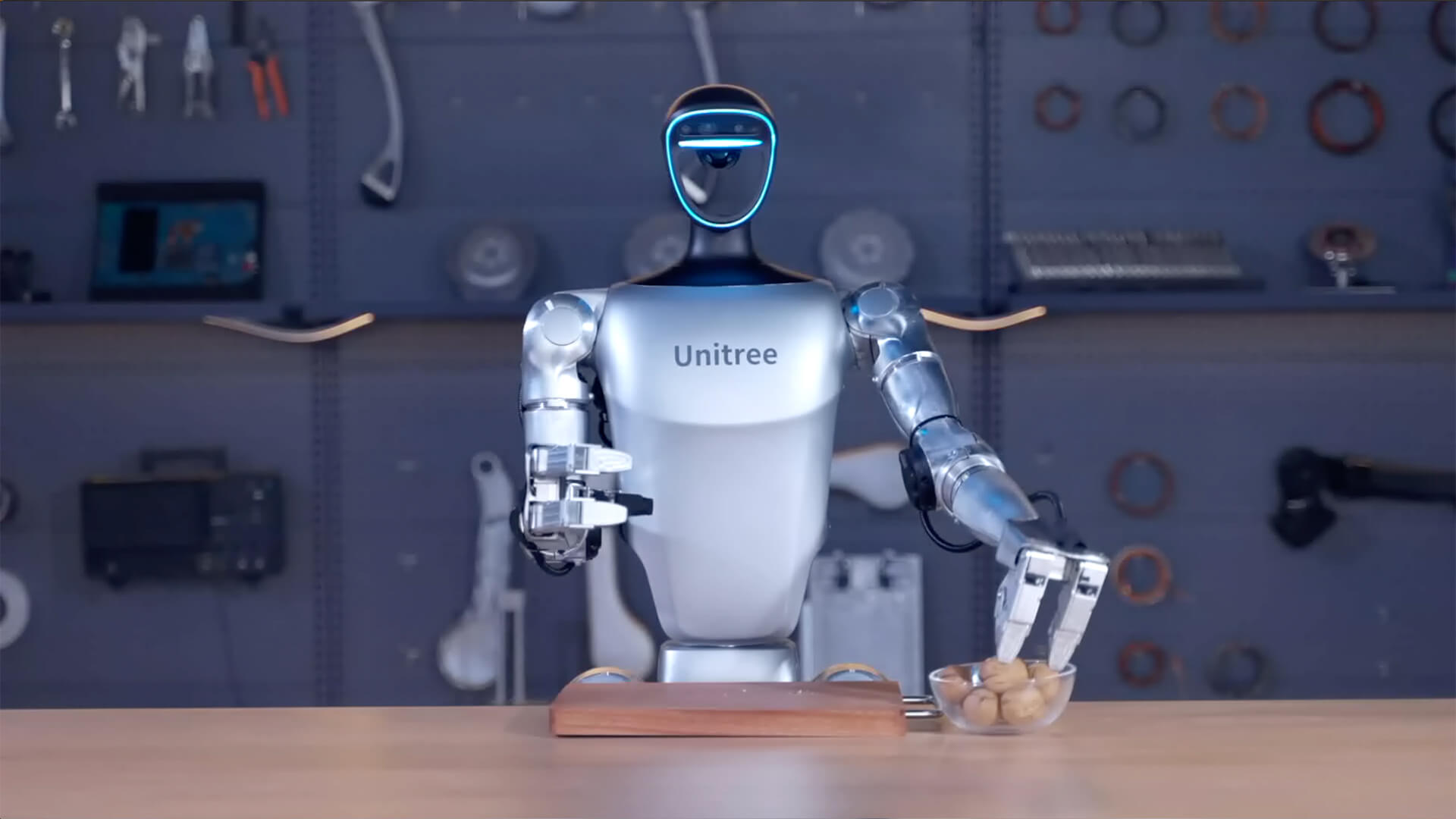
Demo success is evidence of a demo — not universal autonomy.
Unitree uses this G1 image to present dexterous-hand manipulation. The manufacturer's G1 page also warns that some sample functions are still being developed and tested. A buyer must confirm what the delivered configuration includes and what still requires development.
Official Unitree G1 image. Exact hands, control access and supported functions vary by configuration.
Buy a platform around today’s defined project.
Canadian organizations do not need to wait for general-purpose autonomy before starting useful robotics work. They do need to match edition, hands, compute, sensors and software access to a project that can be tested now.
Confirm manufacturer-supported functions, controller, battery, delivery package, training boundary and safety procedure.
Confirm secondary-development entitlement, compute, joint count, hands, sensor access, interfaces, documentation and firmware responsibility.
Confirm exact development edition, hands, compute, facility requirements, safety controls, support and acceptance tests.
Confirm teleoperation hardware, data rights, software access, hand configuration, interfaces and integration scope.
Confirm interaction functions, route and environment limits, supervision, integration, privacy controls and operator workflow.
Eight things to verify before betting on the future.
A useful purchasing review separates what the robot does now from what the customer's team plans to build.
Current supported functions
Ask for a live demonstration of the exact model and software version, then record which behaviours are manufacturer-supported.
Secondary development
Confirm whether the purchased edition permits custom control and what documentation, examples and support are supplied.
SDK and sensor access
List the APIs, ROS 2 or DDS interfaces, camera and LiDAR data, joint state, hand data and command boundaries the project needs.
Onboard and external compute
Match processors, memory, networking and workstation needs to perception, models, simulation and data logging.
Hands and manipulation
Name the exact hand, finger or wrist configuration, sensing, payload, object set and required force or precision.
Repeatability
Define consecutive successful cycles, intervention rate, reset time and the variations the test must include.
Safety controls
Document the test zone, supervision, stop method, fall risk, recovery procedure, networking and change-control process.
Parts and technical support
Confirm batteries, wear parts, repairs, firmware ownership, escalation path, training and support horizon.
Start with one controlled pilot, not an open-ended job description.
“Help in our warehouse” is too broad for procurement. “Move this defined object between two marked stations, under these conditions, for this many cycles” can be engineered and tested.
One bounded task, one controlled environment, explicit acceptance criteria.
Define one mission. Specify the object, starting pose, destination, route, human interaction and permitted supervision.
Bound the environment. Record the floor, lighting, obstacles, network, people, workcell and excluded conditions.
Choose the development boundary. Decide what must work on delivery and what the lab or integrator will build.
Set acceptance measures. Track successful cycles, intervention, time, safe stops, failed grasps, recovery and downtime.
Preserve a safe manual path. Keep operator control, stop procedures and a controlled test zone outside the experimental autonomy stack.
That work remains useful even if general-purpose robot intelligence improves quickly. The pilot creates a validated environment, dataset, safety process and integration boundary that a more capable model can use later.
Do not buy a future employee. Configure a current robotics project.
SpeedyDrone can help Canadian universities, research labs, innovation teams and businesses compare robot edition, compute, hands, sensors, development access, accessories and pilot requirements around a defined mission.
Unitree's robotics “ChatGPT moment”
Has Unitree already achieved a “ChatGPT moment” for humanoid robots?
No. Wang Xingxing described a future industry threshold. He also said current humanoids are not yet capable enough for mass deployment. Current products should be evaluated against their documented and demonstrated functions.
What would a robotics “ChatGPT moment” mean?
It would mean a robot can take ordinary language instructions into an unfamiliar environment and complete most requested tasks by combining perception, planning, manipulation, verification and recovery with much stronger generalization than current systems.
When does Unitree expect that breakthrough?
Wang discussed a faster case of roughly two to three years and a slower range of five to ten years. That is an industry forecast, not a confirmed launch date or a promise attached to a current Unitree model.
Can Unitree G1 understand and perform any new task today?
No. G1 can support manufacturer functions and development work depending on edition and configuration, but buyers should not assume universal language-driven autonomy. Unitree also notes that some functions shown on its product page remain under development or testing.
Do Canadian developers need G1 EDU?
Unitree's current G1 comparison lists secondary development for G1 EDU and not for base G1. A team that needs SDK access, custom control, ROS 2 integration, added compute or configurable hands should specify the exact G1 EDU configuration and access rights in writing.
Should Canadian organizations wait several years before buying a humanoid?
Not if a current platform can support a valuable research, education, demonstration or bounded pilot objective. The purchase should be justified by today's verifiable work and development roadmap, not by an assumed future software upgrade.
Where do AGIBOT humanoids fit in this discussion?
AGIBOT offers different platforms for different workflows. AGIBOT G1 can be evaluated for teleoperation, data and embodied-AI development, while A2-series projects may centre on interaction and bounded navigation. Confirm model-specific hardware, software and support rather than transferring claims between products.
What information should I send SpeedyDrone for a robotics consultation?
Provide the task, objects, environment, number of robots, desired autonomy, operator role, SDK or ROS 2 needs, sensors, hands, compute workload, safety boundary, facility, budget and target timeline.
Sources consulted
- Reuters: Robots poised for “ChatGPT moment,” Unitree CEO says, August 20, 2026
- PANews: English transcript of Wang Xingxing's World Robot Conference speech
- Unitree: G1 and G1 EDU product information and development distinction
- Unitree Robotics: official SDK2 repository
- Unitree Robotics: official ROS 2 repository
- Unitree: H2 and H2 EDU product information
- AGIBOT: G1 product information
Information and product routes were checked on August 20, 2026. Robot capabilities, software interfaces, documentation, firmware, compute, hands, package contents, availability and support can change. Demonstration imagery does not establish that the depicted function is included, autonomous or repeatable in a customer's environment. Confirm the exact configuration and acceptance criteria before purchase.


