


DJI Agriculture News · April 29, 2026
Global scale is a signal. Farm-level value still has to be measured.
DJI Agriculture reports major global water and carbon savings from agricultural-drone adoption. Canadian teams should use the report to design better pilots, not to promise the same outcome before local measurement.
Quick answer
DJI Agriculture announced its fifth Agricultural Drone Industry Insight Report on April 29, 2026 at Agrishow in Brazil. DJI estimates that worldwide adoption had saved about 410 million tonnes of water and avoided 51 million tonnes of carbon emissions by the end of 2025. These are global, manufacturer-published estimates. They do not prove a specific Canadian farm's savings, legal authority, application quality or return on investment.
Request an Agriculture Fit ReviewWhat was announced
A global adoption report, not a Canadian field trial.
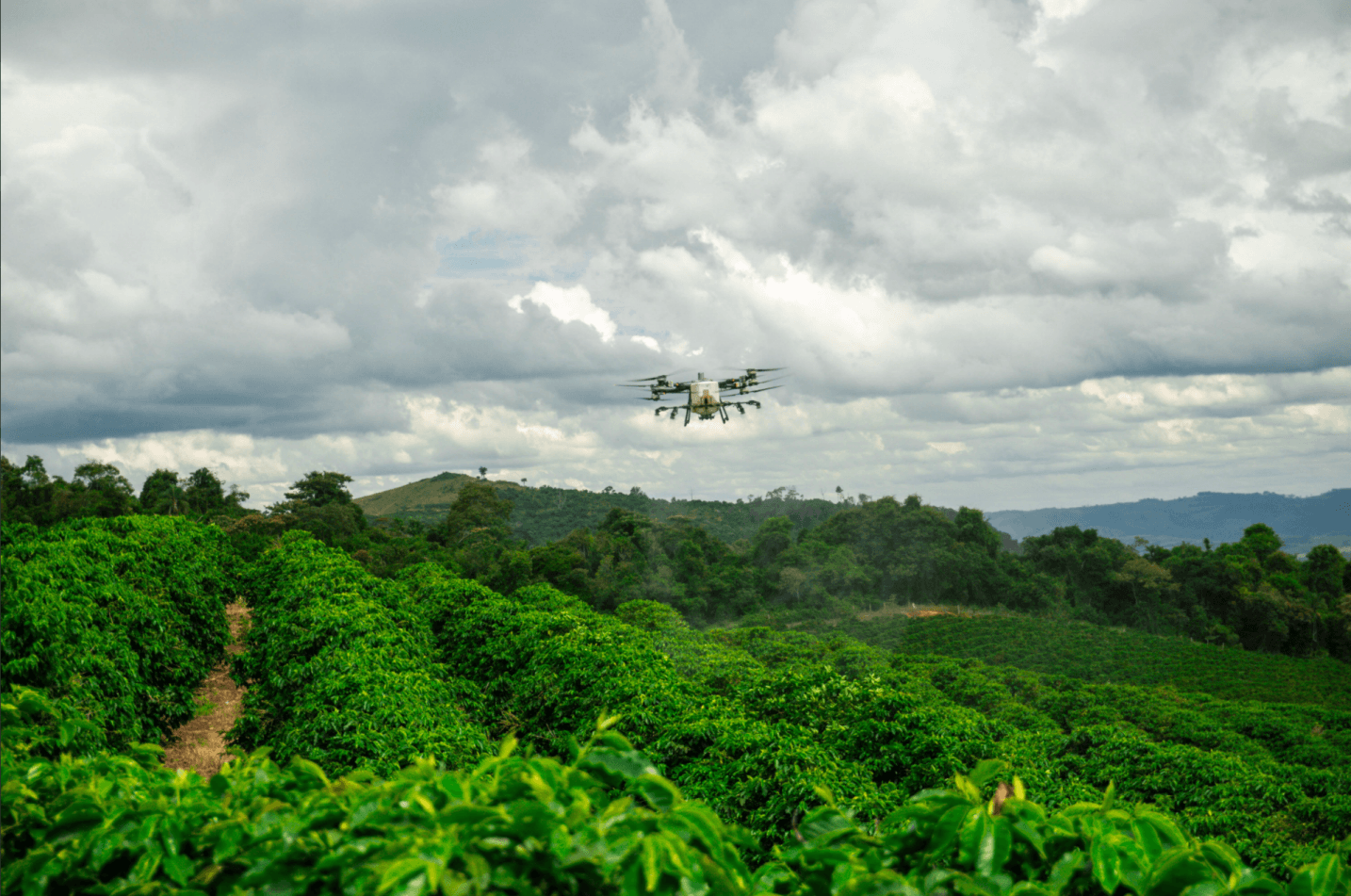
DJI Agriculture says more than 600,000 DJI agricultural drones were in use across more than 100 countries and regions by the end of 2025, supported by more than 600,000 trained operators. The announcement also references a worldwide network of 3,500 service and repair centres.
Evidence boundary
What the figures support, and what they do not.
The report supports a scale argument
Agricultural drones are no longer isolated demonstrations. DJI's adoption counts and international case studies show a mature global category with trained operators, service infrastructure and repeatable crop workflows.
The report does not guarantee local outcomes
The announcement does not establish the savings of a named Canadian farm, the legality of a pesticide application, the suitability of one Agras model, or a guaranteed payback period. Crop, field, label, weather, terrain and operating practice all change the result.
Do not convert aggregate estimates into a sales promise. A farm proposal should show its own baseline, planned treatment area, application method, labour assumptions, water volume, energy use, quality checks and compliance path.
Why it matters for SpeedyDrone Canada
The report makes measurement discipline more important, not less.
Canadian farms considering DJI Agriculture solutions can use the global report as category context. The purchase decision still belongs inside a crop-specific operational and regulatory review. SpeedyDrone's agricultural drone solutions path and current DJI Agras T50 listing provide local product context without replacing label or regulatory checks.
Record the baseline
Measure the existing sprayer or spreading workflow: area, passes, water, fuel or electricity, labour, refills, setup time and rework.
Define the application boundary
Name the crop, product label, field geometry, terrain, buffer areas, weather limits, application rate and responsible operator. Verify current federal and provincial requirements.
Measure quality, not only speed
Track coverage, uniformity, drift controls, missed areas, overlap, refill consistency and record accuracy. Faster operation has little value if treatment quality declines.
Calculate comparable resource use
Compare water, chemical, energy and labour per treated hectare under the same task definition. Keep manufacturer maximums separate from observed Canadian results.
Set a scale-up gate
Expand only when the pilot meets safety, compliance, application-quality, uptime and cost thresholds under representative field conditions.
Practical pilot scorecard
Measure five results before making a sustainability claim.
- Water intensity: litres used per treated hectare for the defined task.
- Energy intensity: generator fuel or electricity consumed per hectare, including charging and cooling.
- Application quality: coverage, rate accuracy, drift observations, missed areas and rework.
- Operational efficiency: productive hectares per labour hour after refill, travel, setup and battery handling.
- Compliance completeness: required records, approved product use, operator credentials, site controls and incident reporting.
These measurements let a farm test whether a local program aligns with the direction described in DJI's global report without borrowing an outcome it has not earned.
DJI Agriculture 2026 Report FAQ
Who published the 2026 agricultural-drone report?
DJI Agriculture published its fifth Agricultural Drone Industry Insight Report and announced it on April 29, 2026 at Agrishow in Brazil.
What global savings did DJI report?
DJI estimated approximately 410 million tonnes of water saved and 51 million tonnes of carbon emissions avoided through global agricultural-drone adoption by the end of 2025.
Are those figures Canadian farm results?
No. They are global manufacturer-published estimates. A Canadian farm must measure its own baseline, field conditions, operating method and results.
Does the report prove that an Agras drone can apply every crop-protection product in Canada?
No. Product labels, federal requirements, provincial rules and site conditions govern use. The global report is not a Canadian pesticide approval.
How many agricultural drones did DJI report in use?
DJI reported more than 600,000 agricultural drones in use across more than 100 countries and regions by the end of 2025.
What should a Canadian pilot measure?
Measure water and energy per hectare, application quality, labour and throughput, downtime, record completeness and total comparable cost.
Can a farm quote the global savings in its own sustainability report?
It may cite DJI's global estimate with clear attribution and scope, but it should not present the figures as its own outcome without local measurement.
What is the next step before requesting an Agras quote?
Prepare the crop, acreage, field layout, intended operation, application requirements, current equipment, season timing and compliance questions for a configuration review.
Official and live sources
- DJI announcement: global agricultural-drone adoption report - publication date, adoption estimates and case-study context.
- SpeedyDrone: DJI Agriculture solutions - Canadian solution pathway.
- SpeedyDrone: agricultural drone solutions - application and consultation context.
- SpeedyDrone: DJI Agras T50 - current Canadian product and package path.
- Health Canada Pest Management Regulatory Agency - federal pesticide regulation and label authority.
Build the Canadian evidence before scaling the fleet.
Share your crop, field size, current workflow, application requirement and season timing. SpeedyDrone can help frame a product fit review and the operational questions that still need field validation.
Request an Agriculture Fit ReviewChecked August 9, 2026. This article is general information and does not provide pesticide, aviation, legal or environmental approval.


