


3 kg smart tracking or 4.5 kg production rig?
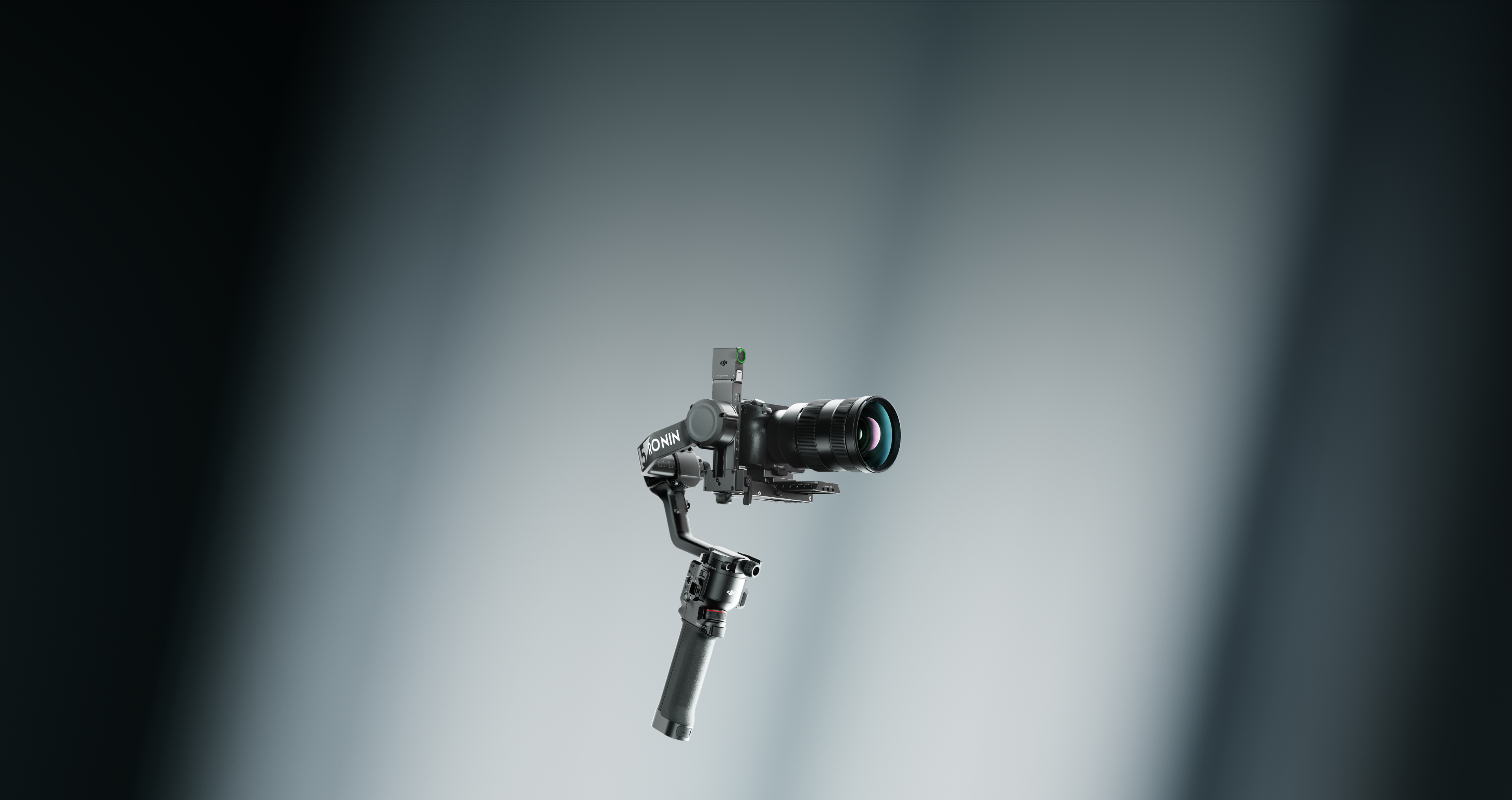
DJI RS 5 and RS 4 Pro are not a simple new-versus-old upgrade pair. RS 5 is the faster solo-operator system; RS 4 Pro is the heavier, more expandable platform for focus, monitoring and remote-control workflows.

Quick answer
Buy RS 5 when your complete balanced rig stays comfortably below 3 kg and you value fast setup, direct touchscreen tracking and an electronic briefcase handle. Buy RS 4 Pro when the job needs 4.5 kg payload capacity, Focus Pro LiDAR, dual focus/zoom motors or deeper transmission and remote-control integration. The choice is creator efficiency versus production expansion—not simply “newer” versus “older.”
Start with the workflow, not the release date
RS 5 sits in DJI’s “lightweight commercial” tier. RS 4 Pro remains the “expansive flagship” model. That naming matters because the two gimbals optimize different kinds of work. A wedding filmmaker, real-estate creator or owner-operator with a mirrorless body and compact zoom may get more value from RS 5’s tracking and quicker physical controls. A commercial crew building around a compact cinema camera, manual cine lens, focus motor, monitor and transmitter can justify RS 4 Pro’s payload and ecosystem headroom.
The headline payload numbers—3.0 kg for RS 5 and 4.5 kg for RS 4 Pro—are only the beginning. DJI’s comparison table lists the systems at 1.46 kg and 1.6 kg respectively, so the nominal difference is 140 g. RS 5 is lighter, but “dramatically lighter” would be misleading. Once a camera, lens, cage, plate, microphone, motor, cable and transmitter are attached, the complete moving rig matters far more than the bare-gimbal difference.
| Decision point | DJI RS 5 | DJI RS 4 Pro |
|---|---|---|
| DJI position | Lightweight commercial gimbal | Expansive flagship gimbal |
| Tested payload | 3.0 kg / 6.6 lb | 4.5 kg / 10 lb |
| Best-fit rig | Mirrorless body, practical zoom or prime, compact creator accessories | Heavier mirrorless or compact cinema build, cine lens, motors, monitor and transmission accessories |
| Tracking advantage | Direct magnetic module attachment, on-screen subject selection and tracking view | Enhanced module works with an adapter, but the older screen cannot display its tracking view |
| Focus-system advantage | Supports Focus Pro Motor; Focus Pro LiDAR is not supported | Supports Focus Pro LiDAR, up to two Focus Pro Motors and a deeper remote-control workflow |
| Briefcase control | Electronic handle can control the gimbal and camera | Mechanical briefcase handle; broader remote options exist through the PRO ecosystem |
| Battery claim | About 14 hours standby; about 1 hour to charge with compatible 65W PD power | About 13 hours with BG30; up to 29 hours with optional BG70; about 1.5 hours to charge BG30 at 24W |
| Best reason to buy | Faster solo operation under the payload ceiling | Payload margin and an expandable production system |
Both use automated axis locks, support native vertical workflows and offer fine balancing controls. Those shared fundamentals are not the decision. Choose according to the heaviest real configuration you will balance and the accessories the production actually needs.
A 3 kg rating does not mean every 2.9 kg rig is comfortable
Payload ratings tell you what the gimbal has been tested to carry; they do not guarantee that every shape of rig will balance cleanly or remain pleasant for a full shooting day. A long lens shifts its centre of gravity forward. A tall cage may compete for tilt-axis clearance. A transmitter, focus motor or side handle can create asymmetric weight. Zooming an extending lens can also change balance after setup.
Build a complete weight list: camera body, lens, filter, cage, quick-release hardware, microphone or receiver, focus or zoom motor, cables, phone or monitor mount, transmitter and any counterweight. Then check the physical dimensions and lens travel—not only the total number. For a configuration close to 3 kg, the RS 4 Pro’s 4.5 kg tested capacity gives more room for balancing and motor reserve. For a compact 1.5–2.2 kg mirrorless rig, that extra platform capacity may add complexity without improving the final shot.
Practical rule: choose RS 5 when the complete build is comfortably inside its payload and clears every axis through the lens’ working range. Choose RS 4 Pro when the configuration is near the RS 5 ceiling, front-heavy, motorized or likely to grow during a production.
Camera compatibility is still combination-specific. A supported camera body does not automatically mean every lens, cage and cable arrangement will balance. Use the SpeedyDrone RS 5 camera and lens compatibility guide and DJI’s Ronin compatibility search for the exact body-and-lens pair.
Tracking and physical controls reduce solo-operator friction
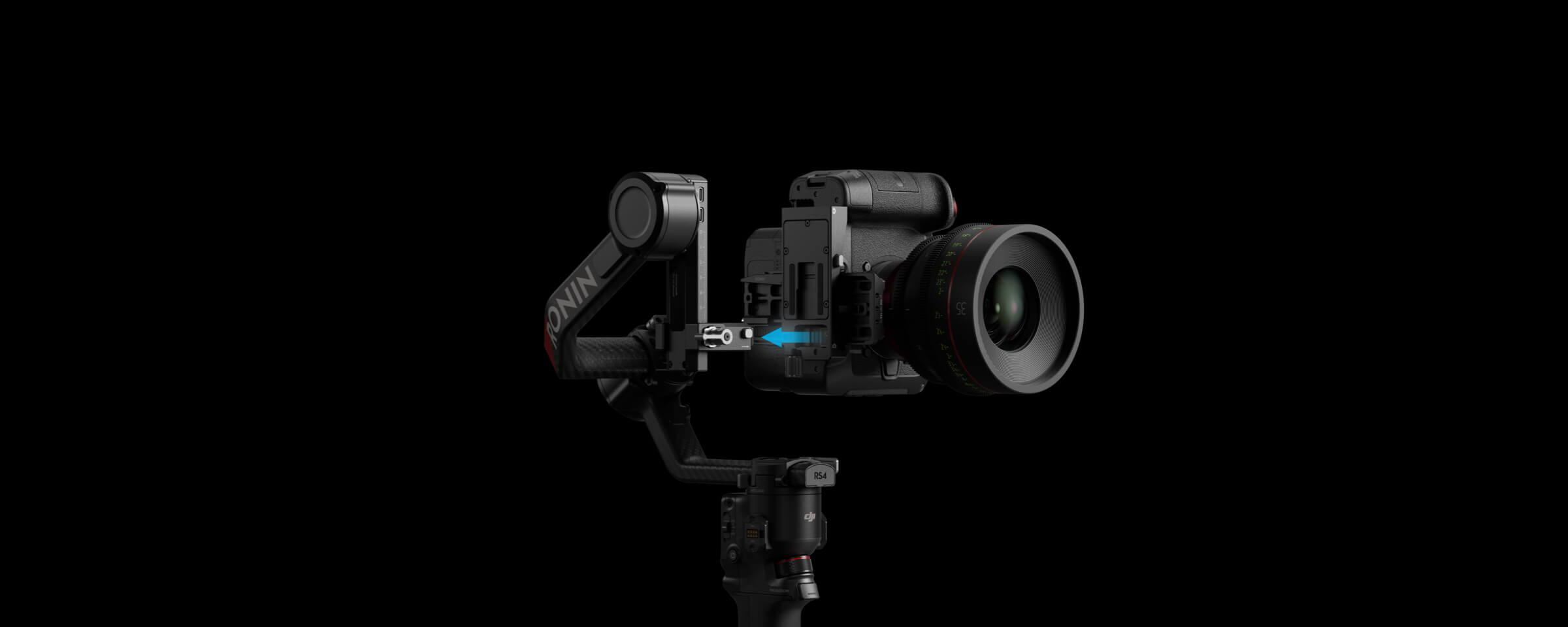
RS 5’s strongest advantage is not simply a newer stabilization algorithm. It is the way the optional RS Enhanced Intelligent Tracking Module, touchscreen and electronic briefcase handle work together. The module attaches magnetically to RS 5 and can show the tracking view directly on the gimbal’s screen. The operator can frame a subject on that screen, then track a person, vehicle, pet or another selected subject. DJI lists a 0.5–10 m tracking range under its stated conditions.
This is valuable when one person is both camera operator and director: a fixed-position interview, a presenter walking through a location, an orbit around a vehicle, a creator filming backward or a small production that cannot add a dedicated gimbal assistant. The RS 5 Combo is the natural package for that workflow because it adds the Enhanced Intelligent Tracking Module and the Electronic Briefcase Handle. The electronic handle has a joystick and buttons for gimbal and camera control, so low-angle work does not require reaching back to the main grip.
The Z-Axis Indicator is easy to overstate. It is not a fourth motorized stabilization axis and it does not physically remove vertical bounce. It is on-screen feedback that helps the operator adjust walking technique. Good footsteps, correct motor tuning and proper balance still determine how clean the result looks.
You already have a controlled shooting method, do not need the new tracking module or electronic briefcase handle, and want the lowest-cost entry into the 3 kg platform.
You will use subject tracking, low-angle control or solo-operated movement often enough to benefit from the included module and electronic handle.


RS 4 Pro earns its place with Focus Pro LiDAR and dual motors
Tracking controls where the camera points. Focusing controls what is sharp. RS 5’s Enhanced Intelligent Tracking Module can keep a subject framed, but it does not turn a manual cine lens into an autofocus lens. The Focus Pro Motor is compatible with RS 5, yet DJI’s current compatibility guidance does not support the Focus Pro LiDAR on RS 5.
RS 4 Pro is the more capable platform when lens control is central to the job. It supports Focus Pro LiDAR and up to two Focus Pro Motors for focus and zoom control. DJI lists 76,800 ranging points and a 0.5–20 m sensing range for the Focus Pro LiDAR. When the LiDAR and motor are properly configured with a calibrated manual lens, the system can provide autofocus-style operation that is fundamentally different from gimbal subject tracking.
That difference matters for narrative, commercial and event work using manual lenses. A focus puller can also work through compatible remote equipment while another operator moves the gimbal. RS 4 Pro’s support for DJI Transmission, High-Bright Remote Monitor workflows, Master Wheels and other PRO control paths makes it a production node rather than only a handheld stabilizer.
Can the Enhanced Tracking Module work on RS 4 Pro?
Yes—with important limits. DJI says the Enhanced Intelligent Tracking Module can mount on RS 4 Pro with its adapter. That adapter occupies the gimbal’s RSS port, so a camera control cable cannot be used there. On RS 4 Pro, the module supports a narrower recognizable-subject workflow and the tracking view does not appear on the gimbal screen. Direct magnetic attachment and on-screen selection remain RS 5 advantages.
Which RS 5 accessory is incompatible with RS 4 Pro?
The RS 5 Electronic Briefcase Handle, not the tracking module. DJI explicitly warns that the handle’s signal-blocking structure can damage older gimbal models. Do not install it on RS 4 or RS 4 Pro. This distinction is important because the two accessories have different compatibility rules.

Transmission, battery and expansion change the ownership experience
Both platforms can participate in video-transmission workflows, but RS 4 Pro has the deeper production architecture. DJI documents simultaneous Focus Pro LiDAR and DJI Transmission use through the Focus Pro LiDAR-to-DJI Transmission Cable Hub, including LiDAR waveform and integrated control functions. The current SpeedyDrone RS 4 Pro Combo (2026) bundles an SDR transmitter, SDR receiver and Focus Pro Motor, making it a more complete starting point for stabilization, monitoring and lens-control work. Focus Pro LiDAR is not included in that package.
RS 5 can also be configured with DJI SDR Transmission hardware, so transmission by itself does not force the Pro choice. The deciding question is whether you only need a clean feed and remote viewing, or whether the rig must combine transmission with LiDAR focusing, dual motors, remote gimbal control and a crewed camera department.
Battery numbers favour different priorities. DJI rates RS 5’s BG33 at approximately 14 hours of standby and about a one-hour full charge with a compatible 65W PD charger at 25°C. RS 4 Pro’s BG30 is rated around 13 hours and approximately 1.5 hours to charge with compatible 24W fast charging. The optional BG70 can extend RS 4 Pro runtime to 29 hours under DJI’s stated stationary test conditions. Real runtime drops when the gimbal is moving and powering accessories, so these figures are planning references rather than shoot-day guarantees.
Think in systems: if you need one operator to unpack, balance, track and shoot quickly, RS 5 is usually more efficient. If you need the gimbal to sit inside a larger chain of lens control, transmission, monitoring and remote operation, RS 4 Pro is easier to justify.
Choose the package that matches the job on day one
At our September 18, 2026 check, SpeedyDrone listed the four Canadian packages below. Prices and availability can change; each page displayed a backorder notice, so confirm the current lead time before scheduling a production.

DJI RS 5
C$659 at time of check
Best when you want the 3 kg RS 5 platform but do not need the new tracking module and electronic briefcase handle in the box.
Current listing showed backorder; verify live timing.

DJI RS 5 Combo
C$815 at time of check
The stronger RS 5 choice for solo creators who want the Enhanced Intelligent Tracking Module and Electronic Briefcase Handle.
Current listing showed backorder; verify live timing.

DJI RS 4 Pro
C$1,104 at time of check
Choose the core 4.5 kg platform when you already own or intend to select the Focus Pro, transmission and control accessories separately.
Current listing showed backorder; verify live timing.

DJI RS 4 Pro Combo (2026)
C$1,819 at time of check
Includes RS 4 Pro, SDR transmitter and receiver, Focus Pro Motor and related hardware. Focus Pro LiDAR remains an additional accessory.
View DJI RS 4 Pro Combo (2026)
Current listing showed backorder; verify live timing.
The RS 5 Combo’s C$156 premium over Standard is straightforward if both included workflow accessories will be used. The RS 4 Pro choices require a different calculation: the core gimbal may be enough for an existing kit, while the 2026 Combo reduces the number of separate transmission and focus components you must source. Do not compare package prices without comparing what is in each box.
Who should buy RS 5, and who should buy RS 4 Pro?
- Your complete balanced rig stays comfortably under 3 kg.
- You work alone or with a very small crew.
- Direct on-screen tracking is more useful than LiDAR focusing.
- You shoot events, real estate, branded content, weddings, social video or small commercial jobs.
- Fast setup, one-hour charging and electronic low-angle control save real time.
- Your rig approaches or exceeds the practical comfort zone of a 3 kg gimbal.
- You use a compact cinema body, long/heavy lens, cage, motor or transmission hardware.
- You need Focus Pro LiDAR for a manual-lens workflow.
- You need two lens motors, remote focus/gimbal operation or deeper DJI Transmission integration.
- The gimbal is part of a production system that will keep expanding.
When RS 5 is the better professional choice
“Pro” in a model name does not make the larger gimbal automatically better for professional work. If the RS 5 safely carries your real camera package, its tracking view, electronic briefcase controls and shorter charging cycle can make a one-person production faster and easier. Buying unused payload and ecosystem capacity can increase cost without improving the footage.
When the RS 4 Pro premium is justified
The premium is justified when it solves a known production requirement: the RS 5 cannot balance the planned rig with adequate margin; the lens workflow needs Focus Pro LiDAR; two motors must be controlled; or a director, focus puller or remote operator needs a connected monitoring-and-control path. In those cases, RS 4 Pro is not merely the heavier option—it is the correct infrastructure.
If your build sits between the two, weigh and mock up the complete rig before buying. Include the accessories you plan to add six months from now. Payload margin is cheaper to choose once than to replace an undersized platform later.
DJI RS 5 vs RS 4 Pro questions
Is DJI RS 5 better than RS 4 Pro?
Not universally. RS 5 is usually better for a sub-3 kg solo-creator rig that benefits from direct touchscreen tracking and the electronic briefcase handle. RS 4 Pro is better for heavier or expanding rigs that need Focus Pro LiDAR, dual motors, transmission integration or remote production control.
Can DJI RS 5 carry a cinema camera?
Some compact cinema-camera combinations may fit within its 3 kg tested payload, but total weight is not enough to confirm compatibility. Lens length, cage dimensions, cables, axis clearance and centre of gravity all matter. Verify the exact camera-and-lens combination and balance the complete rig.
Does DJI RS 5 support Focus Pro LiDAR?
No. DJI’s current Focus Pro compatibility guidance lists the Focus Pro Motor for RS 5, but not the Focus Pro LiDAR. RS 4 Pro supports both.
Can the RS Enhanced Intelligent Tracking Module work on RS 4 Pro?
Yes, with the supplied adapter mount and current firmware. The adapter occupies the RSS port, the camera control cable cannot use that port, and RS 4 Pro cannot display the module’s tracking view on its own touchscreen. Direct attachment and on-screen subject selection are RS 5 advantages.
Can I use the RS 5 Electronic Briefcase Handle on RS 4 Pro?
No. DJI warns that the handle’s signal-blocking structure can damage older gimbal models. Use only compatible handle hardware specified for the RS 4 Pro.
Is the RS 5 Z-Axis Indicator a fourth stabilization axis?
No. It gives visual feedback to help the operator refine walking technique. It does not physically isolate vertical movement the way a mechanical or motorized fourth-axis system would.
Is RS 5 much lighter than RS 4 Pro?
DJI’s store comparison lists 1.46 kg for RS 5 and 1.6 kg for RS 4 Pro, a difference of about 140 g. The larger real-world difference usually comes from the camera, lens and accessories each platform is expected to carry.
Which battery lasts longer?
With standard grips, DJI rates RS 5 at about 14 hours of standby and RS 4 Pro at about 13 hours under stationary test conditions. RS 4 Pro can reach up to 29 hours with the optional BG70. Movement and powered accessories reduce actual runtime.
Should I buy RS 5 Standard or Combo?
Choose Standard when you do not need the Enhanced Intelligent Tracking Module or Electronic Briefcase Handle. Choose Combo when subject tracking and low-angle electronic control are part of your regular solo workflow. Check the exact current box contents before ordering.
What this comparison is based on
DJI RS 5 Support and specifications
Payload, weight components, battery, charging, tracking-module specifications and accessory compatibility.
DJI RS 5 FAQ
Tracking behaviour, subject selection, adapter limits and electronic briefcase handle warning.
DJI RS 4 Pro Support
Payload, battery, remote-control options, Focus Pro LiDAR support and simultaneous LiDAR/Transmission requirements.
DJI Focus Pro specifications
LiDAR ranging points, sensing distance and system specifications.
DJI Focus Pro compatibility guidance
Current RS 5 versus RS 4 Pro LiDAR/motor compatibility and RS 5 dual-motor balancing note.
SpeedyDrone DJI RS Series collection and product records
Canadian package mapping, exact product images and prices checked September 18, 2026. Availability remains live product-page data.
Editorial boundary: payload-fit and buyer recommendations are practical interpretations of official specifications, not a SpeedyDrone laboratory test. Product imagery is official DJI or current SpeedyDrone listing media; no AI-generated gimbal, camera or interface image is used.
Build the gimbal system around your real camera rig
Compare current RS 5 and RS 4 Pro packages, then match the payload, tracking, focus and transmission path to the work you actually shoot.
Compare DJI RS gimbals in Canada


