


Canada · First-time Advanced applicants
The right exam.
The flight review.
Your TC certificate.
Understand the application pathway, then choose the exam preparation and flying practice you actually need.

Information and listed Canadian fees checked October 3, 2026.
To get a Transport Canada Pilot Certificate – Advanced Operations, you must be at least 16, pass the Advanced online exam, pass an Advanced flight review and apply through the Drone Management Portal. You do not need to obtain a Basic certificate first. Passing the written exam alone does not finish the process.
Ground school and flight training help you prepare; they are not substitutes for the government exam, practical evaluation or application. Your successful flight review must be within 12 months before you apply. A course completion certificate is not the Transport Canada pilot certificate.
The purchase decision follows your preparation gap. If you have passed the exam and can demonstrate the flight skills, you may only need a review. If your knowledge needs structure, ground school can help. If you also need supervised flying practice, choose training before the assessment rather than expect the reviewer to teach you during it.
This guide covers first-time Advanced certification in Canada, the conditional privileges it provides and three AlteX preparation paths sold by SpeedyDrone. It is general information, not an approval for a particular aircraft or flight. Your intended operation still needs its own airspace, aircraft and site checks.
The pathway, from account to certificate
Use one consistent Drone Management Portal account and retain the identifiers supplied with your exam result. The school uses that information to arrange and record the review. The legal requirements are the exam, review and application; the preparation stages below explain how to reach them without confusing a training purchase with certification.
- Access the PortalCreate or access your account and check that your identity details are correct.
- Prepare for AdvancedStudy the relevant knowledge requirements; choose optional instruction if it fills a real gap.
- Pass the examComplete the Advanced online exam and retain the result and reference number.
- Prepare for the reviewPractise the assessed skills and arrange the required documents and registered aircraft.
- Pass the reviewComplete the Advanced evaluation with a qualified flight reviewer.
- Apply and payApply through the Portal with a qualifying, in-date review; obtain your TC certificate.
- Maintain recencyKeep the required knowledge current and retain applicable evidence before later flights.
What does the Advanced certificate let you do?
Advanced holders can conduct Basic operations and qualifying Advanced operations. The reason to choose Advanced is the operation you want to perform, not simply whether you are paid for a flight. Transport Canada lists privileges including controlled-airspace operations with air traffic control permission, certain operations closer to people, medium-drone operations and defined sheltered or extended visual line-of-sight operations.
Those are conditional privileges. For most Advanced operations, the aircraft must meet the safety assurance requirements for that specific operation. An Advanced certificate does not make every drone suitable for flying near or over people. Controlled airspace still requires the appropriate ATC permission; a training-provider certificate or a manufacturer's feature list cannot supply it.
Start with the intended mission and consult Transport Canada's Advanced operation requirements. For wider site and category context, use SpeedyDrone's Canadian drone safety and regulation overview. Do not interpret the examples here as confirmation that your proposed location or aircraft qualifies.
Step 1: pass the Advanced online exam
The Advanced exam has 50 multiple-choice questions, a 60-minute time limit and an 80% passing score. You must be at least 16 to take it. Transport Canada provides the result through the Portal immediately after completion. Keep the successful result and reference number because the school will request them when you book the flight review.
If you fail, you must wait 24 hours before another attempt. There is no maximum number of attempts, but each has a fee. Review the areas you misunderstood before paying again; repeatedly trying without addressing the knowledge gap is a poor preparation plan. TC also offers a case-by-case accommodation process for extra time, which should be requested before payment when needed.
Prepare for the Advanced exam specifically. Taking the Basic exam and then booking a flight review is not the Advanced pathway. The official Advanced exam page explains the format, retries and next step; its questions draw on the RPAS knowledge requirements, which TC explicitly says are not themselves a study guide.
For preparation, connect the theory to decisions you would make on a real flight: recognizing the relevant airspace, assessing weather and site hazards, understanding the aircraft's limitations and choosing appropriate procedures. Being comfortable with the camera app is not the same as understanding the knowledge being examined. A useful study plan identifies weak areas rather than merely collecting practice-question scores.
Is ground school mandatory for Advanced?
No mandatory ground-school course is part of the Advanced certificate issuance requirements. Transport Canada strongly recommends attending a drone flight school before the exam. You can therefore choose structured instruction for its educational value without being told that purchasing a particular provider's course is legally compulsory.
This distinction matters when comparing training descriptions. Level 1 Complex has a separate requirement for at least 20 hours of ground school, alongside other requirements. That is not a mandatory 20-hour course rule for every first-time Advanced applicant. Likewise, a course advertised as 24 hours does not automatically qualify you for the Complex pathway; its syllabus and provider requirements must match the credential sought.
Ground school makes sense when you want an organized route through the material, explanations of unfamiliar aviation concepts and a way to identify what needs more study. Experienced pilots can still have theory gaps. Conversely, a capable self-directed learner who has already passed Advanced need not buy another ground-school package solely because the review is still outstanding.
The AlteX Advanced training options at SpeedyDrone combine preparation in different ways. Compare the work each includes with the stage you have reached. The commercial bundle name may use “License,” but the official credential remains a Transport Canada Pilot Certificate – Advanced Operations.
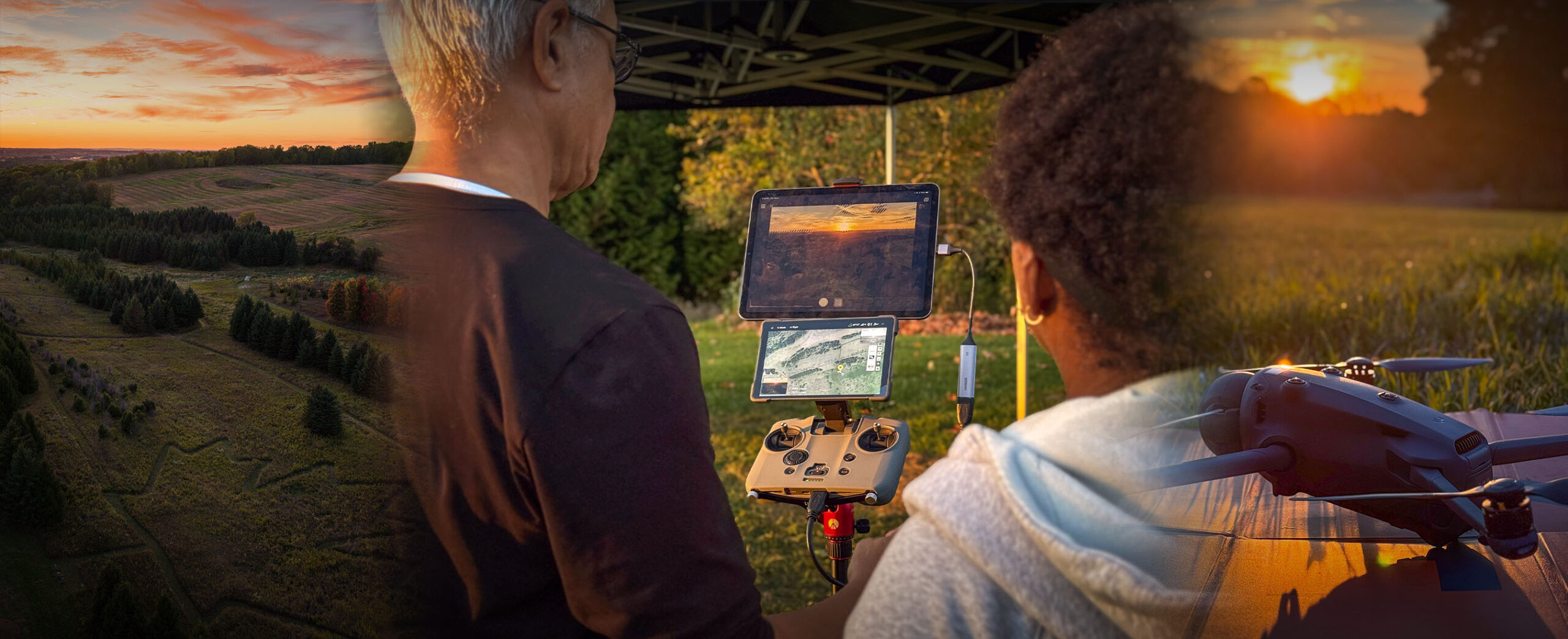
Step 2: complete an Advanced flight review
You must pass the Advanced exam before the review. Contact a drone flight school to schedule it with a qualified reviewer. Transport Canada says every reviewer is associated with a self-declared drone flight school. A paid lesson from a helpful pilot is not automatically the required formal review.
For scheduling, TC lists a copy of your successful exam result, valid government-issued identification showing your name and date of birth, and the Certificate of Registration for the aircraft used in the review. Confirm with the school how it wants the documents supplied and which account/reference identifiers it needs. A rental arrangement does not make the registration-document requirement disappear.
Bring existing pilot-certificate details if you have them and the provider requests them, but do not confuse that administrative preparation with a requirement to obtain Basic first. The Advanced issuance rule sets out age, the Advanced exam and the qualifying review. Foreign pilots should check the separate SFOC-RPAS requirement before booking; TC says that application can take up to 30 working days.
The reviewer assesses practical safety, not only whether you can move the aircraft. Standard 921.02 includes planning, site assessment, emergency knowledge and aircraft-handling exercises. Use the scope below to identify what you should be ready to explain and demonstrate.
- Site and plan: explain how you survey the location and plan an operation.
- Emergencies: explain lost-link and fly-away actions and who to contact.
- Reporting: explain when and how to inform TC and the Transportation Safety Board of an incident or accident.
- Aircraft preparation: carry out the appropriate pre-flight checks.
- Flight handling: demonstrate takeoff or launch, navigation by applicable visual and ground-control references, distance recognition and landing.
Training is preparation; the review is evaluation
Transport Canada's Flight Reviewer's Guide describes the review as an evaluation rather than a training flight. During the assessed flight, the candidate is pilot-in-command. The reviewer has a safety responsibility, but should not be expected to coach you through managing the aircraft or solving every task.
If you cannot yet explain your site survey, select appropriate procedures or handle the aircraft confidently, arrange instruction before the review. Practising only automated takeoff and return functions may leave important gaps. Our recommendation is to separate learning time from evaluation time, even when one commercial package includes both.
Ask whether a provider's advertised practice/setup period is supervised instruction, independent familiarization or simply time to prepare the aircraft. Those are different services. Also confirm the aircraft, registration paperwork, batteries and weather/rescheduling arrangements. Do not assume buying a review means unlimited coaching, an included rental or a guaranteed pass.
Step 3: apply through the Drone Management Portal
TC says the reviewer submits the result online within 24 hours and you receive confirmation with access to the result. Once you have passed, apply through the Portal and pay the issuance fee to obtain the Advanced certificate. Download and retain the issued certificate; a course receipt or exam-results page is not a substitute.
The application timing deserves attention. CAR 901.64(c) requires a successful flight review within the 12 months before application. Do not leave an old pass unused and assume that a later 24-month recency rule keeps it eligible for first issuance. If the timing is unclear, resolve it with TC before relying on the result.
A failed review is not a certificate. TC allows another review to be scheduled the next day and does not cap the number of retries, but further fees may apply. Use the debrief to identify what needs more preparation. An immediately repeated appointment is an option, not a requirement or evidence that extra training would be unnecessary.
Separate government fees from training costs
As checked October 3, 2026, TC's current service-fee data gives C$10.17 per Advanced exam attempt and C$25.43 for Advanced certificate issuance. These amounts apply in the April 1, 2026–March 31, 2027 fee period. Older C$10 and C$25 figures are not the current effective amounts; confirm the final charge in the Portal before paying.
One successful exam attempt plus issuance therefore totals C$35.60 in those two government fees. That is not the total cost of getting certified. Reviewers set their own commercial fees, and preparation, repeat assessments, registration, rental, travel or applicable taxes can add to the budget. Confirm what a package includes rather than assume it pays government charges for you.
| Item | Who charges | Checked price | What it means |
|---|---|---|---|
| Advanced exam | Transport Canada | C$10.17 per attempt | Government knowledge exam, not a course price. |
| Certificate issuance | Transport Canada | C$25.43 | Application/issuance after qualifying exam and review. |
| Flight Review | SpeedyDrone / AlteX offer | C$245 | For an exam-passed candidate ready for evaluation. |
| Ground School + Review | SpeedyDrone / AlteX offer | C$395 | Written preparation plus the practical review. |
| Ground School + Flight Training + Review | SpeedyDrone / AlteX offer | C$650 | Theory, flying practice and evaluation. |
Phone: swipe inside the table. Keyboard: focus this region and use arrow keys. Retail prices are dated CAD listings, not an all-inclusive government licence fee.
Choose the AlteX path that fits your preparation
These three services are alternatives for different readiness levels, not purchases that every applicant must stack together. If a bundle includes the review, confirm its booking process before buying another review separately. The correct choice starts with two questions: have you passed the Advanced exam, and are your practical skills ready to be assessed?
All three exact SpeedyDrone listings are currently purchasable. That does not confirm a particular session, available seat or weather window. Confirm provider scheduling and equipment arrangements before committing to a deadline. The in-person listings identify AlteX droneHUB in King, Ontario, not the SpeedyDrone Toronto showroom as the review venue.

For candidates who have passed the Advanced written exam and can perform the required skills. Listing includes preparation material and scheduling information; optional rental must be arranged.

Ground School and an in-person Flight Review. Suits experienced flyers who want structured preparation for the Advanced exam; do not assume a flight-training block is included.

Ground School, three hours of in-person flight training and Flight Review. The detailed listing specifies 24 hours online and a provided training drone for training/review.
Authentic retailer course artwork identifies commercial offers. It does not establish government endorsement, automatic certification or a guaranteed pass.
If you have already passed the exam but still need flying practice, ask about a training-and-review arrangement that avoids repeating ground school. Do not choose review-only simply because it is cheaper, or the full theory bundle simply because it is larger. Confirm the useful preparation with the provider.
For organizational budgeting beyond one pilot, our professional drone program cost guide covers the separate fleet/program question. An employee's certificate is one part of an operating program, not the complete aircraft, procedure or mission-approval budget.
Advanced or Level 1 Complex?
Advanced is not a general BVLOS licence. Its defined sheltered operations can involve loss of direct sight around a structure, and its small-drone EVLOS pathway uses a trained, certified visual observer in uncontrolled airspace. Those narrowly specified cases do not authorize arbitrary long-distance or unobserved flights.
If your planned mission needs qualifying BVLOS operations, review Level 1 Complex and the applicable operating requirements. That pathway includes additional ground school, exam and review requirements, and complex operations also require flying under an RPAS Operator Certificate. The pilot credential and the operator's authority are separate.
For an ordinary Advanced applicant, the immediate choice is preparation for the Advanced exam and review. For a BVLOS project, first classify the actual operation; buying an Advanced package is not evidence that the project is covered. This guide does not confirm that any listed AlteX Advanced package supplies Complex training or an RPOC.
Does the Advanced certificate expire?
The certificate does not expire, but you must continue to meet the applicable recency requirements. Issuance, the 12-month review-to-application condition and ongoing recency are different checks. Once certified, keep your certificate and the required proof current rather than assume the absence of an expiry date removes later obligations.
Consult TC's current skills and recency guidance. This first-certification guide stops short of a full recurrent-training catalogue: getting the credential and maintaining it answer different questions. A provider's learning-access period is also not the government's recency period.
Advanced certification FAQs
Do I need Basic before applying for Advanced?
No. The Advanced issuance requirements are age 16 or older, the Advanced exam, a qualifying Advanced flight review and application. Basic is not listed as a prerequisite. If you already have Basic, it does not replace passing Advanced. Administrative instructions to bring an existing certificate, when you have one, should not be interpreted as an extra licensing requirement. Follow the current TC pathway rather than a simplified Basic-then-flight-test description in older marketing copy.
How old must I be, and what is the Advanced exam format?
You must be at least 16. The Advanced online exam has 50 multiple-choice questions, allows 60 minutes and requires 80% or higher to pass. The successful result is only the knowledge-exam stage. Retain the result/reference number, arrange the required practical review and then apply. Those steps are separate even if one training provider helps you prepare for all of them.
Can I retake a failed exam or flight review?
Yes. After a failed Advanced online exam, TC requires a 24-hour wait before another attempt and does not cap attempts. After a failed flight review, another review can be scheduled the next day, with no stated retry limit; additional commercial fees may apply. Availability is still a provider scheduling question. Use the feedback to improve preparation rather than assume a retry appointment includes instruction or that unlimited attempts means unlimited free attempts.
Is ground school compulsory, and will a course guarantee a pass?
Ground school is not a mandatory Advanced issuance requirement, though TC strongly recommends flight-school preparation. The 20-hour mandatory ground-school requirement discussed for Level 1 Complex is a separate pathway. No course purchase guarantees an exam pass, review pass or certificate. A course completion document records education; TC issues the pilot certificate after the actual requirements and application. Choose instruction for the knowledge or practical gap it addresses, not because the course title says “License.”
What should I prepare for the flight review?
Pass Advanced first, retain the successful result and confirm your documents with the school. TC lists valid government-issued ID with your name and date of birth and the aircraft's Certificate of Registration. Practise the official planning, emergency, preflight and handling skills before the appointment. If renting, confirm the aircraft and registration arrangements. The review evaluates you; do not assume that a preparation module or practice period includes a full flying lesson during the assessment.
Which AlteX option should I choose?
Review-only fits an exam-passed, practically ready candidate. Ground School plus Review fits an experienced flyer who still wants structured written preparation. The Flight Training bundle adds practical instruction for someone who needs both. If your exam is already passed but handling needs work, ask about training and review without unnecessary theory duplication. Confirm the precise offer and schedule before purchasing; the three listed prices do not mean everyone should buy three services.
How much does an Advanced certificate cost?
As checked October 3, 2026, the government charges are C$10.17 per exam attempt and C$25.43 for certificate issuance. One successful attempt plus issuance is C$35.60, before the commercial review and other costs. SpeedyDrone lists the three AlteX offers here at C$245, C$395 and C$650. Confirm inclusions, taxes, rental, repeat assessments and travel separately. A C$395 commercial package is not the government price for issuing a pilot certificate.
How long can I wait to apply after passing the review?
CAR 901.64 requires a successful Advanced review within 12 months before application. Apply with an eligible result instead of assuming it can remain unused indefinitely. TC's later recency obligations do not extend that initial application condition. The reviewer submits the result online and you still need to complete the application/payment stage; passing the review or receiving a provider document does not by itself finish issuance.
Does Advanced authorize controlled airspace or BVLOS automatically?
No. Controlled airspace still requires ATC permission and the aircraft/operation requirements must be satisfied. Advanced includes defined sheltered and EVLOS cases, but is not a general BVLOS entitlement. A qualifying BVLOS plan may require Level 1 Complex and an RPOC, with further operating conditions. Match the certificate, aircraft and permissions to the mission. Neither low weight, a training purchase nor a successful review independently approves a particular flight.
Prepare for the requirement you have not completed
Tell SpeedyDrone whether you have passed the Advanced exam, how much flying experience you have and when you hope to complete the review. Confirm the right AlteX pathway, equipment arrangements and current scheduling before enrolling.
Plan your Advanced training with AlteXSources and scope
Checked October 3, 2026. Requirements and privileges: the linked TC Advanced and Level 1 Complex pages; application timing: CAR 901.64; practical scope: Standard 921.02; scheduling/retries: TC flight review guidance; evaluation versus training: TC Flight Reviewer's Guide. The exam page and current TC service-fee data support the dated government amounts. Commercial prices/inclusions use the exact linked SpeedyDrone listings. Photos are AlteX promotional assets, not first-hand tests, individual flight permission or evidence of endorsement.


