


Choose agricultural research drone equipment by separating what the trial must observe from what it must apply, then specifying the evidence needed to evaluate both.
RGB and multispectral cameras collect observations. Spraying and spreading systems perform interventions. They are not four interchangeable options: one field trial may need an imaging aircraft, an application aircraft and a ground-sampling programme. The right procurement decision is the smallest configuration that can deliver the experimental protocol reliably, not the aircraft with the largest tank or the most colourful index map.
For Canadian research teams, the deciding conditions include plot dimensions, treatment isolation, repeat-flight comparability, material compatibility, operator capacity and regulatory eligibility. Define those conditions before asking for a model recommendation or a quote.
Features, configurations and Canadian regulatory sources checked October 8, 2026. Equipment-planning guidance, not an experimental protocol, agronomic prescription or operating authorization.
In this research equipment guide
01 Start with the research question
A useful equipment request starts with a measurable endpoint. “We want a drone for crop research” is too broad. “We need repeatable plot-level canopy measurements at defined growth stages, linked to ground samples and final harvest records” gives a supplier something concrete to assess. It also identifies where aircraft capability ends and the research team's measurement method begins.
Write three statements: the primary outcome, the intervention being tested, and the evidence required to compare treatments. Observation-only studies may need no application aircraft. An application-method study may need detailed deposition measurements rather than a multispectral map. A cover-crop trial may need seed-delivery records and establishment counts, with aerial imagery serving as supporting evidence.
Identify the experimental unit before choosing the measurement footprint. A plot, strip, orchard block or entire field may be the unit receiving a treatment. Thousands of image pixels within that unit do not automatically create thousands of independent experimental replications. The researcher responsible for design and analysis should define the unit, endpoints and sampling rules; a dealer should not determine them by choosing a convenient route.
Illustrative planning question: a grower association investigating cover-crop establishment might need a calibrated spreading method, repeated quadrat counts and RGB plot records. If its question also concerns canopy spectral response, add multispectral acquisition with an appropriate correction and validation plan. This is a hypothetical specification exercise, not a reported trial or promised result.
02 Separate observation from intervention
Procure by function first. Observation equipment should produce interpretable measurements at the required scale. Intervention equipment should deliver the intended treatment without unacceptable crossover into neighbouring units. The two functions can be connected, but neither proves that the other worked.
Observe the response
RGB and multispectral capture
Specify the feature to measure, spatial detail, dates, correction method, plot registration and ground evidence.
Deliver the treatment
Spraying and spreading
Specify the legal material, application method, delivered dose, useful swath, treatment boundaries and clean-out procedure.
Task-to-requirement matrix. On a phone, scroll the table horizontally to read all columns.
| Research task | Equipment role | Procurement evidence to request |
|---|---|---|
| Plot records and visible phenotyping | RGB observation | Sample images resolving the actual target; repeatable capture and plot-level extraction. |
| Canopy indices and repeated spectral monitoring | Multispectral observation | Raw bands and metadata; documented correction, registration and ground-validation workflow. |
| Application method or treatment response | Spraying intervention | Eligible use, calibration, deposition checks, boundary performance and treatment-change records. |
| Cover-crop seed or granular treatment | Spreading intervention | Material and feeder fit; discharge and distribution checks; subsequent establishment or response measurements. |
Use the matrix to write requirements, not to bundle every technology into one purchase. An imaging system can support a study using existing ground application equipment. An application contractor can supply treatment delivery while the research team owns its observation workflow. Specify the connection between data and treatment IDs without assuming that an index should automatically generate an application plan.
For the wider commercial sequence, use the existing Mavic 3M + Agras T50 smart farming workflow. This guide instead concentrates on what a research procurement must demonstrate before acceptance.
03 When is RGB enough?
Start with RGB when the endpoint depends on visible features that can be resolved and measured consistently. Examples include plot documentation, visible gaps, canopy cover or a validated counting workflow. RGB is also useful for locating samples, reviewing treatment boundaries and maintaining a visual record of the trial. Buying a multispectral aircraft does not remove the need for ordinary field photographs.
Test the required detail using representative targets, not an attractive overview of the farm. A procurement pilot should include the smallest feature of interest, the densest canopy and the most difficult expected lighting or surface conditions. Examine individual source frames as well as a processed mosaic. Decide whether the deliverable will be manual annotation, plot-level measurements or an independently validated analysis method.
Capture geometry matters. Choose altitude, image sharpness, overlap and timing around the intended measurement, then document the settings. A change in how much soil is visible between rows can alter an apparent cover measurement even if the treatment has not changed. If a route or camera must change during the season, retain the change record and assess its effect before combining results.
RGB does not capture a near-infrared band, so it is not a substitute for a multispectral NDVI workflow. Conversely, not every research question needs NDVI. Reuse an existing RGB system if its sample deliverables meet the protocol, its operation is eligible and its data can be handed over in the required form. This is often a more defensible first decision than purchasing extra sensors without a defined analytical use.
04 When does multispectral add research value?
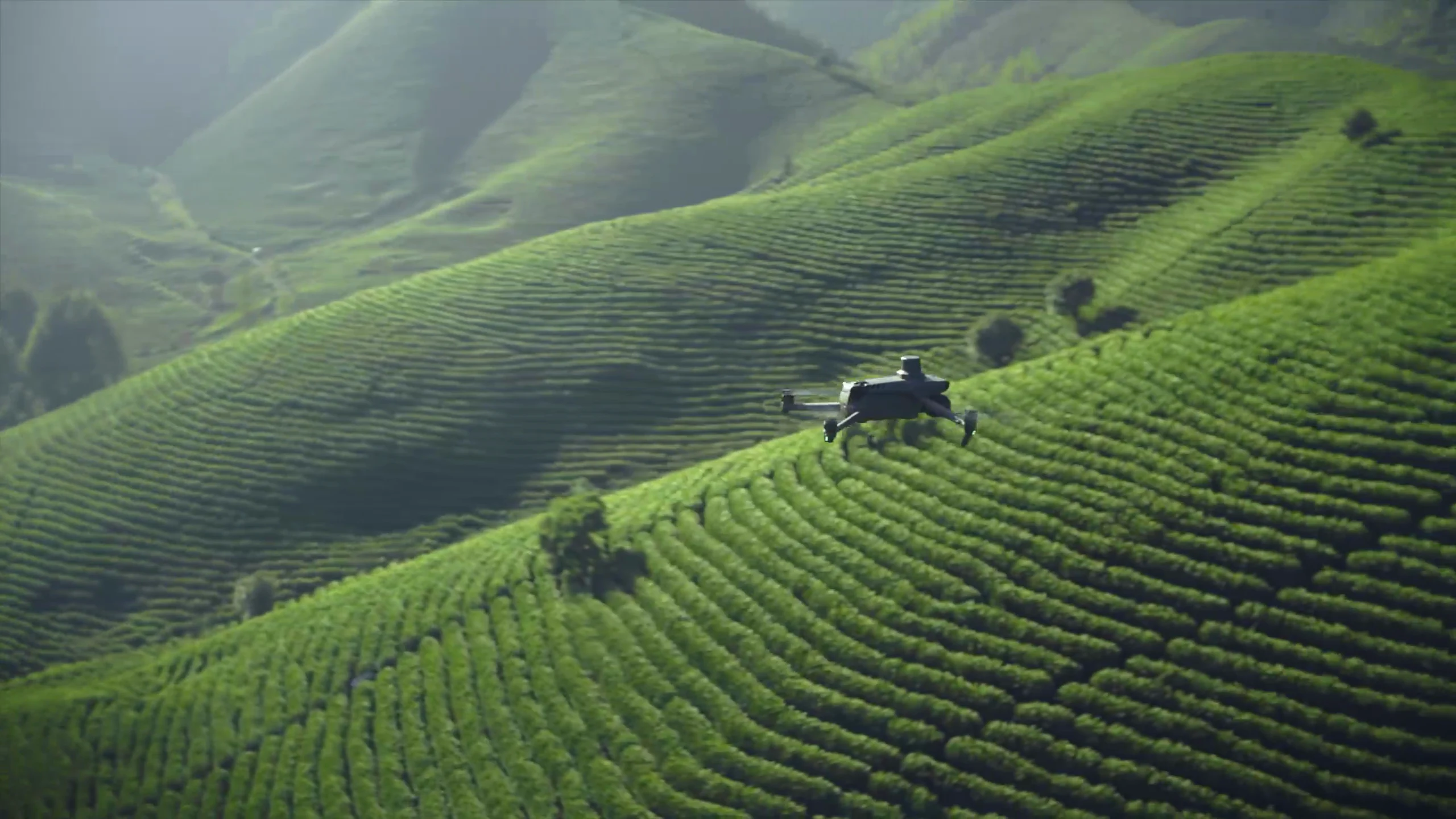
Multispectral acquisition is worth specifying when the study needs repeatable measurements across defined spectral bands, not simply a more detailed-looking map. The DJI Mavic 3 Multispectral combines a 20 MP RGB camera with green, red, red-edge and near-infrared sensors. Those bands support common vegetation-index workflows. The research team must still establish how the chosen measurement relates to its endpoint.

Mavic 3 Multispectral (M3M)
View Mavic 3M at SpeedyDrone →Candidate for combined RGB and multispectral observation. Confirm current availability and the processing configuration before ordering. Source: DJI, manufacturer product imagery from the SpeedyDrone listing.
A two-week flight schedule needs a comparability plan
If imagery is collected every two weeks, define a consistent acquisition window and record actual time, cloud conditions, crop stage and interruptions. Repeat the intended capture geometry. Preserve plot identifiers and coordinate reference information so that each date samples the same experimental units. A stable calendar alone does not make measurements comparable when light, canopy structure and processing choices change.
Radiometric correction addresses the relationship between recorded signal and reflectance; spatial registration addresses where the measurement belongs. They solve different problems. DJI says Mavic 3M photographs contain digital-number values, not finished reflectance, and its sunlight-sensor information supports compensation during reconstruction. Its official FAQ also explains metadata and sensor precautions. Keep original files and metadata rather than archiving only a coloured index export.
A 2024 Biosystems Engineering study by Wang and colleagues evaluated radiometric correction under varying illumination using a MicaSense Altum system. It found that correction choice affected reflectance accuracy and spatial uniformity. That supports the need to validate the correction workflow, but it is not a Mavic 3M validation study or a ready-to-copy calibration recipe for DJI equipment.
Ask the analyst to define a sensor-and-software-specific procedure, including any supported reference targets, quality checks and rejection criteria. Have a supplier process representative raw files in the intended software version and return both outputs and processing settings. Do not assume that a platform accepting RGB imagery supports the required multispectral corrections or research exports.
Finally, pair spectral observations with ground evidence appropriate to the hypothesis. A vegetation index alone does not identify why a canopy differs or establish a treatment's causal effect. Record how samples are selected, when they are collected relative to the flight and how their locations link to plots. Use the multispectral crop-scouting resource for the management context; retain the research team's own validation method.
05 Specify spray trials around plot fit
A spray-trial aircraft must fit the treatment geometry and evidence requirements, not just the acreage. DJI Agras T50 has a 40 L spray tank, but tank size says little about whether a pass can treat a narrow experimental plot without affecting its neighbour. The procurement test must address start and stop behaviour, practical swath, deposition and clean-out between treatments.
Use a representative plot layout in the fit assessment. Agree where buffers, turning areas and untreated reference units belong before planning routes. Check how application boundaries are handled and what records can be exported. Geometric flight accuracy does not prove where droplets landed. A route log is evidence of aircraft activity, not an independent deposition measurement.
Make acceptance conditional on a researcher-approved calibration and distribution assessment, using safe, legally eligible test materials and methods. Include the settings, measurement method, weather observations and rejection criteria in the test record. A water-only equipment demonstration can help establish handling and control behaviour; it is not a substitute for pesticide-use eligibility or validation with the intended formulation.

DJI Agras T50 Pro Package (3 Batteries)
View the T50 package at SpeedyDrone →The listing specifies a new aircraft/controller with pre-owned charging equipment and three pre-owned flight batteries. Confirm condition, battery records, included accessories and trial duty cycle in the quote. Source: DJI product imagery, assembled for the SpeedyDrone listing.
Small-plot suitability should be demonstrated, not inferred from a large-field marketing rate. If useful swath or boundary transitions cannot fit the experimental units, a different application method, a qualified service provider or a revised design may be necessary. Any design revision belongs to the research lead, not to the dealer or flight planner alone.
For the wider purchase and farm-operation context, see the Agras T50 Canada buyer's guide. Do not treat the complete commercial setup as automatically appropriate for experimental application.
06 Specify seeding and spreading trials by material
Spreading equipment is a treatment-delivery system, not proof that seed established or fertilizer produced a response. Specify the exact material, particle-size range, density, mixture, target rate and plot dimensions. A published hopper capacity or compatible diameter is only an initial screen. Flow, bridging, separation and the effective distribution pattern still need a material-specific check.
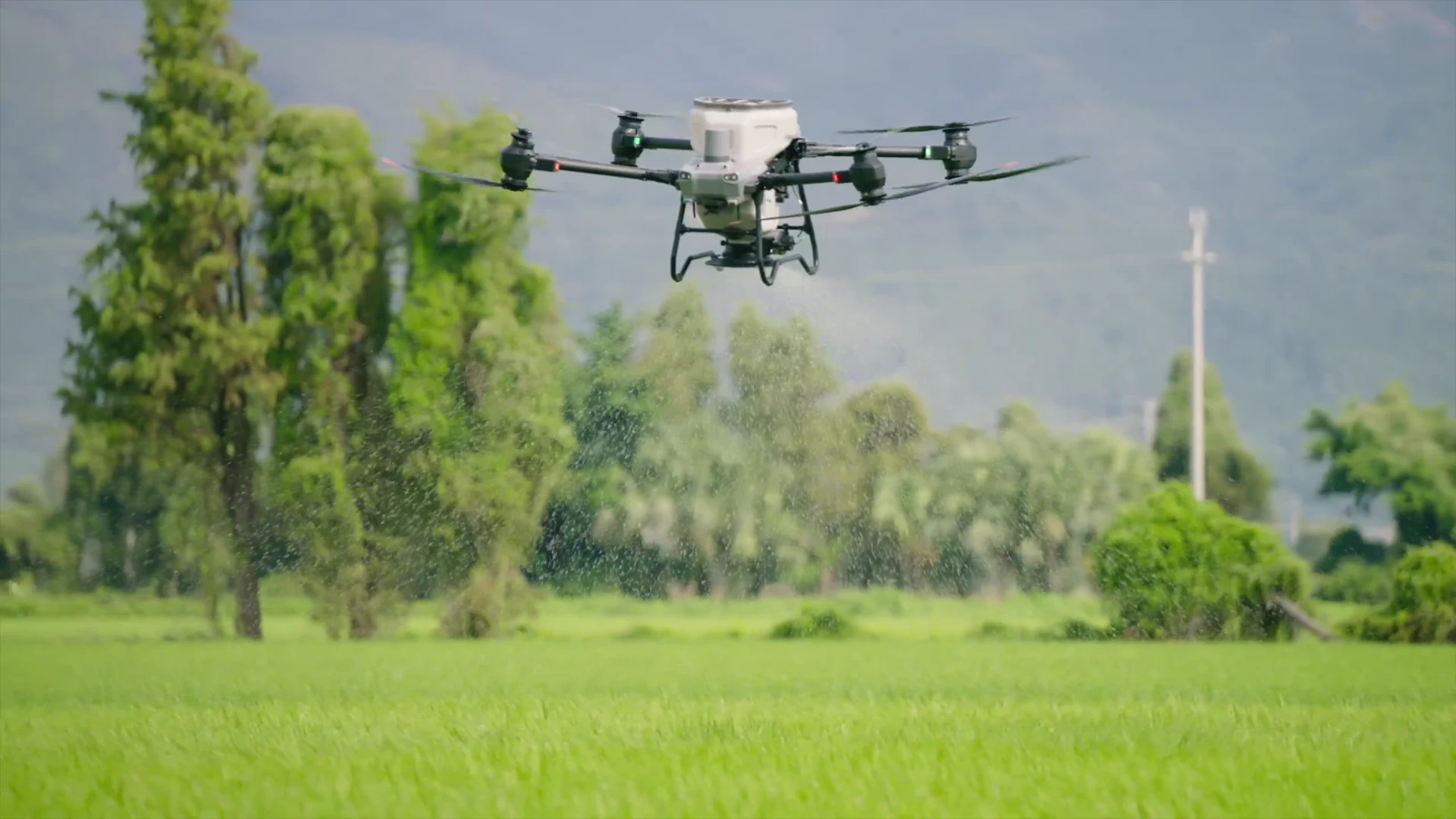
The DJI Agras T50 Spreading System has a 75 L tank and supports compatible dry granules from 0.5 to 5 mm. Its listing is special order. The DJI Agras T100 150L Spreading System uses screw feeders and a centrifugal disc; feeder choice changes the supported material range. Confirm the exact assembly and feeder rather than assuming that an aircraft package includes the required spreading configuration.

DJI Agras T50 Spreading System
View the T50 spreader at SpeedyDrone →Confirm special-order timing and material fit. Source: DJI, manufacturer product imagery from the SpeedyDrone listing.

DJI Agras T100 150L Spreading System
View the T100 spreader at SpeedyDrone →Confirm availability, feeder and aircraft compatibility. Source: DJI, manufacturer product imagery from the SpeedyDrone listing.
For mixed cover-crop seed, assess the mixture actually intended for the trial. Components can differ in shape and behaviour; a test with one material does not validate another. Agree how discharged mass and deposition across the swath will be measured, and how leftover material and treatment changes will be documented. Define acceptable crossover into neighbouring units separately from total mass delivered.
After application, use the trial's independent establishment or response measurements. Seed delivered, seed on the ground, emerged plants and final cover are not interchangeable quantities. The study should state which is the primary endpoint and when it is measured. Keep application records connected to the plot ID without treating them as biological validation.

DJI AGRAS T100
View T100 configuration details at SpeedyDrone →A high-capacity application candidate, not an automatic small-plot recommendation. Availability and fulfilment require confirmation; review Canadian operating eligibility before committing to a configuration. Source: DJI, manufacturer product imagery from the SpeedyDrone listing.
For detailed feeder and calibration planning, use the T100 Spreading System 4.0 application guide. Retain the trial-specific material and plot acceptance test even when a commercial spreading procedure already exists.
07 Make evidence quality an acceptance condition
Equipment acceptance should demonstrate a usable evidence chain, not just a successful flight. The research lead defines treatments, controls, replication, randomization and the analysis plan. Ontario's on-farm research guidance begins with objectives and the data needed for comparison, then addresses plot design, replication and randomization. No aircraft feature replaces those design decisions.
- Protocol and plot IDsDefine experimental units, treatment assignments, endpoints, measurement dates and who approves deviations.
- Capture or application recordRetain original files, settings, timestamps, material records and exceptions linked to each experimental unit.
- Independent checksValidate location, data quality or delivered treatment with the methods and limits chosen by the research team.
- Reproducible handoffDeliver labelled outputs, raw evidence, processing versions and limitations so the analyst can reconstruct what happened.
Agree practical pass/fail criteria before the demonstration. These might concern whether the target is visible, plots register correctly across dates, the required raw metadata survives transfer, or a treatment pattern stays within protocol-defined limits. Do not borrow a generic accuracy figure and treat it as a research tolerance. Specify how a failed test will be repaired, retested or excluded.
Control the data handoff as carefully as the field work. Use a consistent trial/site/plot/date naming convention, maintain a treatment-ID crosswalk and retain source files separately from edited outputs. Record software and processing versions. Confirm coordinate reference system, units, export formats, storage responsibilities and who can access unpublished trial results. Demonstrate transfer into the institution's actual analysis environment before the first critical sampling date.
Plan continuity for equipment failure, lost sampling windows and staff changes. Identify a backup capture method and a procedure for missing observations. A procurement contract can specify response and replacement arrangements; it cannot guarantee suitable weather or recover an unobserved growth stage. Record those limits in the project plan rather than hiding them in the equipment budget.
08 Check Canadian operating requirements separately
Use three reviews: aviation eligibility, material-use eligibility and site/institutional permission. Imagery collection does not create a pesticide-use requirement, but it still needs an eligible flight. Spreading untreated seed is not the same regulatory question as applying a pest-control product. A granular pesticide remains a pesticide even if the aircraft spreads it rather than sprays it.
Aircraft weight and operating category
Transport Canada currently distinguishes small drones from 250 g to 25 kg, medium drones over 25 kg to 150 kg, and large drones over 150 kg. Medium-drone VLOS operations are advanced or beyond, with the appropriate pilot credentials, registration and aircraft safety assurance requirements. Controlled airspace requires the relevant air traffic control permission. See the official operation categories and advanced-operations requirements.
The weight question is especially important for T100 procurement. DJI publishes a 175 kg maximum takeoff weight for its standard spraying and spreading configurations, above the Canadian 150 kg medium-drone threshold. Do not assume that limiting the tank load establishes an eligible medium-drone operation. Confirm the exact aircraft/configuration, applicable declarations and authorization pathway with Transport Canada before committing the trial budget. Technical capacity is not operating permission.
Pesticide trials and the 2026 policy
Health Canada's SPN2026-02, issued June 30, 2026, permits RPAS application of products registered for conventional aerial application under its conditions. This is not permission to apply every pesticide by drone. Verify the current product label, crop/site, application method, rate, spray volume, droplet requirements, buffers and any RPAS prohibition. A proposed trial setting cannot override those conditions.
The August 21, 2026 user guide addresses crew roles, PPE and provincial or territorial requirements. Use its official regulator directory to confirm the relevant pesticide qualifications, licences and permits. Design the crew and handling arrangement around the applicable label and guidance, including separation of piloting from mixing/loading unless the permitted conditions allow otherwise.
Research status is not a blanket exemption. Health Canada describes research authorization, notification and specific exemption pathways. Have the institution's research and regulatory lead establish which applies to the exact protocol, including unregistered products or uses. A federal research pathway does not establish aviation permission or remove provincial obligations.
09 Buy, rent or outsource the defined work?
Buy when repeated work, staff continuity and control over timing justify owning the complete operating system. Outsource when the study needs limited application events, a capability the team cannot support or a lower-commitment feasibility test. Rental can be useful where it is genuinely available, but confirm the required configuration, support and access period rather than assuming that a listing guarantees a research-season booking.
Procurement routes. On a phone, scroll horizontally for the full scope.
| Route | What to establish | What belongs in the agreement |
|---|---|---|
| Own the system | Recurring workload, eligible operators, analysis capacity, storage and field logistics. | Complete configuration, condition, acceptance test, handover, support and ongoing costs. |
| Contract defined work | Provider eligibility, sampling-window availability and protocol fit. | Deliverable files, methods, treatment records, data rights, exceptions and revisit terms. |
| Rent or pilot first | Confirmed availability, insurance/handling requirements and a representative test. | Exact hardware, accessories, access dates, damage terms and evidence needed to make the later purchase decision. |
Compare complete costs rather than aircraft prices alone. Include sensors and application assemblies, software, positioning, batteries, power, transport, calibration materials, handling equipment, qualified staff, processing time, maintenance, insurance and data retention. For a short trial, staff mobilization and the cost of a missed measurement window may matter more than reducing a refill.
Ask bidders to respond to the same protocol requirements. A service quote for an attractive map is not comparable with a quote providing raw bands, metadata, plot extracts and processing records. Separate purchase price from optional support, training and analytical deliverables. Require written confirmation of product condition and bundle contents, particularly when new and pre-owned components are combined.
A sensible first commitment is a representative acceptance pilot with an explicit decision afterwards. It should test the most consequential uncertainty, such as spectral comparability or treatment isolation. This is a procurement recommendation, not an offer of a specific rental or service package. Use SpeedyDrone Planning & Deployment to discuss equipment, setup and verification scope.
10 Assign operator readiness and research responsibility
Assign the research lead, aircraft operator, application crew and analyst before the equipment arrives. One person may hold several roles where appropriate, but the responsibilities should remain explicit and applicable pesticide-role restrictions must be respected. The person approving the experiment is not necessarily the person qualified to fly or handle its material.
For flight theory, practical flying and equipment competence, review AlteX drone training programmes and confirm a programme that fits the proposed operation. The public training resource is a starting point, not evidence that a specific heavy aircraft or agricultural application qualification is included. Training should be selected against the actual aircraft, mission and pilot requirements.
Operator training does not substitute for experimental design, statistical analysis, agronomic judgement or provincial pesticide qualifications. Test the handover with the whole team: an eligible operator captures or applies, the analyst checks the files, and the research lead confirms whether the result meets the protocol. Budget time for that joint acceptance instead of ending the purchase process at a first flight.
11 Agricultural Field Trial Equipment Readiness Checklist
Use this checklist to prepare an internal equipment brief or supplier conversation. Check an item only when its answer is documented; use the notes for unresolved questions, responsible people and evidence locations. The count is a document-preparation aid, not a score for scientific quality or regulatory eligibility.
Prepare the procurement brief
0 / 8 items documented
Nothing is sent or saved by this worksheet. Copy your notes before leaving the page. Without interactive controls, the checklist remains available for selection, handwritten completion and browser printing.
Attach a representative plot plan, a sample of the intended material where appropriate, the capture or treatment calendar, and one example of the required output. Do not disclose restricted research data through an initial enquiry. Approximate location and a non-confidential protocol summary are enough to begin the configuration discussion; arrange secure transfer separately if it becomes necessary.
Research equipment FAQ
Does one field trial need both an imaging drone and an application drone?
Sometimes, but the protocol should determine the combination. Imaging supports observation; spraying or spreading delivers an intervention. An observation-only study may need no application aircraft, while a treatment study can use existing ground equipment or a qualified contractor. Specify how treatment IDs, dates and independent measurements connect. Do not buy every technology merely because it appears in the same agriculture ecosystem. The procurement should solve the defined measurement and treatment requirements, not create a larger system without a research purpose.
Can a research team reuse an existing RGB drone?
Yes, if its operation and sample deliverables meet the protocol. Test the smallest feature, capture consistency, image quality, plot registration and required file handoff. RGB can support visible records and a validated measurement method; it cannot replace a near-infrared measurement needed for NDVI. Reuse should be based on demonstrated output rather than the aircraft's marketing category. If the research question genuinely needs additional bands, specify the multispectral workflow and validation before adding hardware.
Are NDVI maps from different dates directly comparable?
Not automatically. Different illumination, crop stages, geometry, correction and registration can affect the comparison. Define an acquisition and processing procedure, retain raw files and metadata, and inspect whether the same experimental units were measured each time. DJI's sunlight-sensor information assists a supported workflow; it is not an independent validation of a time series. A researcher should decide what differences can be interpreted and which observations need qualification or rejection, with ground evidence appropriate to the endpoint.
Are large Agras aircraft suitable for small experimental plots?
Suitability has to be demonstrated for the actual layout. Relevant checks include useful swath, boundary transitions, deposition or distribution, treatment changes and contamination of neighbouring units. Maximum tank capacity and large-field productivity do not answer those questions. If the equipment cannot meet the protocol's limits, consider another application method or provider. Any change to plot design or treatment assignment should be approved by the research lead, not made informally to accommodate a preferred aircraft.
Can a spreading system handle any cover-crop seed mixture?
No universal compatibility claim is appropriate. Confirm the exact spreader, feeder, particle range and intended mixture, then validate flow and distribution using that material. Diameter alone does not establish how a mixture behaves. Keep delivered mass separate from emergence or establishment measurements, and record treatment changes and residual material. Ask for written configuration confirmation before ordering; a spraying package does not establish that the correct spreading assembly or feeder is included.
Does university or research use exempt a drone trial from Canadian rules?
No blanket exemption follows from the organization's name or research purpose. Establish aviation eligibility for the aircraft and operation, then separately assess pesticide and provincial requirements where applicable. Health Canada provides research authorization, notification and specific exemption pathways, each with conditions. The institution's responsible lead should confirm which applies to the exact protocol. An equipment purchase, training course or research certificate does not by itself establish every other permission needed at the trial site.
What should a research team request from a drone service provider?
Request evidence needed to reconstruct the work: original imagery and metadata where relevant, plot IDs, capture dates, settings, processing versions, correction and quality records, and clearly labelled outputs. For application work, specify material and treatment records, settings, independent checks and deviations. Agree data ownership, access, retention and rework terms before the first visit. A visually attractive map or a flight log alone may be insufficient for the study's acceptance and analysis requirements.
When is outsourcing better than buying research drone equipment?
Outsourcing can suit limited events or an uncertain configuration when an eligible provider can meet timing and evidence requirements. Ownership can suit recurring work with stable staff, analysis capacity and field support. Compare total costs and responsibilities using the same deliverable specification. Include missed-window risk, data access and continuity, not just aircraft price or an hourly rate. A representative pilot can resolve the decisive uncertainty before the team commits to a full system.
Technical sources and scope
Technical specifications: DJI Agras T50 specifications and DJI Agras T100 specifications; Mavic 3M, research and regulatory references are linked at the relevant decisions above. All cited sources were reviewed October 8, 2026. Recheck changing labels, operating requirements, software compatibility and supplier terms before deployment.
The equipment acceptance methods, procurement matrix and worksheet are SpeedyDrone editorial recommendations. They do not establish experimental validity, measured performance, pesticide approval or a completed customer project.
Plan a research drone configuration
Bring your research question, plot dimensions, sampling schedule, intended material, province and required outputs. Discuss equipment, software and deployment scope before committing to a purchase.


