

Handoff between compatible aircraft
Autel supports transferring an ongoing job to a second aircraft when the first needs to land for battery. Plan the crew’s roles and confirm all participating nodes before a field session.
Thermal imaging for daylight inspections and after-dark operations.

Compare Autel EVO III enterprise drones at SpeedyDrone Canada. The Autel EVO III 4T Pro Plus Combo combines a 50 MP wide-angle camera, up to 11× optical zoom and thermal imaging for infrastructure and equipment inspections. The Autel EVO III 4N Pro Plus Combo pairs two dedicated night-vision cameras with thermal imaging for low-light observation and incident assessment.
Both models use a foldable IP43 airframe and a 640 × 512 native thermal sensor. Choose a No 4G or 4G configuration based on your connectivity needs. Each product page lists bundle contents and pricing in Canadian dollars.
*Autel measured maximum flight time at 9 m/s in near-windless conditions. Payload, battery condition and weather affect actual flight time.
Select No 4G or 4G on each product page.


Start with the lighting at your site and the detail you need to capture.
| Feature |  4T Pro |  4N Pro |
|---|---|---|
| Best fit | Daylight inspection and visible detail | Low-light and night observation |
| Visible and low-light cameras | 50 MP wide-angle and up to 11× optical zoom | 8 MP long-range and 2.3 MP ultra-low-light night vision |
| Night-vision sensitivity | See Autel specifications for individual camera modes | 0.01 lux long-range / 0.001 lux ultra-low-light |
| Native thermal resolution | 640 × 512 | 640 × 512 |
| Thermal focal length | 13 mm | 25 mm |
| Thermal diagonal field of view | 42° | 22° |
| Thermal output | R-JPG stills and MP4 video | R-JPG stills and MP4 video |
| Thermal temperature range | −20 to 150 °C / 0 to 550 °C | −20 to 150 °C / 0 to 550 °C |
| Laser rangefinder | Up to 2,000 m on suitable reflective targets | Up to 2,000 m on suitable reflective targets |
| Airframe | Foldable, IP43 | Foldable, IP43 |
| Connectivity options | No 4G / 4G | No 4G / 4G |
Both models capture 640 × 512 radiometric stills. Autel lists 1280 × 1024 processed thermal video on both models. Laser range varies with target size and reflectivity.
Watch how the two payloads handle daylight detail and low-light context. Select play to view each Autel demonstration.
Autel’s aerial sample moves from a broad city view to a closer view. Use a wide image to preserve the location, then switch to optical zoom for details such as connectors and fasteners. The 4T thermal camera’s 42° diagonal view covers the wider area.
Autel’s flight-app recording shows warm areas highlighted within the night-vision view. The fused view provides thermal context, while the 4N’s dedicated thermal camera has a narrower 22° diagonal field of view. The demonstration includes original Chinese interface labels.

Autel’s still shows how a wide view retains the road, shoreline and surrounding terrain in one frame.
Both payloads support centre, point and area readings. Save radiometric R-JPG stills for analysis in Autel IR Tool, and keep a corresponding visual image to identify the location. Note weather, distance and surface conditions when comparing readings.
Temperature ranges are −20 to 150 °C in high gain and 0 to 550 °C in low gain. Reflections, surface properties and distance can affect readings.
Footage and production stills from Autel Robotics.
These figures apply to the foldable Pro aircraft. Use them to check transport space, turnaround time and what you need to carry for the workday.
Autel demonstrates the EVO III beneath a concrete bridge as part of its GNSS-denied navigation feature. This clip shows flight in that setting. Refer to the table for Autel’s separately measured endurance figures.
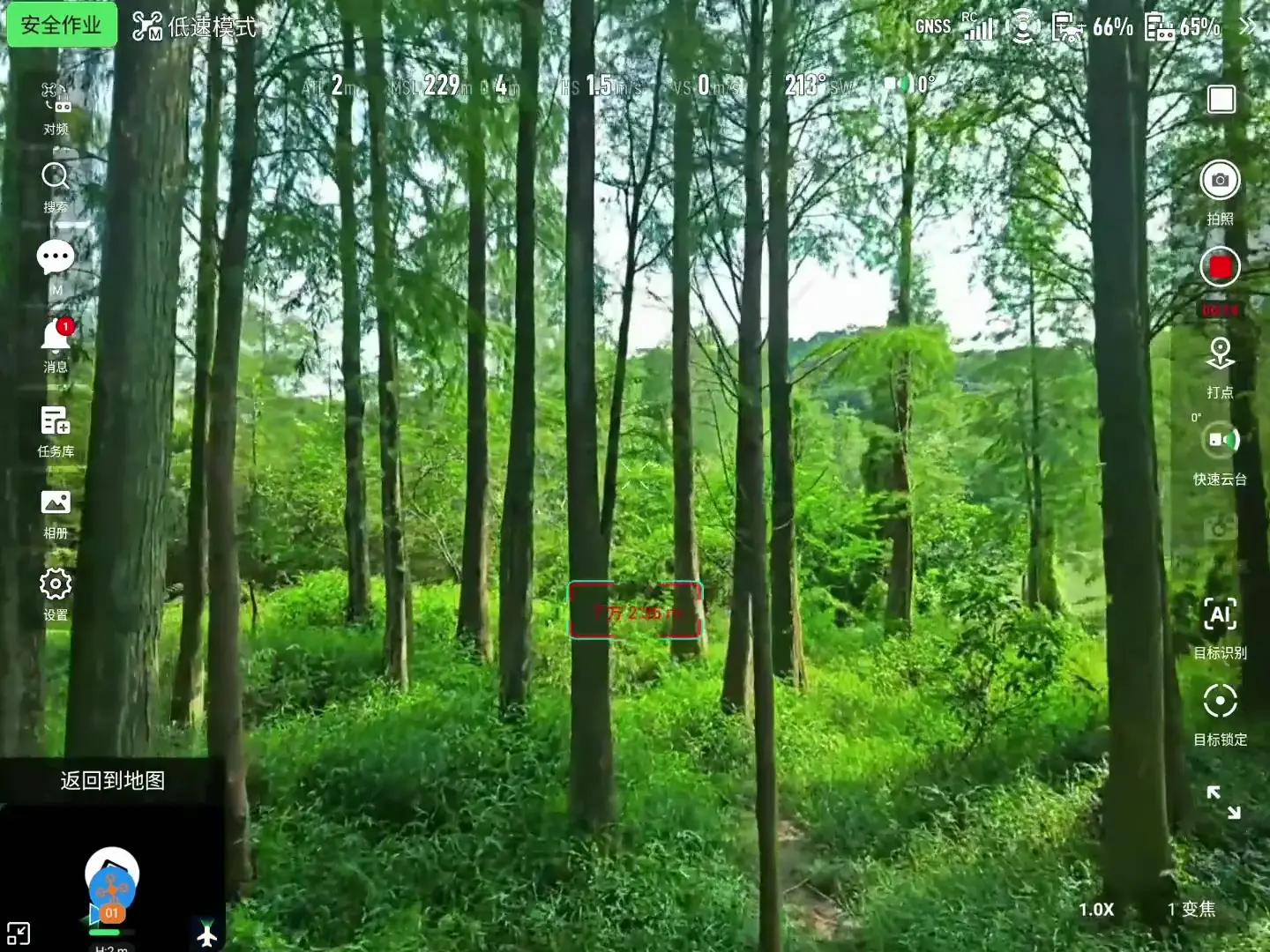
This manufacturer capture shows the controller display in a wooded setting. Sensing depends on the direction of travel, lighting and the surfaces around the aircraft.
Footage and production stills from Autel Robotics.
| Specification | Autel EVO III Pro |
|---|---|
| Aircraft weight with standard battery | 4T Pro: 1,545 g. 4N Pro: 1,615 g. Autel includes the gimbal, propellers and microSD card in these measurements. |
| Folded dimensions | 276 × 136 × 133 mm. |
| Maximum flight and hover time | 50 minutes in forward flight at 9 m/s. 42 minutes in hover. Both tests used the ABE41 battery in near-calm air and ran to 0%. |
| Maximum measured flight distance | 33 km in a controlled endurance test at 14 m/s. Use your own return reserve and account for wind, terrain and the available link. |
| Aircraft operating temperature | −20 to 50 °C. Autel rates the Smart Controller V3 separately at −20 to 40 °C. |
| Wind resistance | Autel lists 12 m/s during horizontal flight. Plan for gusts and the return leg as well as the sustained wind. |
| Battery and storage | ABE41 146.88 Wh battery. The aircraft has 256 GB of onboard storage, with about 176 GB initially usable before firmware updates. |
| Battery swaps | Autel EIS supports battery hot swapping when enabled in advance. The Pro Plus packing list includes one battery. |
Autel’s endurance figures come from near-windless test conditions. Load, altitude, wind, temperature and battery condition affect usable flight time. Allow time for your own return and landing reserve.
Compatible EVO III aircraft and controllers share live video, aircraft positions and points of interest over a local network. Mesh can operate without mobile data or internet access. A multi-aircraft setup requires additional compatible equipment.
Up to 8 connected nodes including up to 4 controller nodes.
Autel’s illustrated demo shows a second aircraft taking over while the first returns when its battery runs low.
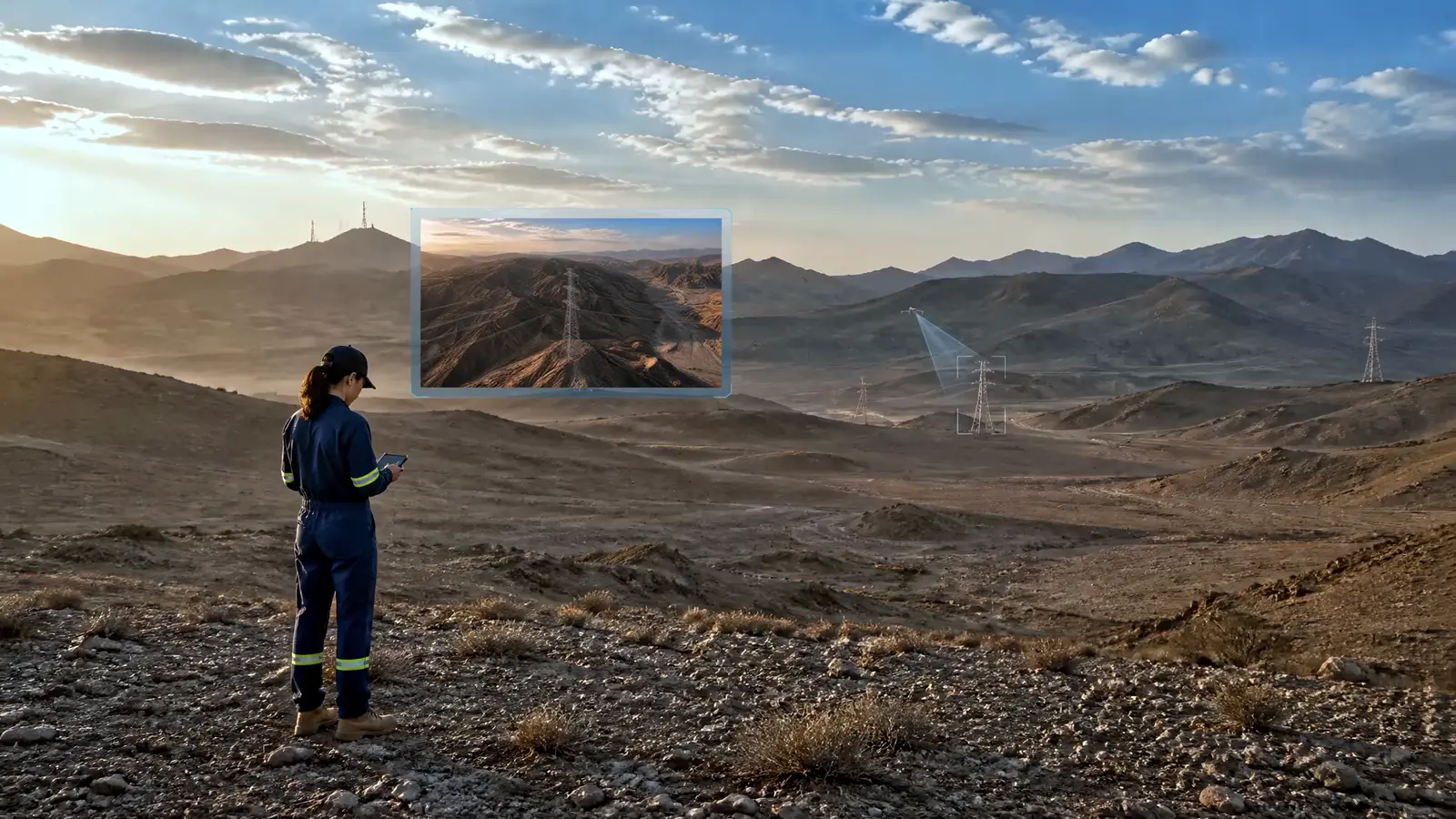
Autel’s scenario illustration uses an overlaid aerial feed to show the kind of view that can be shared with another operator.
Illustrated demonstration and scenario image from Autel Robotics.
Autel supports transferring an ongoing job to a second aircraft when the first needs to land for battery. Plan the crew’s roles and confirm all participating nodes before a field session.
A compatible aircraft can act as a relay for video and control signals. Site terrain and interference still shape the usable connection. Check the setup on site before relying on the relay.
Plan a repeatable flight, review what the camera recognizes and keep the operator in control of the decision.
This Autel flight-app recording shows different object classes labelled over the shoreline and parking area.
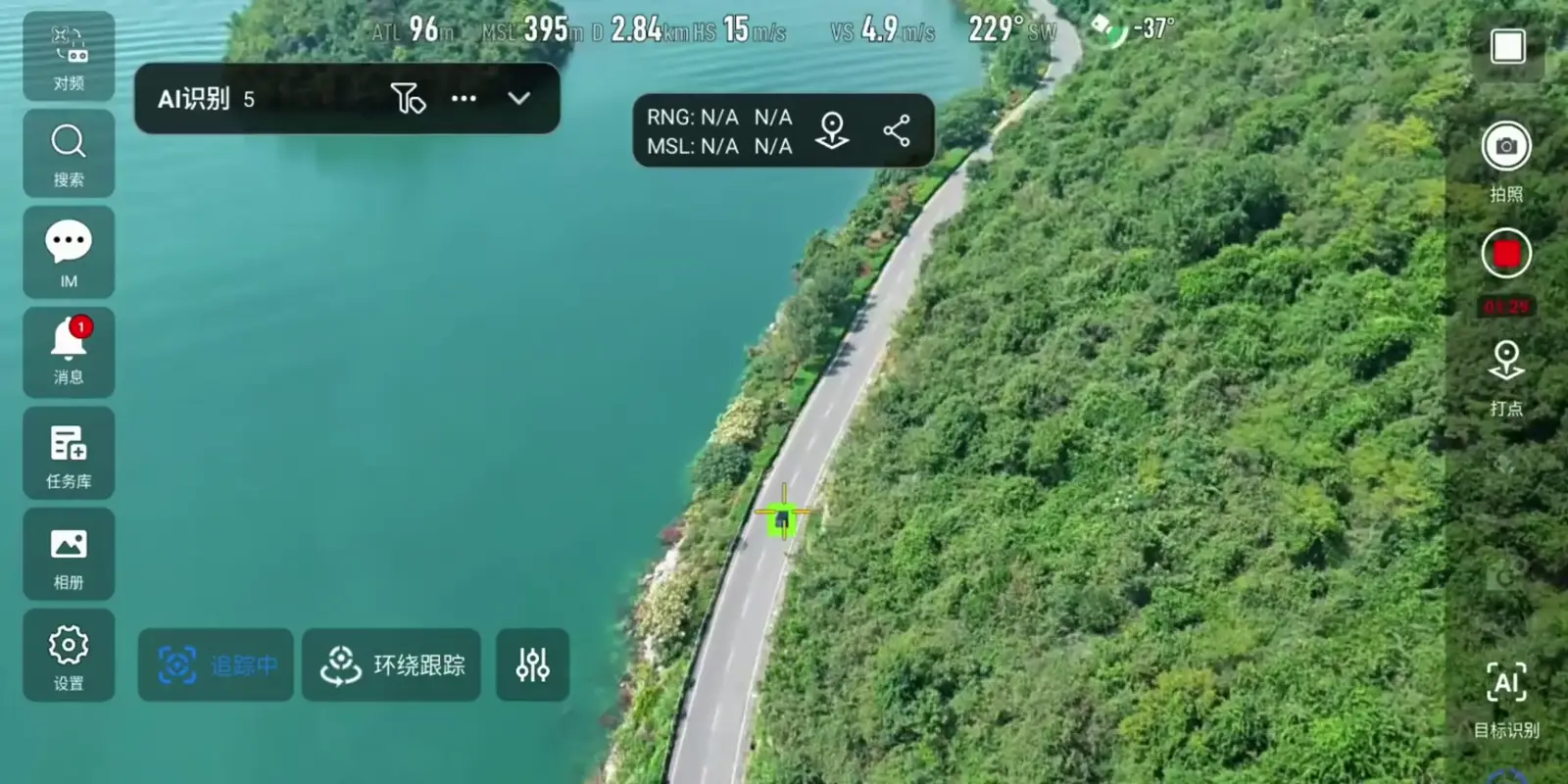
Autel’s capture shows a tracking indicator over the live view. Recognition and tracking depend on visibility, surroundings and the supported software configuration.
Manufacturer flight-app recording and capture from Autel Robotics.
Save repeatable search and patrol routes for recurring site observations.
Autel lists recognition of more than 10 object classes, including vehicles, boats and people. Detected objects can be labelled in the live view.
Track a moving subject within supported conditions. The operator still supervises the aircraft and evaluates what the camera shows.
Visual positioning and SLAM can assist where satellite signals are limited. Fisheye vision sensors, forward millimetre-wave radar and a downward time-of-flight sensor provide obstacle information.
Watch the Autel flight display as nearby trees trigger on-screen sensing alerts. The recording shows the controller’s original interface.
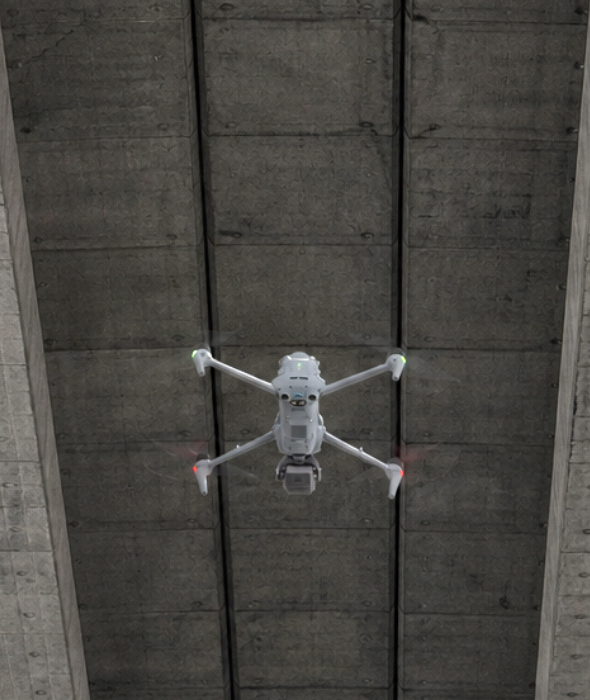
Autel’s aircraft image shows a setting where overhead concrete can limit satellite visibility. Visual positioning still needs usable detail and suitable lighting.
Flight-app recording and aircraft image from Autel Robotics.
Autel cites up to 40 m of forward detection for larger obstacles in daylight with vision and radar working together. Its published detection distances for thin wires and branches are shorter.
GPS, GLONASS, Galileo and BeiDou support GNSS positioning. Where satellite signals are weak, visual positioning needs usable detail and sufficient light. Check nearby surfaces, clearance and lighting at the site.
Obstacle sensing assists the pilot. Performance depends on lighting, weather, surfaces and flight direction. Autel specifies a mounted near-infrared auxiliary light for nighttime obstacle avoidance below its stated light threshold.
See how wide-angle, night-vision and thermal imagery serve different jobs, from documenting infrastructure to assessing a scene after dark.
The 4T Pro is a starting point for daylight inspections. Use a wide-angle frame to identify the asset, then capture the detail with optical zoom.
Autel’s wide-angle sample shows a coastal road and surrounding terrain in the same frame.

An aerial view of turbines and ridgelines shows the site context a wide image can retain.
The 4N Pro’s dedicated night-vision cameras help the crew retain visual context after dark. Check the thermal view alongside the night-vision image before drawing conclusions about a warm area.
A person and the surrounding path remain visible in Autel’s monochrome night-vision sample.

Autel’s controller capture shows relative heat signatures in the scene. The colours depend on the selected thermal palette.
Video samples and images from the Autel EVO III Series page.
Both the 4T Pro Plus and 4N Pro Plus offer No 4G and 4G configurations. Choose the camera for your work, then decide whether you need cellular-assisted video transmission.
The 4T and 4N Pro Plus Combos share the accessory list below. The aircraft and gimbal match the camera model you select.

| Item | Quantity |
|---|---|
| 4T Pro or 4N Pro aircraft | 1 |
| 7.9-inch remote controller | 1 |
| Smart battery | 1 |
| Battery charger | 1 |
| AC power cord | 1 |
| Spare CW and CCW propellers | 1 set |
| Smart battery charging hub | 1 |
| Remote controller cover | 1 |
| USB-A to USB-C data cable | 1 |
| USB-C to USB-C data cable | 1 |
| Spare controller sticks | 2 |
| Remote controller lanyard | 1 |
| Cleaning cloth | 1 |
| Hard case | 1 |
| User documentation | 1 |
Answers for teams comparing the 4T and 4N Pro Plus configurations.
Choose the 4T Pro for daylight work where visible wide-angle coverage and optical zoom are important. Choose the 4N Pro when your main task is gathering useful images in low light. Both models offer 640 × 512 native thermal imagery.
The 4T Pro has a 42° diagonal thermal field of view. The 4N Pro’s 22° diagonal view covers a narrower area at the same distance. Choose based on whether you need adjacent equipment in frame or a tighter view of one area.
Yes. Both save native 640 × 512 radiometric R-JPG stills for analysis in Autel IR Tool. The published 1280 × 1024 mode is processed thermal video.
The maximum was measured while flying at 9 m/s in near-calm air until the battery reached 0%. Autel reports 42 minutes for hovering under a separate controlled test. Plan your time around the wind, payload and reserve needed for return and landing.
No. Mesh works locally between compatible EVO III aircraft and controllers without cellular service. A multi-aircraft network requires multiple compatible nodes. The optional 4G configuration addresses cellular video transmission.
The supplier’s packing list includes one smart battery, one charger and one smart battery charging hub. Use the complete packing list to check what you already have and what a full workday may require.
Imaging and obstacle sensing use different systems. Autel specifies a mounted near-infrared auxiliary light for nighttime obstacle avoidance when illumination is below its published threshold. The 4N camera payload is designed for low-light viewing.
Confirm the exact module configuration, carrier compatibility and the availability of mobile data at your site. Review the 4G options and Autel demonstration, then ask about SIM and plan requirements for your site.
Match the camera work to the model first, then choose No 4G or 4G on that product page. If you are unsure, tell SpeedyDrone what you are inspecting, how far you typically work from the area of interest and what lighting you expect.
When you contact us, include the sites you inspect, the detail and lighting you work with, and how many aircraft you need. If you’re considering 4G, tell us where you fly and which carrier serves your site. We can help you compare the 4T and 4N Pro Plus options.
See Autel’s EVO III specifications and manufacturer images and footage for more detail.