


An internal drone program becomes dependable when an organization assigns responsibility for the mission, people, aircraft, procedures and data—and prepares someone else to continue the work. Buying an aircraft and training one employee are useful beginnings. A repeatable capability also needs accepted deliverables, documented workflows, equipment readiness and controlled access to records.
Start with one mission, define who owns each handoff and prove that the team can deliver without relying on one person's memory. In Canada, match the pilot's privileges and the aircraft's suitability to the actual operation; an internal program does not automatically require an RPAS Operator Certificate.
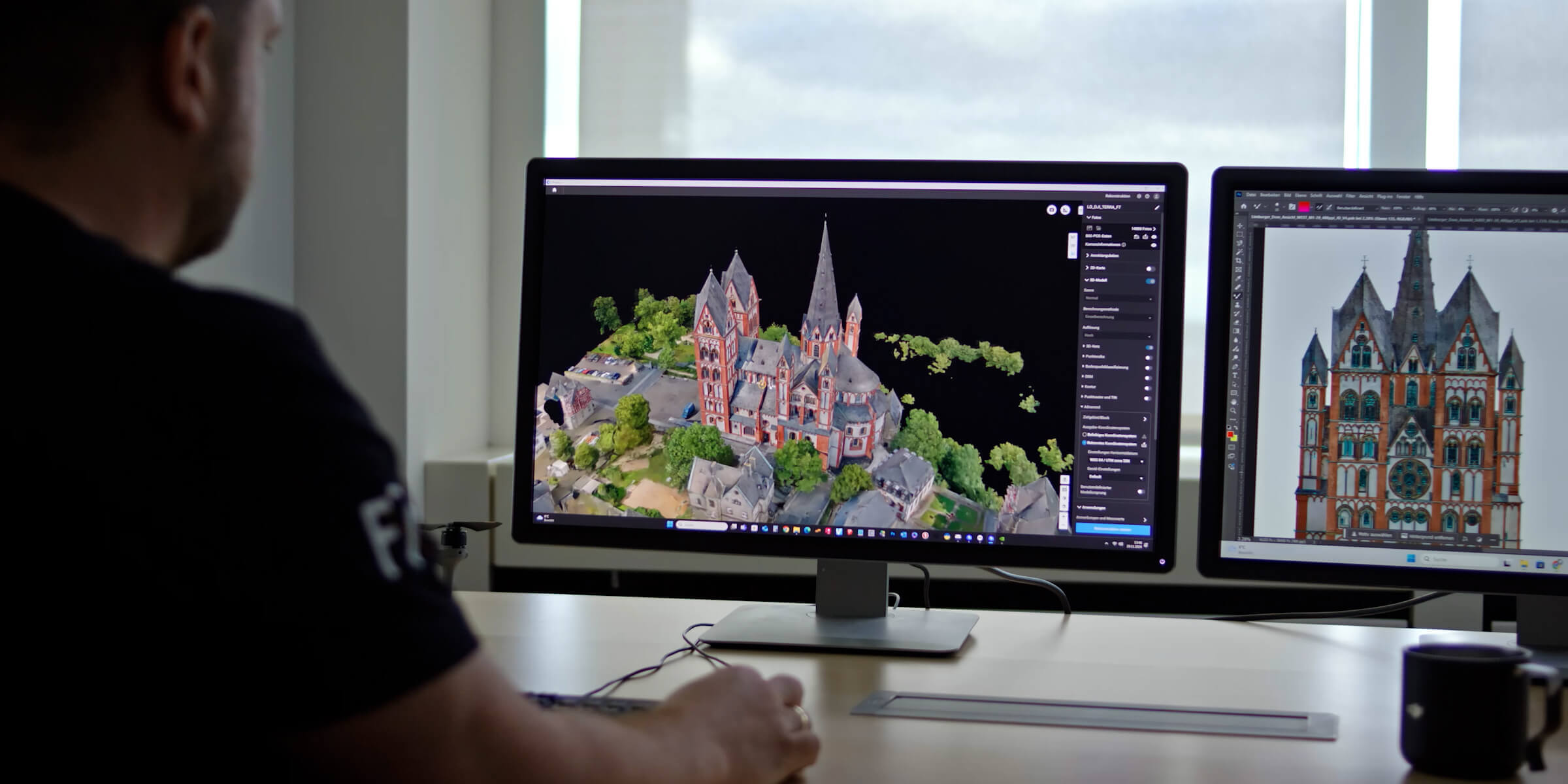
Explore the program-building steps
Why Buying the Aircraft Is the Easy Part
The purchase creates a visible asset. The work around it is less visible: deciding which requests take priority, keeping batteries ready, maintaining software access, checking output quality and ensuring that files reach the right recipient. Those decisions determine whether the drone is useful next month, after the first enthusiastic employee moves to another role.
Consider an illustrative team that buys a drone, trains an employee and completes a successful demonstration. The next request arrives while that employee is on holiday. Nobody knows which account owns the processing licence, where the last project's files were stored or whether the spare battery is serviceable. The aircraft still belongs to the organization; the ability to use it effectively has disappeared.
This guide addresses that organizational gap. For hardware allowances, labour, insurance and total ownership costs, use the separate professional drone program cost guide. Here, the central question is how to make the capability repeatable and transferable.
Step 1 — Define What the Program Must Accomplish
Write the program's first mission as a deliverable that a named person will use. “Fly the construction site” is incomplete. “Provide an approved progress-image set to the project manager before the weekly coordination meeting” identifies a recipient, purpose and deadline. A municipality might need a GIS-ready dataset; an inspection team might need a documented set of observations for specialist review.
Agree on what the recipient will accept before equipment selection or training expands. Specify coverage, output format, review responsibility, turnaround time and the conditions that require a return visit. Where measurement or professional interpretation matters, the appropriate technical lead should define the validation and acceptance criteria. A visually impressive model is not automatically fit for an engineering decision.
Keep the initial scope narrow enough to repeat. Record what the team will do when weather, access, aircraft serviceability or staffing prevents capture: reschedule, use another approved method or obtain qualified external support. This turns an occasional flight into a service the organization can plan around.
Step 2 — Assign Program Ownership and Responsibilities
Assign a Program Owner who can set priorities, obtain resources and resolve competing requests. Then identify who owns operational execution, equipment readiness, data handling and technical quality. The following seven areas are a practical organizational framework, not a prescribed staffing minimum for every Canadian operator.
On a phone, scroll within the table to read each column.
| Role | Responsibility | A useful record |
|---|---|---|
| Program Owner | Business purpose, budget, priorities and review. | Mission scope and approval of changes. |
| Pilot / Operator | Flight planning, operation and flight records. | Mission plan and operational log. |
| Equipment Owner | Aircraft, batteries, configuration and maintenance. | Asset register and serviceability status. |
| Data Owner | Storage, processing handoff, access and retention. | Data policy and delivery record. |
| Technical Lead | Payload, software, mission method and output QA. | Accepted template and review criteria. |
| Backup Operator | Continuity within demonstrated privileges and skills. | Competency record and handover exercise. |
| Manager / Approver | Internal mission approval, policy and escalation. | Approval limits and escalation contacts. |
A small team can combine several roles. Record a named owner and deputy for each area instead of assuming that IT, the pilot or a department manager will handle it. Check task-specific separation requirements before combining duties, especially where pesticide handling or formal operating requirements apply.
Internal approval and flight authority also serve different purposes. A manager can authorize a business request; the operator still needs to confirm that the operation can proceed under the applicable rules and conditions. The escalation process should support stopping or postponing work when a required condition is missing.
Step 3 — Separate Pilot Certification, Equipment Skills and Mission Competency
A pilot certificate answers a regulatory qualification question. It does not demonstrate that an employee can configure the organization's aircraft, plan a mapping workflow, interpret thermal observations or produce the required business output. Assess three layers separately, and record the evidence for each.
May they perform this operation?
Relevant pilot privileges, recency and operation-specific conditions.
Can they operate this system?
Aircraft, controller, payload, configuration, batteries and abnormal situations.
Can they deliver the result?
Capture method, processing, quality checks, interpretation and handoff.

For equipment onboarding, SpeedyDrone's DJI Drone Training listing describes AlteX training in setup, controls, system settings, battery management, maintenance and records. Confirm the course scope for the aircraft and task your team intends to use.
AlteX's current training catalogue also lists Advanced pilot education, flight training, flight review, compliance and renewal, and introductory survey and geomatics training. These are useful development routes; a course title alone does not establish readiness for every payload, industry or operating pathway.
Make internal sign-off practical. Have the employee plan a representative mission, configure the actual system, explain a stop decision, process the dataset and present the output for review. Document any limits, such as “approved for this mapping workflow under supervision.” This helps managers assign work according to demonstrated ability rather than a certificate or general confidence.
Step 4 — Build SOPs Before Knowledge Lives in One Person's Head
Start with procedures that another trained person can follow during a real assignment. Include the normal sequence, decision limits, record location and escalation contact. The useful question is whether the document resolves uncertainty at the point of work.
Use the aircraft manufacturer's instructions and applicable operating requirements as inputs. Internal SOPs should specify your team's handoffs and controls without casually replacing the manufacturer's limits. Keep a current version accessible in the field, identify its owner and record why revisions were made.
| Phase | What to document | What must be clear |
|---|---|---|
| Pre-flight | Site, airspace, weather, aircraft, batteries, configuration and plan. | Who checks each item and what stops the mission. |
| Flight | Assigned roles, operating limits and emergency actions. | Who acts and who is contacted when conditions change. |
| Post-flight | Inspection, battery handling, records and data transfer. | How readiness and successful transfer are confirmed. |
| Data | Naming, storage, access, processing and retention. | Who reviews and releases the deliverable. |
| Incident | Immediate response, reporting, investigation and corrective action. | Internal escalation and applicable external reporting duties. |
Test the procedures through a supervised handover. Ask the second operator to locate the approved plan, identify the right battery, recover the correct template and find the last delivery record. Any step that requires “just ask the usual pilot” is a documentation or access gap. Fix those gaps while the person who holds the knowledge is available.
Step 5 — Manage Aircraft, Batteries, Software and Maintenance
Keep an asset register that connects each aircraft, controller, battery and critical accessory to its serial number, location, custodian and serviceability status. Include registration information where applicable, maintenance history, coverage or repair contacts, software entitlement and the approved configuration. This becomes especially useful when equipment moves between departments or sites.
Battery ownership needs explicit attention. Assign responsibility for charging, inspection, storage, health records and removal from service according to manufacturer guidance. A case containing several batteries does not tell the next operator which are ready. Make the status understandable and prevent a questionable component from returning to the usable kit by accident.
Manage changes deliberately. Before a firmware or software update, identify affected aircraft, controllers, payloads and templates, then validate a representative workflow. Record the version and any new limitations. If a repair, calibration or configuration change affects output quality, the technical lead should decide what must be checked before that equipment returns to production.
For multi-site coordination, the FlightHub 2 operations guide covers organizations, projects, roles and device binding in greater depth. A shared platform can help organize supported systems; ownership, compatible equipment and the right access permissions still need to be established.
Step 6 — Create a Data Ownership and Retention Workflow
Decide who controls raw files, processed outputs and release of the final deliverable. Possession of a memory card or laptop does not settle ownership. Establish the organization's rights and responsibilities through the relevant employment arrangements, client agreements and internal policies, with the appropriate legal, privacy or records team where needed.
Specify the approved destination before capture begins. Record naming rules, project identifiers, permissions, backup responsibility and retention or deletion rules. Define who confirms a successful transfer and when the field copy may be removed. Choose retention according to applicable obligations and business needs rather than inventing one universal period for every dataset.
- CaptureOperator records the mission and transfers the original files.
- PreserveData owner confirms storage, access and recoverability.
- Process & reviewTechnical lead checks the output against its intended use.
- Release & retainApprover controls delivery; records owner applies the retention rule.
Separate drafts from accepted outputs and retain enough processing context to reproduce important work. The next analyst may need the source dataset, project settings, coordinate reference information, review notes and software version. A finished PDF by itself may be insufficient when a recipient later asks how a result was produced.
Use organization-controlled administration and individual user accounts with suitable permissions. Record recovery and transfer processes instead of depending on a former employee's personal account or sharing one person's password. For technical security and deployment questions, consult the enterprise and government drone data-security checklist.
Step 7 — Build Backup Capability
The single-pilot problem includes more than flying. The primary operator may also know the account recovery path, preferred settings, spare-part location, processing recipe and client delivery conventions. Appointing a backup pilot solves only part of that dependency if the remaining knowledge and access remain personal.
Run an absence exercise: can the deputy locate the approved mission, confirm equipment readiness, obtain authorized access, complete the permitted work and deliver the required records? Test this while the primary operator is present to supervise, then document missing skills or access. The exercise should use the backup person's own privileges and demonstrated competency.
Include aircraft unavailability in the same plan. Identify an approved substitute, repair route, qualified contractor or alternative capture method. Record what changes in the procedure or expected output when a substitute is used. A second aircraft with incompatible batteries, software or processing settings may create a new workflow rather than a ready replacement.
For a role change or departure, complete a structured handover of assets, accounts, recovery contacts, project files, templates and outstanding work. Preserve necessary records and remove access according to policy. Continuity should be demonstrated before the handover is treated as complete.
Step 8 — Plan Recurrent Training and New-Equipment Onboarding
Build a training plan around the work people will actually perform. Include initial qualification, equipment onboarding, mission instruction, supervised assignments and review of demonstrated performance. Track which tasks each person may undertake independently and which still require support.
Separate applicable regulatory recency from the organization's own practice and reassessment schedule. Consult Transport Canada's current skills and recency guidance; an internal briefing does not automatically satisfy every regulatory route. Keep the appropriate evidence available and verify the requirements for the pilot's operating category.
Revisit competency when hardware, payloads, software, procedures or mission demands change. A pilot comfortable with imagery capture may need different instruction for mapping QA or an agricultural application workflow. Agree on what must be demonstrated before the new task enters routine operation.
AlteX's equipment, flight-practice and compliance-training options can support parts of that development plan. Confirm course fit and scope directly. The organization still needs to decide how learning will be applied, supervised and assessed against its own deliverable requirements.
Step 9 — Measure Program Value
Flight counts describe activity. They do not show whether the organization received usable outputs on time. Choose a few measures that connect operational reliability to the original business purpose, and define the calculation so successive reviews compare the same thing.
| Measure | Suggested definition | What it helps diagnose |
|---|---|---|
| Accepted deliverables | Outputs accepted ÷ outputs submitted, within the same period. | Capture, processing or review quality. |
| Turnaround time | Elapsed time from accepted request to accepted delivery. | Where planning, capture or processing stalls. |
| Avoidable repeat work | Repeat missions caused by internal error ÷ completed missions. | Training or procedure weaknesses. |
| Equipment downtime | Unavailable operating time during the planned service window. | Maintenance and spare-capability needs. |
| Continuity coverage | Critical workflows with a competent, accessible backup ÷ critical workflows. | Remaining dependency on one person. |
| Corrective actions | Open actions, responsible owners and closure dates. | Whether identified problems are being resolved. |
Where useful, add processing time, utilization, cost per accepted deliverable or substantiated avoided site visits. Record the comparison method before claiming a saving; a displaced visit is not a saving if the replacement workflow takes more total effort. Review incidents and near misses alongside output measures so speed targets do not discourage reporting.
Use the results to choose the next improvement: another trained operator, better documentation, a processing change or additional equipment. Expanding the fleet is one possible response, not an automatic answer to every bottleneck.
How the Model Changes by Industry
The following examples are illustrative planning scenarios. The ownership framework stays useful across sectors, but the mission-specific competence, approvals and handoffs change.
Construction / Mapping
A team using the DJI Matrice 4E, with its mapping-oriented mechanical-shutter wide camera, still needs owners for mission planning, positioning or control strategy, processing and QA. Define who maintains the capture template and who may approve a dataset for its intended use.
If the workflow uses DJI Terra Flagship for reconstruction or LiDAR processing, confirm the relevant edition, source data and export requirements. Assign processing competence separately from flight competence, and ensure the backup can recover the project settings.
Municipal / GIS
A GIS team's successful pilot may lead to requests from Engineering, Public Works and Emergency Management. Establish booking priorities, departmental approval, a qualified operator pool, aircraft allocation, common naming and controlled access before informal sharing becomes the normal operating model.
Departmental data needs may differ even when the aircraft is shared. Assign the receiving department's acceptance and release responsibilities. The municipal drone program guide develops public-sector procurement and governance questions in more detail.
Agriculture
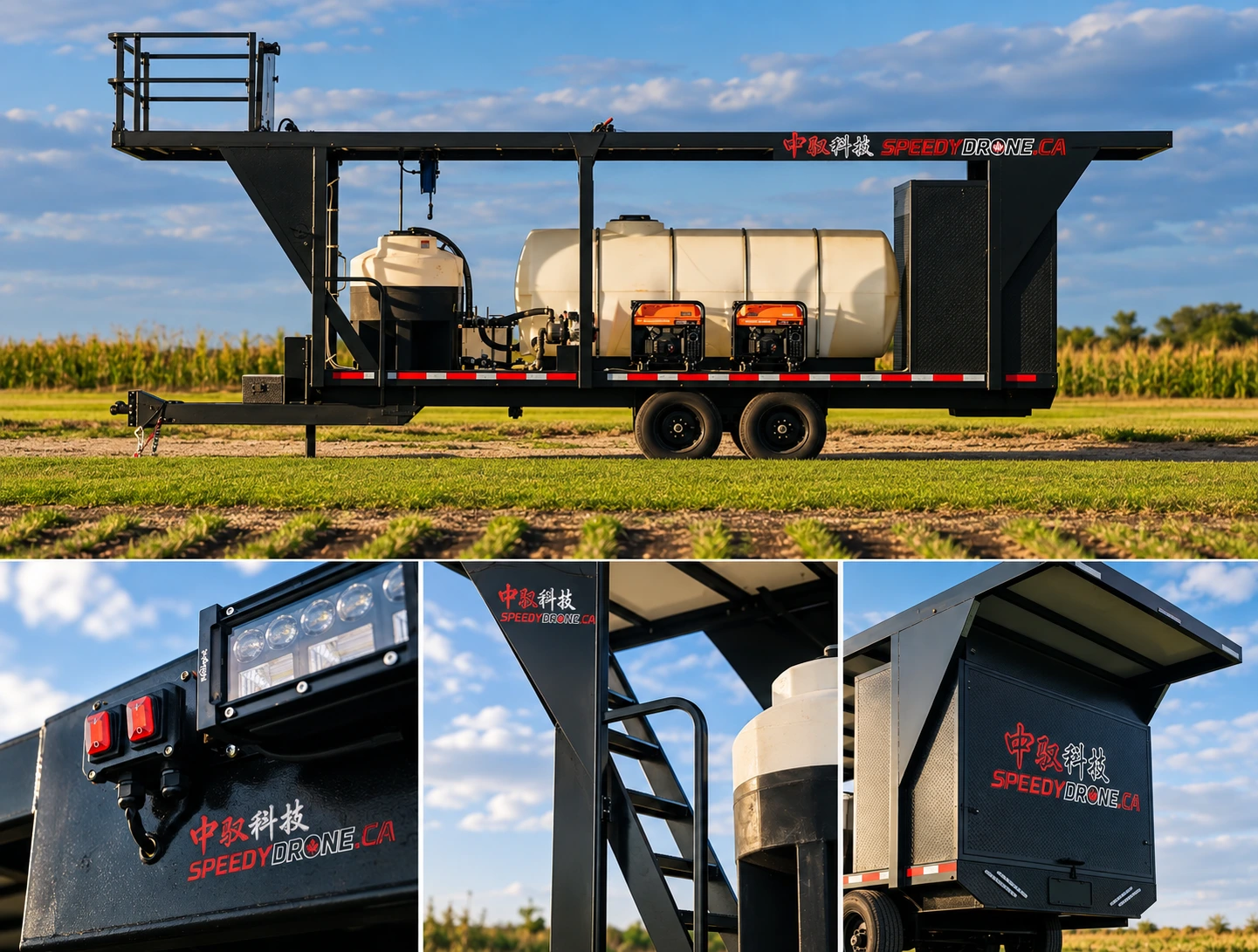
An agricultural team using the DJI Agras T50 for spraying or spreading must allocate task approval, application setup, water or material logistics, battery rotation, records, maintenance and seasonal readiness. Prepare a backup for critical roles during short operating windows.
For pesticides, aviation qualification and application requirements are separate. Under Health Canada's current RPAS pesticide policy, mixing and loading duties have specific pilot-separation conditions and a limited closed-system loading exception. Check the exact label, policy and provincial or territorial requirements before assigning duties.
The agricultural drone business guide covers the broader business and field-system planning questions.
Inspection / Utilities / Public Safety
Separate the person capturing imagery from the specialist responsible for interpreting it and the person authorized to act on it. Assign escalation, evidence handling and release controls according to the task. A thermal observation does not automatically establish a defect, and a public-safety flight does not by itself resolve privacy or operating permissions.
Continuity may require an operator, an analyst and an authorized decision-maker to be available together. Define the supported service window and fallback instead of assuming that one trained pilot creates an always-available response capability.
When Does an Organization Need an RPOC?
Transport Canada requires Level 1 Complex operations to be conducted under an RPAS Operator Certificate (RPOC). The pilot and aircraft must also meet the relevant requirements. Buying a drone, employing a pilot or using drones internally is not, by itself, the RPOC trigger.
RPOC preparation includes an accountable executive, identified maintenance responsibility, a training program, flight SOPs and a safety-risk-management process. Review the current RPOC requirements against the intended operation.
An internal program may operate within Basic or Advanced requirements where the mission fits those conditions. Complex or other special operations require their applicable pathway. A dock or remote-control feature does not determine permission: assess the actual operation using Transport Canada's operating categories.
Internal Drone Program Maturity Model
Use this proposed model to identify the next organizational gap. Its stages are planning categories, not Transport Canada certification levels. A dependable program can remain at Stage 3 when that meets its needs; multi-site operation and automation are optional directions.
-
01
Experiment
One pilot, one aircraft, one bounded use case.
Evidence to progress: a recipient accepts the output and the team understands the operating conditions.
-
02
Repeatable Workflow
Defined mission, checklist, naming, processing and report.
Evidence to progress: repeated work meets the same acceptance criteria with documented settings.
-
03
Internal Capability
Primary and backup operators; SOP, equipment and data owners; training plan.
Evidence to progress: a supervised absence exercise succeeds without personal knowledge or account access gaps.
-
04
Multi-Team Program
Multiple operators, aircraft, departments or sites with common governance.
Evidence to progress: allocation, access, templates and change control work across teams.
-
05
Complex / Automated Operations
Selected remote, dock or complex workflows with suitable supervision and fallback.
Independent operating gate: verify the applicable legal pathway; an RPOC is required for Level 1 Complex operations.
Internal Drone Program Checklist
For each item, record the owner, evidence location and next action. “We should do this” is a planning note; a named person and a tested record show whether the capability exists.
- Mission: a named recipient, defined deliverable and acceptance criteria.
- Ownership: program, equipment, data and technical responsibilities assigned.
- People: relevant qualifications, recency and demonstrated task competency.
- Procedures: accessible, current SOPs with stop and escalation decisions.
- Equipment: location, configuration, serviceability and maintenance recorded.
- Data: rights, storage, access, review, release and retention established.
- Continuity: backup skills, authorized access and equipment fallback tested.
- Training: supervised onboarding, ongoing review and change-triggered instruction.
- Value: comparable measures of accepted outputs, reliability and corrective action.
Use the gaps to structure the next management review. Resolve missing ownership and handoffs before adding complexity; involve the relevant technical, privacy, records or safety specialists where the mission requires them.
Internal Drone Program FAQ
Practical questions for managers bringing operations in-house.
How many people does an internal drone program need?
Begin with responsibility areas rather than a fixed headcount. One employee can hold several roles when the task and applicable requirements permit it. Identify the owner and backup for operational execution, equipment, data and technical review. Some work needs separate people or specialist review, including pesticide duties subject to label and policy conditions. Staffing should also reflect the service window: a program expected to operate during absences needs more coverage than an occasional scheduled project.
Does an Advanced pilot certificate prove an employee is ready for every mission?
No. Regulatory qualification, equipment competency and mission competency answer different questions. An employee may hold the relevant certificate but still need instruction in the actual aircraft, payload, capture method, processing and output review. Use a representative supervised assignment to assess the complete workflow, then document the tasks and conditions the employee can handle. Confirm the operation-specific privileges and requirements separately; internal sign-off cannot extend a pilot's legal authority.
What should happen before the main pilot leaves or changes roles?
Transfer equipment custody, approved configurations, project files, software administration, recovery contacts, templates and unfinished work through the organization's authorized process. Preserve required records and confirm that the next person can locate and use them. Run a supervised handover mission or processing exercise before treating the transition as complete. Revoke or change access according to policy after continuity is established. Knowing a former employee's password is not a durable account-management process.
Who owns drone data captured by an employee?
Determine ownership and use rights from the relevant agreements, policies and applicable obligations. The fact that an employee captured files or holds the laptop does not settle the question. Decide who controls raw data, processed outputs and release to a client or another department. Document approved storage, access, retention and handover responsibilities. If ownership or reuse is uncertain, resolve that with the appropriate organizational specialists before sharing or deleting material.
Does every company using drones need an RPOC?
No. An internal program does not automatically require an RPOC. It is required for the Level 1 Complex pathway, alongside the relevant pilot and aircraft requirements. Determine the category from the actual planned operation. Internal procedures remain useful for ordinary programs too, but they should not be presented as universal RPOC obligations.
Should we buy a second aircraft or train a backup operator first?
Identify the bottleneck and the consequence of interruption. If nobody else can plan, fly, process or recover the accounts, another aircraft will not solve the main dependency. If competent staff are available but maintenance regularly interrupts a necessary service, equipment fallback may matter more. Check compatibility, configuration and output differences before treating a substitute aircraft as interchangeable. The right sequence follows the mission's continuity needs and the evidence from actual operating records.
Can AlteX training replace the organization's internal training plan?
External training can supply valuable instruction, flight practice or equipment knowledge. The organization still needs to connect that learning to its mission, SOP, software, review standards and assigned responsibilities. Confirm the relevant course scope, then use supervised work to assess the complete delivery process. Keep records of what each person can do and the limits of that approval. Revisit the assessment when equipment, operating conditions or the required deliverable changes.
When is a drone program ready to expand to another department or site?
Expansion is easier to justify when the existing workflow produces accepted outputs, procedures and configurations are documented, and the team can cover ordinary absences. Before adding a department or site, define request priorities, local responsibility, asset allocation, access boundaries and output acceptance. Test a representative handoff rather than assuming that a successful flight proves organizational readiness. Additional complexity or automation also needs its own technical and operating assessment.
Sources and Planning Boundaries
Regulatory and provider information checked October 6, 2026. Official sources linked beside the relevant statements include Transport Canada's operating categories, RPOC and recency guidance; Health Canada's RPAS pesticide policy; and AlteX's course catalogue. Product descriptions were checked against current SpeedyDrone listings and DJI's Matrice 4 information and Terra documentation.
Role assignments, examples, measures and the maturity model are proposed planning tools. Confirm current requirements and the organization's task-specific obligations before deployment.
Building an Internal Drone Capability?
Bring a short brief: your mission, required deliverable, sites, current equipment, primary and backup staff, processing workflow and unresolved handoffs. Discuss the equipment, configuration and deployment needs with SpeedyDrone, and identify the training scope the team should verify with AlteX or another suitable provider.
Discuss Your Internal Drone Program

